
Structured Shadowing Sequences for Preserving Unstated Founder Heuristics
Structured shadowing extracts unstated founder heuristics by using real-time micro-interruptions and structured debriefs to codify implicit decision rules.
Signal
A founder steps into an escalation meeting, reviews four lines of operational telemetry, and changes a pricing calculation that three senior managers spent two weeks refining. When asked to explain the decision, the founder cites intuitive instinct or years of market immersion. The true driver of the adjustment rests inside an unstated mental model regarding cash collection velocity during interest rate shifts, forged during a solvency crisis seven years prior.
The implicit heuristic remains uncodified because it operates below conscious awareness during routine execution. Passive observation fails to capture this cognition. A successor sitting quietly in the back of the room records the final decision without capturing the hidden variable evaluation that produced it.
Knowledge transfer research establishes a clear boundary between explicit rules and tacit cognitive routines. Explicit knowledge translates directly into written operating procedures, whereas tacit heuristics require structured extraction environments. When an organization attempts to transfer a leadership seat through unstructured shadowing, the successor absorbs visible surface behaviors while missing the decision rules.
The outcome is behavioral mimicry: the successor repeats the founder’s outward actions in identical scenarios but fails when environmental parameters shift slightly. The operational model degrades because the underlying logic stayed with the original decision-maker.
The failure of traditional job shadowing stems from cognitive automaticity. Expert practitioners compress complex multi-variable evaluations into singular choices, losing the ability to articulate the intermediate steps. A structured shadowing sequence disrupts this automaticity by forcing real-time verbalization of implicit risk thresholds and boundary conditions.
Passive observation records the selection while missing the unspoken variable that eliminated every alternative.
Without an explicit protocol to surface hidden decision filters, the successor inherits the risk profile of the role without the diagnostic apparatus required to manage it. The organization pays for this gap in misallocated capital, delayed operational responses, and immediate post-transition performance drops.
Desk
Capturing unstated decision logic requires shifting the observational setting from passive listening to active micro-interrogation. The founder continues running live operations, but the desk arrangement and interaction cadence are explicitly altered. Structured shadowing divides real-time operations into discrete observational bursts, paired with immediate cognitive extraction protocols.
Pre-Decision Context Framing
Before entering a vendor negotiation, product review, or capital allocation meeting, the founder spends four minutes establishing the prior variable baseline. The founder states the primary variable, the single acceptable failure mode, and the absolute boundary condition. The successor writes these three inputs down on a physical pad.
This pre-framing establishes a diagnostic baseline against which the founder’s real-time choices can be measured.
Real-Time Micro-Interruption
During live execution, the sequence permits the successor to deploy an agreed pause phrase when the founder departs from standard operational procedures. The pause forces the founder to identify the unstated trigger. If a client requests a custom contract clause and the founder refuses without hesitation, the successor activates the delta query.
The founder must state the specific risk threshold that triggered the immediate refusal before the conversation proceeds.
Observational protocols fail when they overburden daily operations. A structured sequence balances extraction depth against operational momentum through specific failure-mode controls:
- Interruption Flooding occurs when the successor halts the conversation too frequently, destroying the natural flow of negotiation and forcing the founder back into performance mode.
- Retrospective Smoothing happens when debriefs take place hours after the event, allowing the founder to construct a logical narrative that hides the actual emotional or immediate heuristics used.
- Contextual Erasure arises when decisions are documented without recording the surrounding market volatility or organizational stress levels that justified the choice.
Immediately following the operational event, the successor leads a five-minute structured debrief focused exclusively on discarded options. The successor asks why the second-best alternative was rejected, surfacing the hidden trade-offs. The founder explains the exact threshold where an acceptable risk turned unacceptable.
The successor codifies this distinction in an active decision matrix rather than a static manual.
Surfacing implicit decision rules requires forcing the decision-maker to articulate the discarded alternatives before the memory of the trade-off fades.
The original builder notes that explaining the reasoning behind every minor operational move doubles the length of the workday while slowing down execution.

Matrix
Selecting the appropriate observational protocol depends on the operational cadence of the seat and the degree of tacit complexity involved. Unstructured immersion yields minimal tacit preservation, while overly aggressive interruption halts execution entirely. The three primary extraction modalities vary significantly in operational friction and cognitive capture yield.
| Modality | Tacit Extraction Rate | Operational Friction | Cognition Distortion | Primary Output Artifact |
|---|---|---|---|---|
| Passive Observation | Low (15-20%) | Minimal | High (Subject performs for observer) | Surface behavior log |
| Micro-Interruption Protocol | High (70-85%) | Moderate to High | Low (Captures live real-time logic) | Dynamic rule registry |
| Post-Facto Reconstruction | Moderate (40-50%) | Low | Moderate (Subject rationalizes choices) | Decision tree diagram |
The Micro-Interruption Protocol yields the highest concentration of unstated heuristics by capturing decision parameters in the presence of live operational trade-offs. Its deployment requires strict bounding: limiting interruptions to pre-identified critical decision gates prevents operational stall. Post-Facto Reconstruction serves best for high-speed environments where live pauses compromise commercial outcomes, provided the debrief occurs within sixty minutes of the event.
The insertion of an active heuristic ledger transforms raw observational notes into operational policy. This ledger documents the trigger condition, the underlying boundary rule, and the specific exception criteria defined by the founder during the sequence.
The inclusion of a conditional exception clause within the handover protocol mandates that any rule recorded without an explicit rejection threshold automatically expires after ninety days of operational testing.
Scaffold
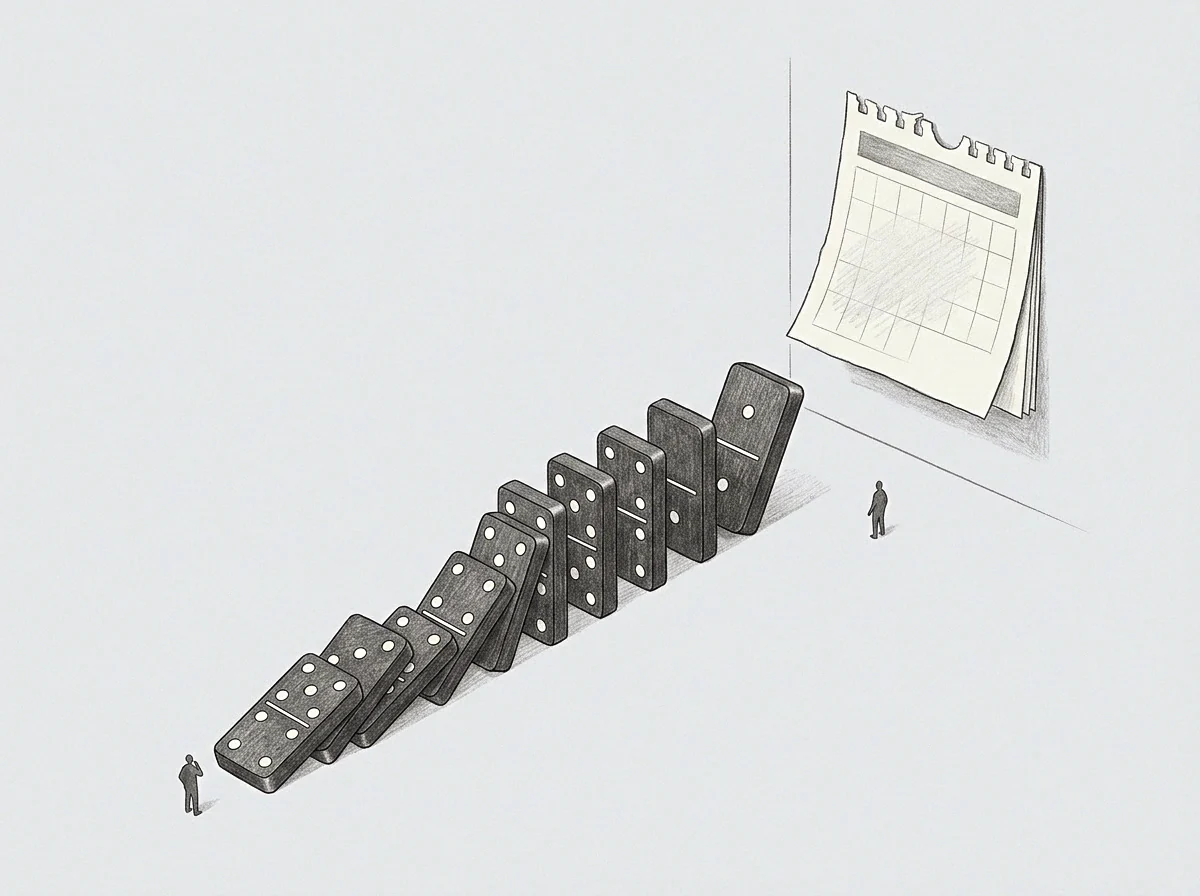
Transferring a leadership seat demands a systematic reduction of observational support. The successor moves through defined integration zones, shifting from observer to co-driver, and finally to sole operator under monitoring. This progression relies on the principle of the zone of proximal development, ensuring the successor handles increasing cognitive load without risking catastrophic failure.

Is Immediate Decision Autonomy Required During Scaffolding?
Early complete autonomy during a seat transition frequently leads to operational rupture. Direct transfer of decision authority without a staged fading sequence forces the successor to rely on personal past habits rather than the founder’s validated domain heuristics. The scaffolded transition maintains accountability while establishing a sandbox for real-time validation.
The sequence unfolds across four precise structural stages:
- The founder executes the task while speaking the internal cognitive narrative aloud to the observing successor.
- The founder executes the task while the successor calls out the required diagnostic parameters and decision variables in real time.
- The successor executes the task while speaking the intended logic aloud, with the founder holding veto authority over final decisions.
- The successor executes the task independently, submitting a post-decision reconciliation report to the founder at the end of each operational cycle.
During the third stage, known as the grip stage, friction inevitably surfaces. The founder experiences anxiety as the successor resolves issues using slightly different operational paths that still comply with core boundary heuristics. The founder must distinguish between a violation of fundamental strategy and a variation in personal work style.
Scaffold removal requires the founder to tolerate stylistic divergence while strictly enforcing boundary heuristic compliance.
When the third phase is terminated prematurely, the successor retains responsibility for outcomes without possessing the authority to enforce boundary conditions, triggering immediate role strain.

Margin
No shadowing sequence extracts one hundred percent of a founder’s cognitive model. A residual core of judgment remains non-transferable, rooted in unarticulated aesthetic taste, long-term pattern recognition, and personal relationship capital built over decades. Pretending this margin does not exist creates false operational confidence during succession.
The goal of structured shadowing is not complete replication, but the systematic codification of critical survival heuristics. The organization identifies which decisions demand strict adherence to the founder’s historical rules and which areas benefit from the successor’s new operational approach. The tacit residue that cannot be converted into rules must be buffered by organizational structure.
This structural buffering involves establishing clear governance guardrails around the successor. Where the founder used unstated intuition to manage risk, the organization installs formal financial exposure limits and dual-sign-off protocols. The formal structure replaces the missing intuitive radar until the successor develops native pattern recognition through years of direct exposure.
The non-transferable intuition of the original builder must be hedged with formal governance guardrails the moment the seat changes hands.
The departure of the original builder marks the end of intuitive governance. The successor takes the desk holding a robust ledger of explicit heuristics, supported by temporary organizational scaffolds, but must ultimately build independent decision models as market realities evolve.
How does an organization determine whether an operational failure six months post-handover stems from an improperly extracted founder heuristic or an unpredicted shift in external market conditions?