
Grounding Tacit Operating Rules During Small Firm Owner Transitions
Grounding tacit operating rules requires extracting implicit executive heuristics into explicit decision guardrails before final owner exit.

Joint
The owner sits at a desk late in the evening, approving a customized payment arrangement for a long-standing customer without consulting any printed policy. A mental calculation balances fifteen years of purchasing history against current inventory exposure and immediate liquidity requirements. No manual records this calculation, and no spreadsheet contains the formula.
The approval flows entirely from implicit memory accumulated through thousands of daily commercial choices. When a successor assumes managerial authority, these hidden decision structures remain invisible until an unexpected transaction forces a confrontation between operational reality and published documentation.
Small enterprise operations depend heavily on uncodified heuristics embedded in the daily routines of founding executives. These implicit mechanisms govern credit limits, pricing concessions, employee allowances, and vendor dispute resolutions. Outside observers often see intuitive leadership where there is actually a learned conditional logic.
The firm functions smoothly because the founder applies these boundary conditions continuously, balancing commercial, financial, and operational trade-offs.

Implicit Decision Logic in Founder-Run Enterprises
Operational complexity in small enterprises rarely makes it into standard manuals. Research in organizational knowledge shows that up to eighty percent of operational expertise inside founder-led businesses remains tacit. This uncodified expertise consists of mental models, pattern recognition, and trade-off evaluations built over decades of active management.
Faced with an operational choice, an owner relies on rapid internal pattern matching rather than step-by-step procedures.
The owner evaluates internal and external signals simultaneously, weighting variables based on past outcomes that never appear in standard accounting registers. A customer requesting extended payment terms is evaluated on past payment rhythms observed during economic downturns alongside accounts receivable age. An employee requesting schedule flexibility is judged against benchmarks of task reliability established over years of shared daily presence.
Because these evaluation filters exist exclusively within the executive mind, organizational routines become deeply synchronized with the founder’s personal presence.
Tacit operating parameters maintain commercial stability only as long as the originating mind controls daily administrative approvals.
Transferring an enterprise requires extracting these unwritten rules and translating them into clear structures that successors can execute. Without systematic extraction, the implicit logic governing the firm disappears the moment the founder leaves daily oversight. An incoming manager is left with static manuals that describe routine tasks while omitting the judgment needed for unusual commercial events.
The resulting operational void forces successors either to apply formal manuals rigidly or to rely on ungrounded guesswork. Applying rigid rules alienates historic clients accustomed to executive flexibility, while ungrounded guesswork exposes the business to unhedged balance sheet risks. Grounding implicit parameters before completing the transition is essential for organizational stability.
Custom pricing decisions were assumed to follow written margin minimums, yet every major account relied on verbal concessions negotiated over coffee.

Fracture
Disruption occurs immediately when an ungrounded transition exposes the gap between written procedures and operational execution. The incoming executive attempts to run the business using provided documentation, only to discover that key operational workflows stall when exceptions arise. Front-line staff continue to consult the departing founder informally, bypassing the designated manager because official guidelines fail to resolve daily ambiguity.
This structural split undermines management authority and creates operational friction across departments.
The failure to ground tacit rules manifests across predictable organizational dimensions during owner exits. When implicit decision structures stay locked within the founder’s memory, the firm experiences rapid erosion of customer satisfaction, margin degradation, and internal governance confusion. Successors frequently mistake these systemic gaps for personnel incompetence or client volatility, failing to recognize that the core issue is an incomplete transfer of underlying decision logic.
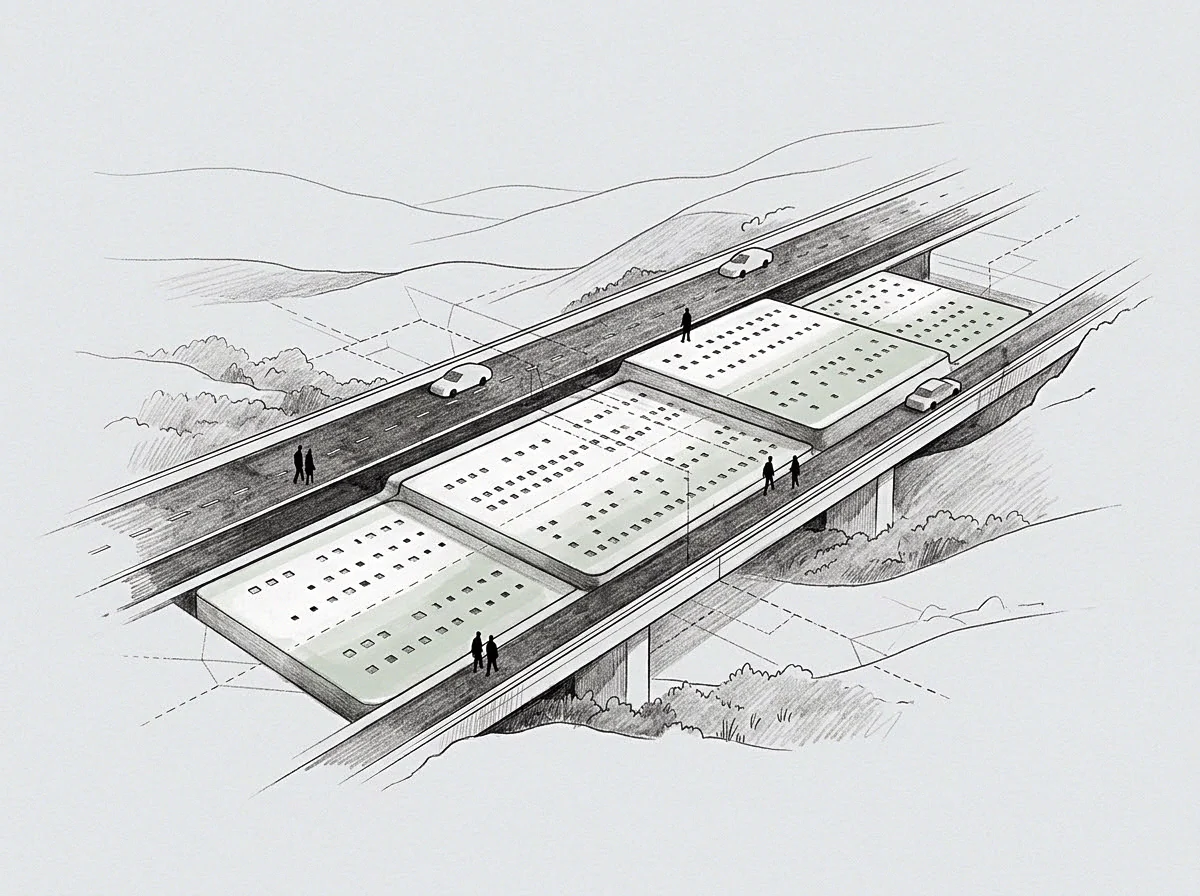
Systemic Failure Modes During Management Handover
When unwritten operational rules remain ungrounded during executive transitions, specific structural breakdown points emerge across daily commercial operations:
- Margin Erosion Through Blanket Concessions occurs when incoming managers apply generic discount schedules to non-standard accounts because the specific conditional logic behind historical client pricing was never documented.
- Administrative Gridlock in Exception Handling develops as front-line staff submit minor operational deviations to executive review, overwhelming new management that lacks the founder’s implicit threshold filters.
- Informal Power Networks persist across senior staff who bypass official leadership to seek guidance from retired founders, crippling the successor’s legitimate decision authority.
- Vendor Relationship Degradation happens when suppliers lose custom credit arrangements or operational allowances previously granted under unwritten, trust-based executive agreements.
- Key Talent Departure follows the enforcement of rigid administrative policies that replace the founder’s nuanced, individual performance trade-offs with impersonal corporate metrics.
Capital absorbs error for a limited window while these operational fractures widen. Studies tracking small business acquisitions show that post-transition performance drops in sixty-five percent of firms within twelve months of founder departure. This drop correlates directly with the magnitude of uncodified tacit knowledge remaining in the business at the close of the transaction.

Cognitive Disconnect Between Founder and Successor
Founding managers and incoming executives process operational information through fundamentally different cognitive frameworks. The founder relies on historical pattern recognition built through continuous exposure to firm dynamics from inception. The successor relies on formal analysis, standard financial reporting, and explicit documented instructions.
This cognitive gap creates mutual frustration during transition shadowing periods.
The cost of ungrounded operational rules is paid in depleted managerial capacity and diluted brand equity during the first year of successor leadership.
During joint working sessions, founders frequently express frustration when successors fail to pick up contextual nuances instantly. The founder perceives these implicit choices as basic common sense, failing to recognize that common sense in a specific firm is actually accumulated institutional memory. Successors, conversely, view the founder’s decision style as arbitrary or chaotic, attempting to enforce rigid process discipline that strips away necessary commercial agility.
Without structured translation mechanisms, joint transition periods dissolve into passive observation sessions where the successor watches the founder make decisions without gaining the underlying analytical mental models. The successor sits in meetings, observes choices, but remains unable to replicate the underlying trade-off balance once left alone in the executive chair.
Mounting financial losses in the sales department reflect a lack of documented guidelines for approving non-standard contract terms rather than market headwinds.
Harness
Converting unwritten executive knowledge into explicit operating guardrails requires a structured extraction sequence, not informal exit interviews. Tacit knowledge cannot be articulated simply by asking an owner how work gets done. Because expert decision-making operates automatically, founders are largely unaware of their own internal cognitive steps.
Systemic capture demands observational extraction, critical incident analysis, and progressive boundary testing during real-time firm operations.
The grounding process builds cognitive scaffolding around the executive seat. This scaffolding codifies internal heuristics into explicit decision trees, quantitative boundaries, and delegated permission matrices. By converting personal judgment into organizational systems, the firm transitions from reliance on an individual mind to reliance on repeatable, transferable operational guardrails.

How do implicit approval thresholds become explicit rules?
Transforming personal decision logic into durable organizational guardrails follows a sequential five-stage translation protocol during the active exit window:
- Shadowing and Real-Time Inquiry requires a dedicated analyst or successor to observe executive daily choices, interrupting post-decision flow to capture specific contextual variables evaluated during customer, vendor, or operational approvals.
- Critical Incident Reconstruction analyzes past operational crises, client losses, and high-margin wins to map the exact conditional thresholds the founder applied when navigating unscripted enterprise events.
- Heuristic Rule Drafting translates observed decision patterns into explicit conditional statements that define clear input variables, evaluation criteria, and allowable operational outputs.
- Simulated Decision Scenarios presents the successor with historical and live operational choices, allowing them to apply drafted rules while the founder evaluates accuracy and identifies missing context.
- Progressive Delegation Testing transfers approval authority for specific operational tiers to the successor while maintaining founder oversight strictly limited to defined boundary exceptions.
The rule holds under pressure only when validated across multiple real-world operational cycles. Shadowing creates context that static reading can never replicate. During this stage, the successor moves from passive listener to active practitioner under controlled executive supervision.
Scaffolding guides decisions until the successor develops intuitive familiarity with the business model. As explicit rules are tested against live operations, incomplete edge cases surface quickly. The founder and successor refine the codified rules together, adjusting parameters to balance risk management with operational speed.
Systematic codification converts private executive instinct into public enterprise infrastructure.
This grounding methodology shifts the burden of decision-making from personal authority to established structural criteria. When front-line employees bring non-standard requests to management, the successor points to documented evaluation matrices rather than relying on personal preference. This operational transparency establishes successor legitimacy while maintaining commercial consistency across all business units.
A rule of thumb for codifying executive heuristics is to document the exact parameters of the three most expensive mistakes the founder prevented during the previous five years.

Ledger
Grounding tacit rules requires establishing a clear comparative understanding of how operational functions shift from implicit founder heuristics to explicit successor systems. Different organizational domains demand distinct codification mechanisms depending on the underlying complexity and risk profile of the decisions involved.
The comparative matrix below maps primary enterprise functions, detailing how unwritten owner logic converts into formal guardrails, alongside the specific transfer residue that permanently resists complete documentation.
| Enterprise Function | Implicit Owner Heuristic | Explicit Grounded Guardrail | Irreducible Knowledge Residue |
|---|---|---|---|
| Customer Credit & Pricing | Qualitative assessment based on buyer tenure, personal trust, and informal gut checks. | Tiered risk matrix combining credit scoring, payment history, and mandatory margin floors. | Micro-level industry instinct regarding impending market stress among specific key buyers. |
| Vendor Negotiations | Verbal side-agreements, leverage calls based on historical volume, personal relationships. | Standardized procurement terms, formal vendor scorecards, secondary sourcing triggers. | Subtle leverage awareness derived from decades of shared personal vendor history. |
| Talent Management | Subjective evaluation of loyalty, flexible job scopes, unwritten bonus allocations. | Structured performance benchmarks, transparent incentive pay scales, role definitions. | Nuanced emotional calibration required to manage high-performing but volatile staff. |
| Capital Allocation | Immediate cash balance checks, personal risk tolerance, uncalculated opportunity cost. | Formal capital expenditure approval thresholds, ROI targets, working capital formulas. | Entrepreneurial timing sense for high-risk, non-linear market expansions. |
| Quality Control | Sensory evaluation, personal inspection routines, informal spot checks on floor. | Statistical defect tracking, standardized inspection checklists, escalation steps. | Deep sensory pattern recognition for subtle production errors before metrics reveal them. |
The table illustrates that while core operational decision-making converts effectively into explicit systems, a specific fraction of knowledge remains permanently tied to personal experience. The irreducible knowledge residue represents the boundary where explicit documentation reaches its limit. Organizations must design secondary governance mechanisms to buffer against the total loss of this residual insight.

Designing Boundary Conditions and Operational Scaffolds
To operationalize explicit guardrails without creating restrictive bureaucracy, small firms must implement dynamic boundary conditions. Boundary conditions define the exact sandbox within which a successor operates with absolute autonomy, alongside hard trigger points that require secondary review or external advisory consult.
Working capital formulas offer a clear example of dynamic boundary design. Rather than requiring executive approval for every purchase order, the owner and successor establish a cash conversion velocity threshold. As long as inventory turns and accounts receivable days remain within defined standard deviations, operational management proceeds without executive intervention.
If metrics breach defined limits, mandatory operational adjustments trigger automatically.
When operational boundaries are defined by quantitative variance rather than personal authority, leadership transitions lose their disruptive potential.
Scaffold removal must proceed in deliberate, measurable stages. Removing structural support too quickly exposes the enterprise to unhedged decision risks, while leaving scaffolding in place indefinitely prevents the successor from building true executive competence. The timeline for scaffold removal aligns with operational cycles rather than arbitrary calendar dates.
An effective transition agreement explicitly defines the operational parameters of the grip stage, establishing that the departing owner retains veto power exclusively over capital allocations exceeding twenty percent of net equity, while all daily operational decisions transfer unconditionally to the incoming manager on day one of the handover contract.

Anchor
Long-term enterprise stability post-transition depends on establishing the successor’s absolute operational authority while preserving access to residual founder context. When the physical exit occurs, the departing owner must step clear of daily communications to prevent double-command structures from forming. The firm enters a new operating phase where explicit guardrails replace personal executive presence as the core organizing force of the business.
The transition completes when the firm’s explicit operating systems handle non-standard events without founder intervention, regardless of whether every piece of tacit knowledge was written down. Staff adjust to new decision paths, clients learn to engage with standardized commercial terms, and the enterprise builds fresh institutional memory. Operational authority anchors securely inside the firm structure rather than the individual mind.

Establishing Independent Successor Authority
Sustaining successor independence requires complete severance of informal approval channels. Employees attempting to consult the retired founder must be redirected firmly to documented firm procedures and current executive leadership. The owner who seeks a clean exit refuses private calls from historical staff seeking exceptions to new corporate policies.
The explicit systems established during the transition period begin to evolve independently of the founder’s original mental models. The new leadership team adapts codified guardrails to meet changing market conditions, modifying credit matrices, updating procurement workflows, and re-allocating capital based on real-time feedback. This evolution marks the final transformation of the enterprise from a founder-dependent business into an institutional entity.
Tenacity buys time during early operational challenges. As the successor executes decisions through grounded systems, initial friction gives way to consistent operational performance. The organization demonstrates its durability when unexpected commercial volatility arises and the explicit guardrails absorb the shock smoothly, guiding management choices without reliance on the mind that built the original firm.