
Scaffolding Executive Transitions During Functional Authority Transfer
Executive authority transfers require progressive scaffolding that codifies tacit knowledge, restricts informal overrides, and enforces structured withdrawal schedules.
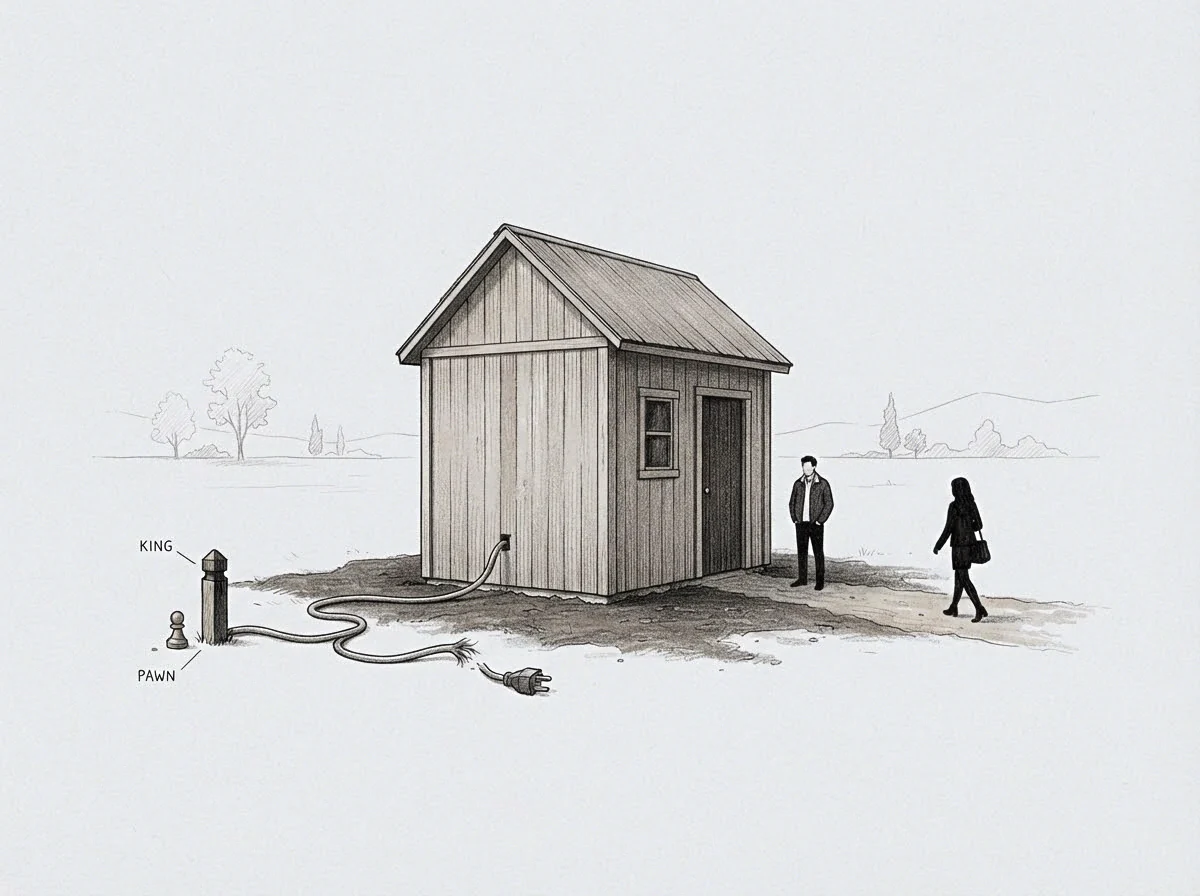
Seat
An incoming vice president of operations attends a weekly capital expenditure review while an outgoing executive, who officially relinquished direct operational management, quietly overrules a vendor approval threshold established earlier that month. Direct reports look toward the edge of the room where the predecessor sits. Decisions pause until an explicit gesture confirms who holds sign-off power.
Dual lines of communication form immediately across the management team. Subordinates send secondary draft approvals to the predecessor through informal channels to avoid post-decision overrides. Dual reporting drains capacity.
The transfer stalls.

Operational Ambiguity in Predecessor Presence
Formal organizational charts record title changes long before authority transfer completes. When a successor takes an executive role, team members evaluate actions against historic power structures rather than official designations. The retention of unconstrained approval channels by an outgoing leader creates operational paralysis across direct reports.
Employees seek double validation, increasing decision latency across routine approvals. Unclear boundaries convert clear delegation into continuous consultation cycles.
An incoming executive loses authority the moment direct reports seek parallel validation from a predecessor sitting in the room.
The Mechanics of Structural Shadowing
When an outgoing executive remains available to resolve operational exceptions, the successor’s explicit operational domain contracts. Direct reports exploit structural overlaps to bypass performance thresholds set by the incoming manager. This pattern creates informal veto pathways where historical personal trust overrides explicit functional mandates.
Operational friction escalates as managers balance two distinct execution criteria simultaneously. Managing dual authority structures consumes hours that belong to direct execution. Unclear authority transfers generate operational latency, split internal execution signals, and force incoming leaders to manage structural resistance instead of operational performance.
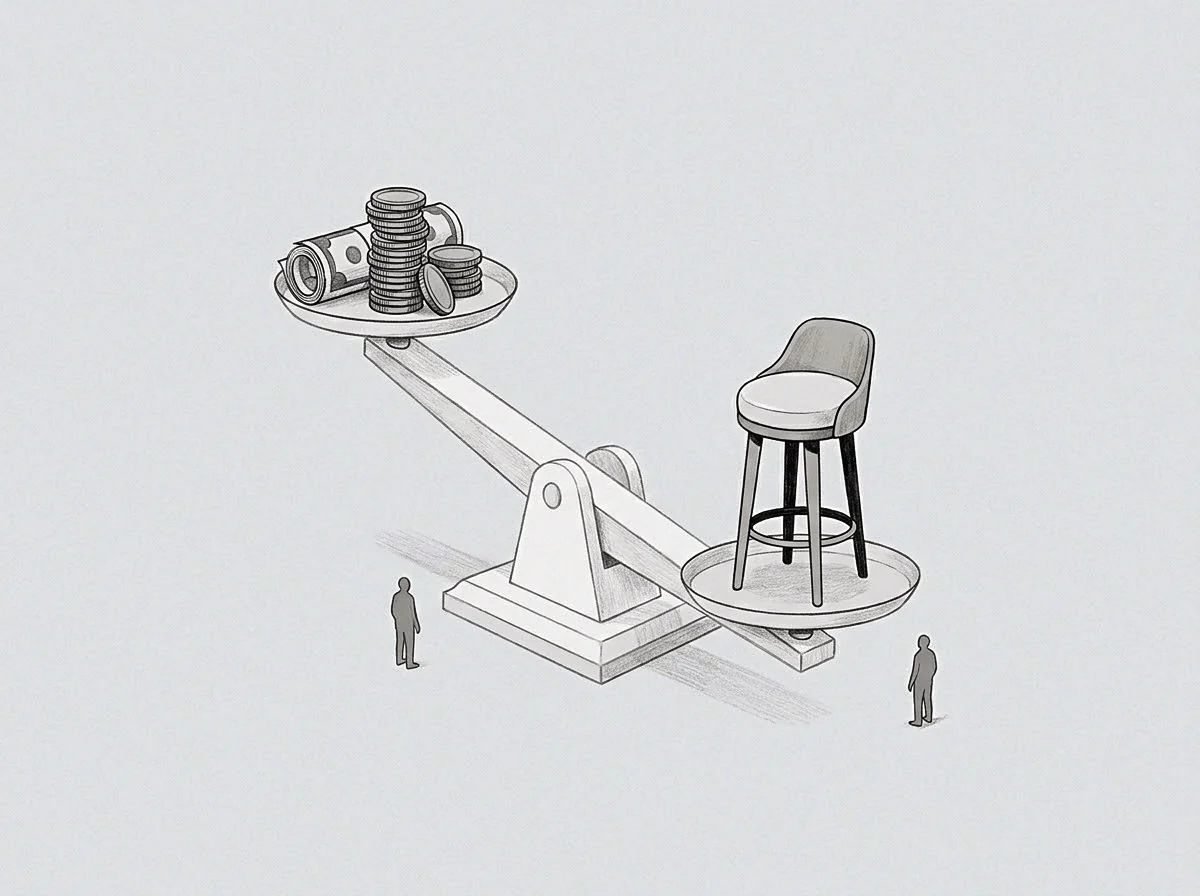
Shift
Tacit knowledge transfer requires structured exposure to operational decisions rather than sudden authority drops. The cognitive burden of managing unfamiliar functional dependencies leads to failure if transferred without temporary operational buffers. Scaffolding structures authority transfer into bounded stages where an outgoing leader moves from active decision-maker to observer, and finally to external advisor.
The scaffold holds. Silence creates operational drift.

Progressive Support Withdrawal as Scaffold Design
Scaffolding functions as a temporary support structure that withdraws systematically as the successor demonstrates operational competency across defined boundaries. The design requires clear exit triggers for each phase to prevent perpetual overlap.
- Initial shadow phase where the predecessor executes complex approvals while the incoming leader documents decision pathways.
- Joint decision phase where the incoming leader proposes operational choices subject to structured predecessor review against defined risk metrics.
- Unilateral execution phase with defined escalation triggers that limit predecessor intervention to catastrophic financial boundaries.
- Complete functional exit where historical governance channels close and formal board reporting replaces informal advisory access.

Cognitive Load and Tacit Knowledge Codification
Explicit procedural manuals fail to capture implicit decision boundaries developed over years of firm operation. Successors rely on observation within active operational contexts to absorb historical context, negotiation boundaries, and implicit risk tolerances. Tacit rules govern expenditure.
Codifying these implicit decision rules into clear decision trees reduces reliance on informal consultations. When scaffolding withdraws too rapidly, the successor defaults to conservative risk positions that slow firm velocity. Conversely, prolonged scaffolding traps the organization in continuous governance loops.
A scaffold left in place beyond functional competency delays leadership ownership and creates chronic dependency across operational teams.
Scaffolding fails when support structures remain active past the point where the successor demonstrates independent execution under operational stress.

Span
Transfers proceed at uneven velocities across distinct corporate functions. Capital allocation, product architecture, client relationship ownership, and key talent retention carry different levels of operational risk during a leadership change. Explicit mapping of functional domains prevents uncoordinated authority loss across critical operations.

Functional Authority Allocation Across Domains
Distinguishing between functional domains reveals where authority transfers smoothly and where historical inertia causes operational bottlenecks. Monetary thresholds standardize faster than relational authority, which relies on implicit interpersonal trust built over multi-year operational cycles.
| Functional Domain | Phase 1 Delegated Scope | Phase 2 Shadow Approval Threshold | Phase 3 Full Authority Boundary |
|---|---|---|---|
| Financial Commitments | Budget items under fifty thousand dollars | Capital expenditure between fifty thousand and five hundred thousand dollars | Unconstrained within approved annual board budget |
| Technical Architecture | Routine operational patches and minor releases | Core infrastructure changes altering system uptime baselines | Complete architectural roadmap sign-off and vendor binding |
| Key Account Ownership | Routine client account renewals and service delivery | Contract adjustments changing gross margin targets by five percent | Direct client negotiation and multi-year commitment execution |
| Personnel Management | Individual contributor hiring within headcount plan | Departmental restructuring and senior management compensation shifts | Complete executive hiring, firing, and organizational design |

Domain Specificity in Transfer Velocity
Financial sign-off standardizes faster than client relationship ownership because monetary limits possess hard numerical boundaries. Relationships and strategic technical decisions depend heavily on unwritten historical context held by the predecessor. When an organization attempts to transfer all functional domains simultaneously, executive performance drops rapidly due to cognitive overload.
Decisions require explicit criteria. The contract sets bounds. Staggering domain transfer according to measurable operational risks stabilizes execution across the wider team.
A transition schedule bound to hard functional metrics prevents emotional drag during authority delegation.
The inclusion of an explicit threshold clause in the transition charter revokes predecessor intervention rights the day operational metrics meet target baselines.

Post
Sudden market shocks or operational failures trigger automated reliance on historic leadership patterns. When an incoming leader encounters unexpected execution roadblocks, team members bypass new authority channels to seek intervention from familiar figures. Shadow authority destroys sequence.
The successor assumes risk.

When Does Informal Authority Revert to the Predecessor?
Reversion occurs when structural boundaries around the predecessor remain permeable. Without explicit rules governing communication, staff route complex operational problems back to the former authority figure out of habit. Preventing informal reversion requires formal intervention protocols that define exactly when, how, and if a predecessor may voice an opinion on current operations.
- Emergency Override Protocol sets exact conditions under which an outgoing executive can resume temporary decision-making power during crisis events.
- Information Isolation Boundary restricts historical leaders from receiving direct operational status updates from subordinate staff members.
- Escalation Buffer Window establishes a mandatory forty-eight hour holding period before senior board members review disputes between incoming and outgoing leaders.

Managing the Grip Stage Friction
During the intermediate phase where authority is partially transferred, incoming leaders experience role strain from holding responsibility without complete decision sovereignty. Subordinates test new boundaries continuously, searching for discrepancies between old policies and new directions. Intervention carries operational cost.
The seat dictates action.
In industrial manufacturing operations, safety protocols mandate clear physical tag-out procedures so two technicians never adjust the same valve concurrently. Executive transitions require structural isolation, as dual operational command leads to system failure.
Clear intervention limits keep historical leaders from turning advisory meetings into operational directing sessions.
Operational decisions executed without historical background feel ungrounded, forcing long-standing staff to ask whether the original direction of the firm remains intact.

Rig
Complete authority transfer requires removing the scaffolding entirely on a predetermined date regardless of operational comfort. The physical removal of an outgoing leader from routine status meetings, executive messaging channels, and operational email aliases establishes clear boundaries for the organization. The outgoing leader steps aside.
The seat remains split.
Structural Termination of Shadow Governance
Leaving advisory paths open past the target end-date allows direct reports to resist new management mandates indefinitely. Executive transitions finalize when the organization resolves internal exceptions exclusively through the successor without back-channel validation. Governance instruments must formally transition all final sign-off rights, equity voting controls, and board seats to complete the shift.
Once administrative and operational access is revoked, informal influence decays rapidly. The incoming leader gains full execution authority only when the predecessor completely vacates the operational environment.
What organizational mechanisms successfully prevent an outgoing founder with significant equity from exerting informal shadow control once all legal executive governance structures have expired?