
Preserving Executive Command in Growth Stage Owner Managed Companies
Executive command endures when an owner exchanges continuous direct operational supervision for legal reserved matters and non-negotiable negative control thresholds.
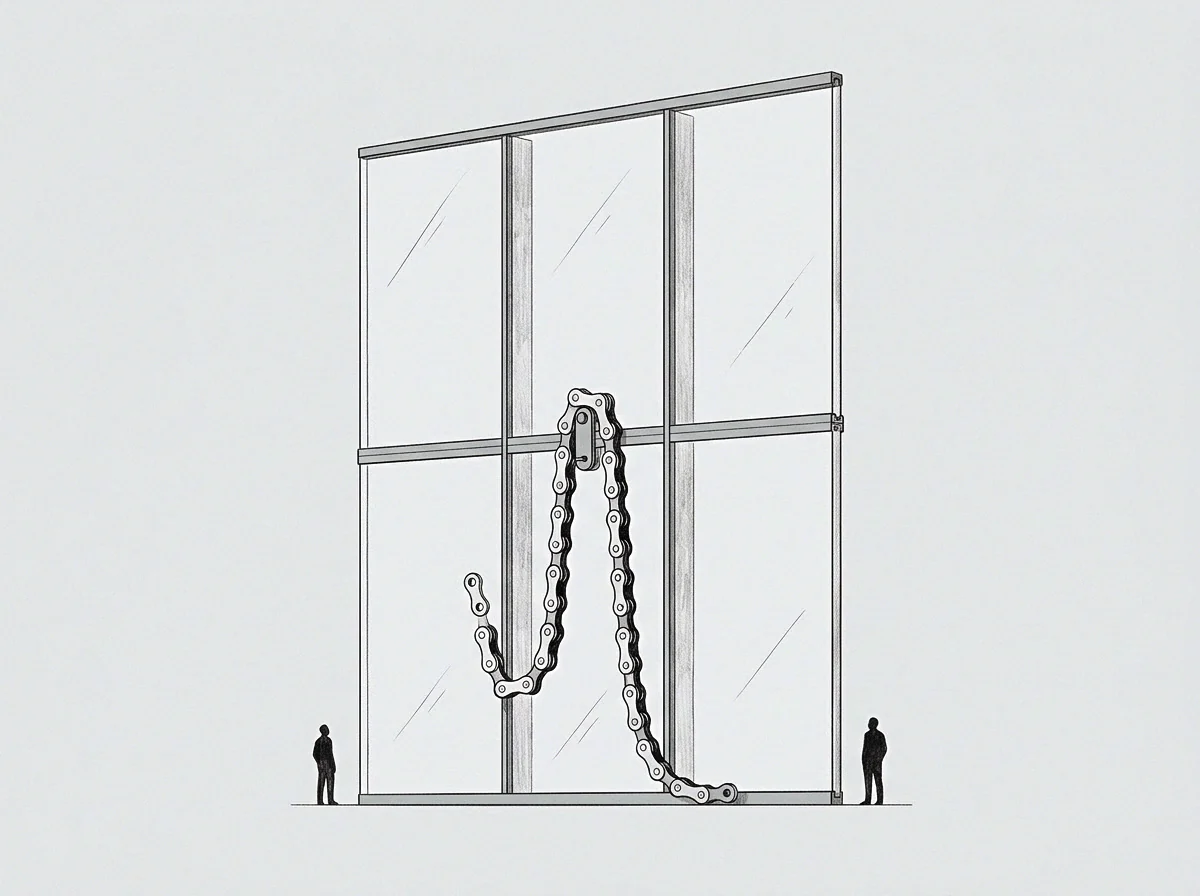
Grip
The Friday bank reconciliation sits beside three unsigned senior employment offers on the owner’s desk. Operational oversight once covered every payment, customer dispute, and release date. Growth dissolves that visibility.
When headcount crosses forty people, verbal alignment no longer steers daily work. The company requires specialized department heads, yet the owner carries the financial risk for any misstep taken under delegated discretion.
Two distinct realities collide at this transition point. Operational supervision guides daily work, schedules, and deliverables. Executive command, by contrast, establishes capital limits, selects senior leadership, defines market scope, and holds unilateral revocation authority over corporate commitments.
Blurring the two creates immediate paralysis across emerging management tiers.
Without explicit structural boundaries, growth dilutes directional authority while multiplying the owner’s personal liability. Attempting to oversee every task directly produces administrative bottlenecks, slows responses to the market, and drives out capable operational talent.
- Authority boundary confusion occurs when managers make operational decisions without written spending caps, forcing recurring verbal check-ins with ownership.
- Informal backchannel communication develops as early employees bypass newly hired department managers to get confirmation directly from the principal.
- Supervisory exhaustion sets in when an owner spends hours reviewing technical work rather than tracking agreed operational performance indicators.
- Accountability decay emerges once departmental executives point to uncoordinated founder interventions in daily workflows to explain missed revenue targets.
Staff read the room for signals about where power actually sits. When an owner overrides a new head of operations in front of the whole company, the formal reporting structure dissolves on the spot. Delegated authority requires public defense if appointed managers are to maintain discipline.
Delegating daily tasks without setting clear performance hurdles creates immediate exposure. Discretion works only within explicit limits; managers need to know the exact line where independent action stops and mandatory ownership approval begins.
An owner promises complete operational independence on Monday morning and rescinds corporate purchasing access by Thursday afternoon.

Split
Separating ownership rights from operational execution requires formal legal and organizational structures rather than personal trust. Equity ownership carries statutory voting rights over board seats, capital calls, dividends, and corporate liquidation. A management role carries day-to-day authority over hiring, vendor agreements, workflows, and sales cycles.
Expanding firms stumble when ownership status is confused with everyday managerial direction.
Corporate charters establish basic voting thresholds, but an owner-managed business reaching institutional scale requires a detailed schedule of reserved matters. That schedule fixes the corporate actions that remain strictly with equity owners, regardless of what titles professional general managers hold.
A governance policy holds only until market pressure tests managerial compliance.
Written terms anchor authority: shareholder agreements secure structural control, while administrative charters set operating pace. When professional managers operate without explicit limits on credit lines, corporate guarantees, or long-term leases, enterprise value erodes quietly.
| Decision Category | Owner Prerogative | General Manager Prerogative | Governance Instrument |
|---|---|---|---|
| Capital Commitments | Expenditures exceeding fifty thousand dollars and all external debt facilities | Budgeted operating disbursements within defined cash allocations | Shareholder Reserved Matters Schedule |
| Senior Personnel | Hiring, compensation agreements, and termination of executive direct reports | Recruitment and operational management of departmental staff | Board Delegation Charter |
| Commercial Strategy | Product category entry, market exits, and intellectual property transfers | Tactical client acquisition, service delivery, and pricing adjustments | Operating Operating Plan Covenant |
| Corporate Structure | Entity formation, capitalization table amendments, and equity grants | Internal departmental division of labor and workflow structures | Articles of Association |
| Legal Commitments | Settlement of formal claims and execution of multi-year leases | Standard customer contracts under approved commercial templates | Statutory Signing Schedule |
Capital allocation governs operations: maintaining statutory command allows an owner to step away from daily production without losing control of the business. The operating executive carries out the annual budget, but ownership controls the treasury release gates.
A reserved matters schedule that requires an owner signature on any commercial lease extending beyond twelve calendar months prevents unintended long-term commitments.

Seat
Occupying the chief executive chair is not the same as holding ownership. With twenty staff members, an executive can personally see how the work gets done. By seventy-five, direct visibility is gone.
Command has to rely on structured operating indicators, consistent reporting cycles, and formal performance metrics.

Can Operating Prerogative Survive Management Expansion?
Professional managers introduce procedures meant to stabilize operations, but those same systems can insulate ownership from ground reality. Non-owner executives tend to optimize for predictability and career stability over commercial adaptation, introducing clear agency friction into expanding operations.
A lender expects a single signature, and when disputes arise, counterparties demand to know who actually binds the company. When an owner hands the chief executive title to an external operator while retaining majority equity, authority splits across two desks. That ambiguity quickly paralyzes mid-level managers.
When authority transfers to an external operator without explicit performance boundaries, the owner becomes a spectator to corporate insolvency.
Tacit operating knowledge rarely transfers through procedural binders alone. Handovers pass along administrative mechanics: spreadsheets, vendor contacts, client histories, and process documentation. The sharper commercial instincts around margin defense, account tolerances, and counterparty reliability stay with the person who built the business.
Growth strains supervisory lines: an owner who steps out of the executive chair too early watches operating margins erode as hired managers add administrative overhead. Conversely, stepping around those managers to direct junior staff undermines appointed leaders and creates confusion. What the role requires is a clear definition of which metric shifts trigger immediate ownership intervention.
The executive calendar shows where the enterprise actually focuses: if leadership spends thirty weekly hours arbitrating internal jurisdictional disputes between department heads, market execution stops. Strategic oversight requires reliable data feeds covering cash burn, customer churn, cycle velocity, and gross margins without requiring an owner to stand on the production floor.
Operating authority holds only while commercial margins exceed the cost of professional administrative layers.

Drift
Information degrades as layers multiply between front-line work and ownership. In a fifty-person company, bad news passes through several hands before reaching the board table. Department heads naturally soften operational failures, delivering sanitized reports that mask weakening unit economics or delivery bottlenecks.
By the time quarterly financials reflect lost customer retention, enterprise value has already evaporated.
Consider an enterprise growing from twenty-five to ninety personnel over eighteen months. The owner hires an experienced corporate chief operating officer to handle operations and step out of the day-to-day, intending to focus on major client accounts. The new executive installs software workflows, intermediate reporting layers, and weekly management meetings, cutting off direct feedback from the field.
Three months into the arrangement, customer delivery cycles have stretched by thirty percent, yet executive dashboards show green across the board. Department heads report compliance with the new processes, while frontline staff stop resolving edge cases informally. The owner only spots widespread client cancellations when quarterly collections drop, revealing how completely the reporting layers distorted reality.
The written management report conceals operational friction precisely where frontline staff cease resolving exceptions informally.
Restoring control against operational drift requires an owner to maintain independent verification channels. This does not mean going behind the operating officer’s back. It means spot-checking primary operational records: raw cancellation logs, open support queues, scrap counts, and unfiltered bank ledgers.
- Audit of unedited primary documents confirms whether reported department numbers match raw accounting entries and shipping records.
- Direct field inspection rounds expose gaps between slide presentations and actual turnaround times on the floor.
- Periodic operational skip-level briefings give frontline leads a direct route to point out bottlenecks without management filtering.
- Mandatory escalation protocols set clear performance triggers that require same-day notice to ownership.
When operational drift goes unchecked, an organization develops an immune response against owner involvement. Appointed executives start treating basic ownership inquiries as meddling rather than fiduciary oversight. Left alone, the internal bureaucracy begins to exist mainly to justify its own growth.
Unchecked reporting layers leave leadership disconnected from the economics of customer retention, draining cash reserves while presenting balanced operational status reports.

Veto
Ultimate authority in an owner-managed firm rests on negative power rather than positive direction. Dictating every move demands too much attention and paralyzes skilled managers. Setting firm negative boundaries leaves leadership free to operate within safe margins while keeping ultimate control over company survival in the owner’s hands.
The maritime model illustrates the balance. A commercial ship’s captain does not stoke engines, handle lines, or check galley inventory; those tasks belong to deck officers and crew. What the captain retains is the authority to alter course, set speed limits, choose ports, and relieve any officer of the watch during a hazard.
Executive command functions through the swift application of absolute negative boundaries rather than through the continuous supervision of daily routine.
Cash reserves dictate operating freedom, and negative control works through non-negotiable thresholds set in board charters. The owner establishes three boundaries: an absolute liquidity floor that freezes unbudgeted spending, an explicit customer concentration limit, and a gross margin floor on new sales contracts. Managers have full autonomy to run the business so long as performance stays above those tripwires.
When an operating executive breaches a negative covenant, ownership intervention must be immediate and visible. There is no room for compromise on non-negotiable boundaries. The executive either corrects the issue within forty-eight hours or surrenders administrative authority.
Holding ultimate command during rapid growth requires legal mechanisms to reclaim authority in an emergency. Executive agreements need clear unilateral revocation clauses. If general management tries to box ownership out of strategic direction, the corporate articles must allow for the immediate, unilateral removal of the board.
The central governance problem remains distinguishing normal managerial learning curves from structural erosion before capital depletion forces an involuntary corporate restructuring.