
Partitioning Owner Operator Capacity Limits Under Chronic Client Emergency Load
Partitioning owner operator capacity requires isolating technician triage within prepaid hour reserves while applying economic friction to unscheduled demands.
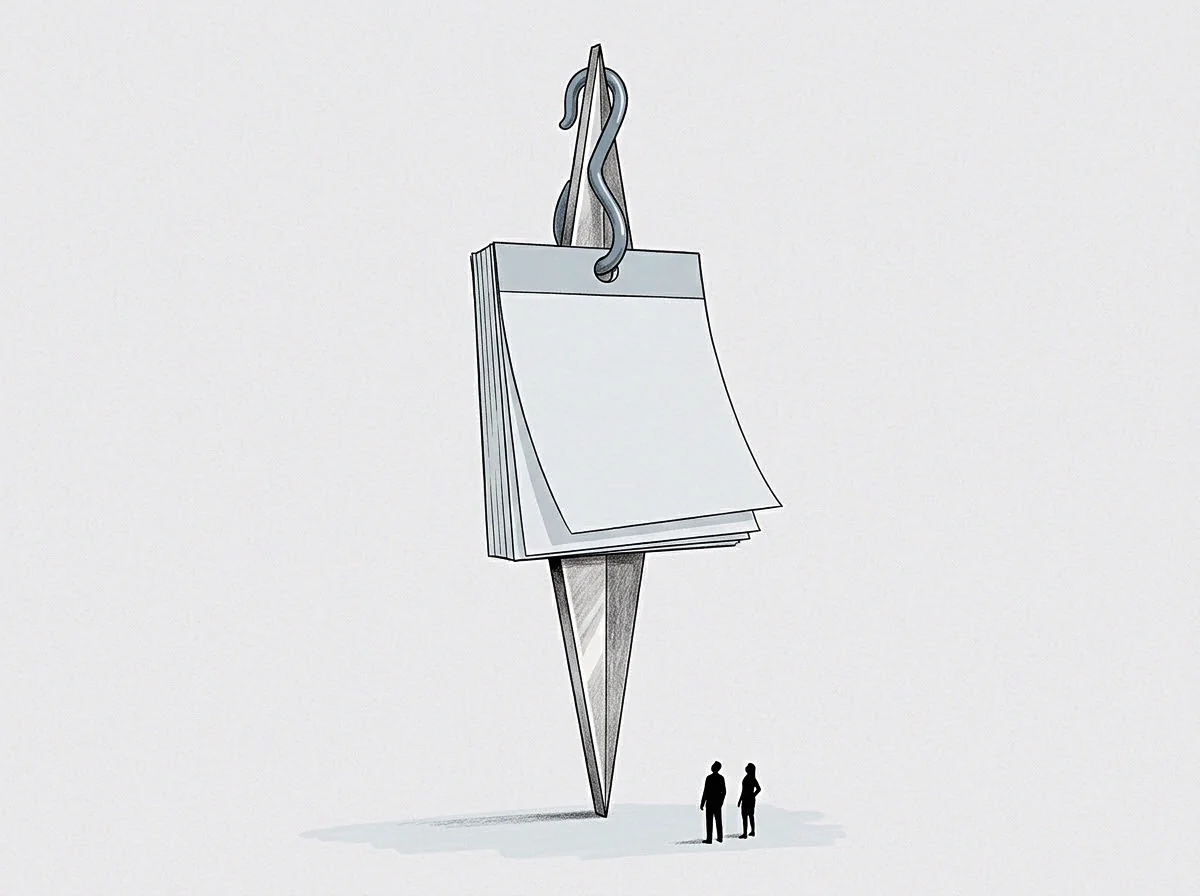
Surge
An alert sounds at nine on a Tuesday evening while the operator is reviewing quarterly tax liabilities. The message arrives on a private phone rather than through the formal ticketing portal: a counterparty executive reports a database failure and asks for immediate diagnosis. The operator sets aside the tax filing, moves to a secondary terminal, and pulls system logs.
Within twelve minutes, executive responsibilities are abandoned as the technical fix takes over completely.
The shift requires no conscious decision. The technician role deals in legible problems: broken code, stalled delivery pipelines, or a downed service. Feedback is instant.
A script finishes or a server comes back up, and the fix is verified on the spot. Running the enterprise rarely offers that satisfaction. Capital allocation, account profitability, and contractual boundaries involve persistent ambiguity without quick confirmation.
Under pressure, technical triage offers relief, and the operator retreats into execution while commercial oversight falls away.
The pattern hardens through repetition. Over four months, an isolated incident becomes an informal operating agreement. The client discovers that distress signals sent outside commercial hours produce immediate senior labor at zero supplemental expense, while the operator treats every panic as an existential retention risk.
Under this pressure, the calendar stops reflecting deliberate priorities. Pipeline reviews get twenty minutes instead of three hours. Hiring discussions slip to the following quarter.
Process management, which should control pacing and capacity, is touched only when delivery schedules fail outright. The operator often reads this friction as personal insufficiency, though the mechanics are straightforward: three distinct roles compete for one cognitive container, and the loudest emergency wins every time.
A client emergency reliably drives the owner into the technician seat by offering the psychological shelter of immediate mechanical resolution.
The operator absorbs the impact. Unscheduled tickets, urgent calls, and database repairs draw energy directly away from long-term enterprise survival. Sixty hours of weekly effort produce zero progress on core enterprise objectives.
The accounts receivable ledger sits untouched for three weeks, while strategic pricing revisions remain half-drafted notes on a pad. The business operates less like an enterprise and more like an ad hoc consultancy under continuous siege.
The client sees the arrangement differently, treating the owner-operator as an elastic buffer. Rather than buying a contract for defined deliverables, they rely on an outside provider to absorb internal operational deficiencies without complaint. When a customer slips on their own production schedule, the operator works overnight to recover the lost time.
The counterparty experiences zero consequences from its disorganization because the supplier provides free structural insurance.
This imbalance requires structural resolution before normal business resumes tomorrow.
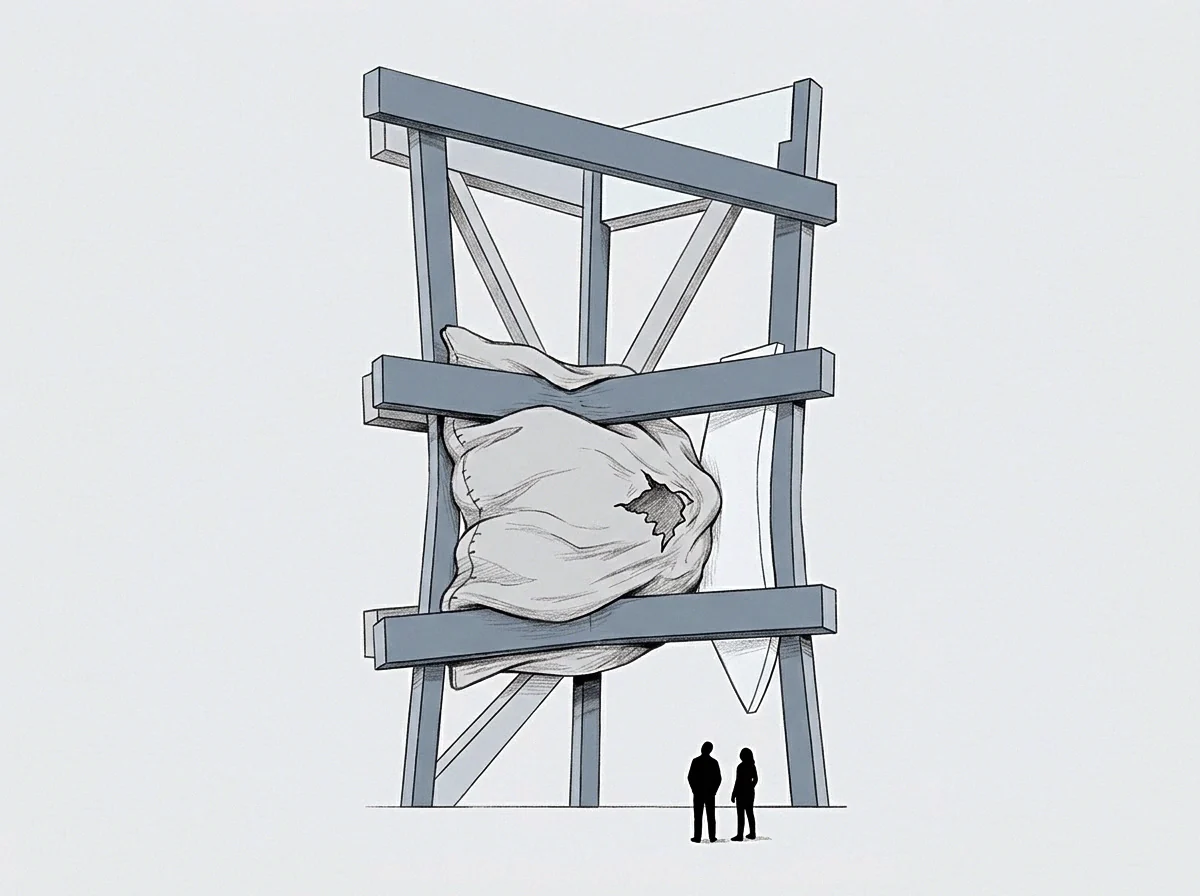
Sump
Clients routinely push their internal volatility onto smaller suppliers. Poor scheduling, loose quality checks, and indecisive management create an ongoing series of false alarms. In a firm with layered management, an account manager checks the service agreement, cites response windows, and deflects the disruption.
A single-operator business offers no such layer; the equity holder answers the phone and repairs the plumbing. Because the operator dreads contract termination above all else, the client learns that urgency secures instant, unbilled priority.
The arrangement soon turns into classic moral hazard, where one party takes greater operational risks because another party bears the consequences. Knowing that late specification changes will be resolved overnight through unpaid overtime, the client stops enforcing internal deadlines. A product manager hands off incomplete requirements at five in the afternoon because an external technician will fix the errors before morning.
The supplier becomes an operational sump where every unmanaged run-off pool collects.
The economic transfer is total. The customer protects its internal labor budget, spares its staff from weekend calls, and preserves normal working hours. The operator funds that calm through interrupted evenings, degraded sleep, and abandoned enterprise development.
The client pays for baseline delivery while receiving uninterrupted emergency coverage, reducing the commercial model to unpriced risk underwriting.
This structural failure produces distinct systemic pathologies across the enterprise:
- Absorption habituation teaches counterparty personnel that operational disorganization carries zero commercial consequence, establishing frantic escalations as their standard communication pattern.
- Discretionary capacity collapse occurs when irregular technical fires consume the cognitive reserves required for sales development, process documentation, and pricing reviews.
- Margin compression deepens as unbilled triage hours expand while base retainers remain fixed against inflation and rising operational overhead.
- Availability asymmetry develops when the client expects twenty-minute response times for non-critical variances while their internal billing department delays invoice settlements by sixty days.
The operator often mistakes this dynamic for account loyalty, assuming that emergency rescues generate goodwill and ensure long-term retention. Empirical examination of business-to-business vendor lifecycles contradicts that assumption. Clients rarely respect suppliers whose time they routinely exploit.
Rather than earning gratitude, the operator becomes linked with friction and technical instability. Once the immediate crisis subsides, the customer frequently replaces the exhausted operator with an agency that enforces strict process discipline and commands higher rates.
Unpriced operational rescue teaches counterparties that planning discipline is an unnecessary expense.
The financial damage compounds quietly. Cash collections stall while the operator debugs integrations late into the night, leaving undisputed invoices unpaid well past their thirty-day terms. Technical work gets done, but commercial collection goes unenforced.
The business drains its reserves despite operating at ninety percent nominal utilization, forcing one person to bear the financial, physical, and psychological costs of a customer’s operational disorder.
Permitting this dynamic to persist guarantees that the enterprise remains unscalable, trapping the operator in low-margin emergency triage until physical exhaustion terminates the commercial entity.
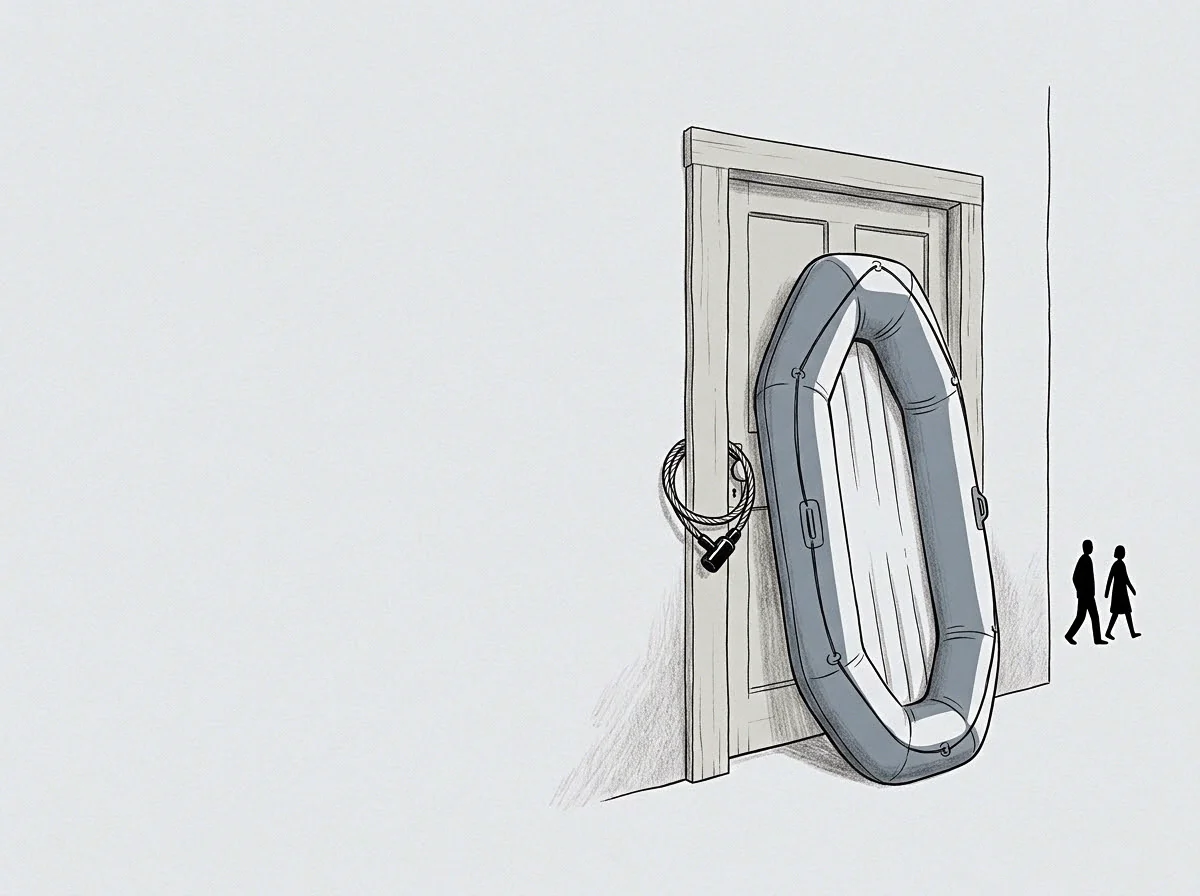
Shear
Mechanical shear occurs when opposing forces pull contiguous layers apart. Inside a small firm, that strain tears operational roles apart whenever client emergencies spike. The technician handles the immediate alarm, the manager tries to organize the delivery queue, and the founder remains accountable for solvency and viability.
No single nervous system can manage all three positions simultaneously under chronic crisis. The switching cost in attention between deep architecture and emergency triage destroys intellectual efficiency.
Research into task switching shows that moving between unrelated complex domains carries a heavy latency penalty. In professional service environments, regaining deep focus after an unscheduled interruption requires up to twenty-three minutes of readjustment. An operator facing five emergency escalations across an eight-hour working day is left with zero uninterrupted cognitive capacity.
The manager cannot establish repeatable workflows because morning plans collapse before noon, and founder work on service design or market evaluation stops entirely. Tactical triage consumes the enterprise.
Queuing theory illustrates this breakdown through Kingman’s formula for waiting times in single-server systems, which shows that queue lengths and delays grow exponentially rather than linearly as capacity nears saturation. An operator running at eighty-five percent base technical utilization who takes on sudden emergency requests pushes system load toward one hundred percent. At that threshold, processing queues explode.
Scheduled deliverables stall, response times for ordinary tickets disintegrate, and operations lapse into chronic system thrashing.
Electrical grids face identical physical constraints. When power lines carry current near thermal thresholds, excess draw overheats the copper, causing the metal to sag and lose transmission efficiency. An overloaded operator functions the same way, absorbing excess client demand until functional brownouts follow.
Settled research on role overload models how competing responsibilities produce acute cognitive depletion. In small enterprise studies, unpartitioned technical interruptions correlate directly with executive paralysis. The finding holds true whenever operational intake lacks programmatic filtering.
Unless an operator can shift between emergency debugging and capital allocation without cognitive penalty, physical limits govern the outcome.
| Functional Seat | Intake Trigger | Unpartitioned State | Partitioned Reserve State | Primary System Cost |
|---|---|---|---|---|
| Technician | Unscheduled system variance or client escalation | Continuous reactive triage with open communication channels | Restricted intake windows with defined incident thresholds | Exhaustion of physical stamina |
| Manager | Milestone schedules and resource capacity queues | Total operational bypass as emergencies preempt queue order | Strict batch processing of client requests and delivery pacing | Compounding delivery delays |
| Founder | Market positioning and capital allocation deadlines | Complete vacancy; zero strategic execution or pricing review | Ring-fenced calendar blocks defended against operational intake | Loss of long-term commercial solvency |
The table shows how these three roles conflict structurally. The technician functions in seconds and minutes, the manager works in days and weeks, and the founder plans across quarters and years. When an emergency strikes, attention collapses into the shortest time horizon, starving future planning and eroding commercial margins.
Queuing models prove that operating near complete capacity guarantees catastrophic delay when unscheduled work arrives.
The physical strain accumulates directly in the operator. Prolonged nervous system activation impairs memory consolidation, diminishes executive functioning, and compromises emotional regulation. The operator becomes irritable with baseline accounts, sloppy in execution, and hesitant during commercial negotiations.
As sleep deteriorates and executive governance is abandoned, the enterprise turns into an operational trap that consumes its owner without building lasting equity.
No enterprise can survive when its primary asset remains permanently deployed as an unpriced shock absorber for external organizations.
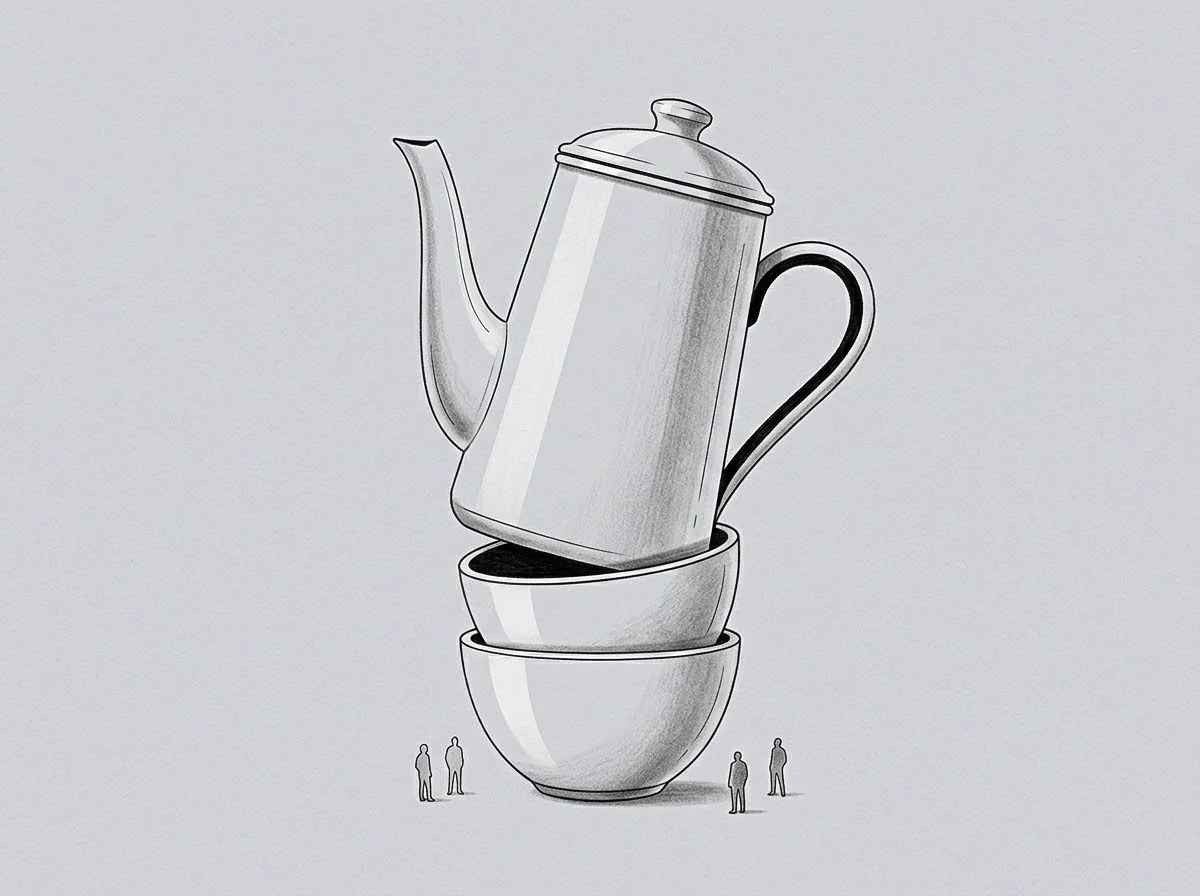
Quota
Protecting capacity requires turning an overburdened seat into an explicitly partitioned one. An unmanaged seat absorbs every request without boundaries or recorded costs, whereas a structured seat operates under documented hours, explicit service scopes, and firm economic thresholds. The operator cannot resolve chronic client emergencies through sheer goodwill or working faster; the solution requires formal architectural partitioning of total human capacity.
The working week must undergo mathematical division into non-fungible reserves. Assuming a sustainable ceiling of forty-five operational hours per week, the operator assigns explicit quotas across functional domains: twenty hours dedicated exclusively to predictable technician delivery, ten hours set aside as an emergency triage reserve, ten hours supporting managerial process maintenance and delivery scheduling, and five hours reserved for founder governance, financial inspection, and business development. Once the ten-hour emergency reserve is consumed in any given weekly cycle, non-critical triage halts until the following Monday.
To enforce these capacity partitions, the enterprise constructs operational gates between the client and the operator:
- Channel isolation eliminates direct messaging access, routing all emergency escalations through an asynchronous intake queue that requires written declaration of business disruption severity.
- Threshold definition specifies the exact technical criteria that constitute an emergency, excluding routine user errors, standard configuration changes, and predictable end-of-month reporting rushes.
- Capacity metering tracks triage consumption against the weekly reserve pool, notifying the client when their emergency draw exhausts their contractual allocation.
- Surge pricing activation imposes aggressive economic disincentives for requests demanding immediate resolution outside scheduled intake windows or beyond allocated hours.
Surge pricing alters client behavior through direct economic feedback. When unscheduled triage costs nothing, the client consumes it without limit. When out-of-bounds emergency triage carries a cardinal price of three times the standard hourly delivery rate, with a four-hour minimum billing trigger, counterparty management suddenly inspects its own requests.
The client product manager discovers that their system issue can easily wait until regular business hours on Thursday.
A boundary without an attached cardinal invoice is merely a personal preference that counterparties will ignore.
The field displays genuine empirical uncertainty regarding the behavioral elasticity of emergency pricing across small enterprise accounts. One perspective argues that steep out-of-band surcharges eliminate frivolous demands while preserving profitable accounts. An opposing perspective holds that aggressive rate ratchets merely provoke client resentment, accelerating contract termination among accounts accustomed to free round-the-clock attention.
In the absence of definitive sector-wide datasets, the careful operator implements step-wise price increases, documenting every instance where out-of-band triage preserved client revenue, using those concrete figures to justify the commercial friction.
The operator introduces these mechanisms through revised commercial contracts. The master services agreement defines the exact hours of operation, the response windows for designated severity levels, the size of the included emergency reserve, and the precise economic terms for out-of-band intervention. This transformation converts an emotional dispute over responsiveness into a straightforward contractual calculation, ensuring commercial boundaries govern the relationship rather than unbilled goodwill.
The revised service level schedule specifies that unscheduled interventions executed outside core business hours bill automatically at the premium crisis rate, payable within seven calendar days of incident closure.
Fence
Installing structural partitions is an analytical exercise; maintaining them against chronic client pressure requires behavioral discipline. The client will inevitably test the new boundaries. A counterparty executive will send a text message on a Saturday morning, bypassing the ticketing intake, citing an emergency, and demanding immediate resolution.
If the operator answers the message, opens the terminal, and executes the repair without enforcing the intake protocol, the partition shatters instantly. The client learns that the documented terms are performative fiction.
Holding the seat demands tolerating counterparty discomfort. When an escalation arrives through an improper channel, the operator executes a standard holding response: redirecting the client to the emergency intake queue, reminding them of the out-of-band billing rate, and declining to touch technical systems until proper escalation occurs. The client may express frustration or reference past arrangements where the operator responded in ten minutes on a Sunday.
The operator remains polite and immovable. The panic belongs to the client; the capacity belongs to the enterprise.
Some client attrition is unavoidable during this transition. Accounts that selected the operator specifically for cheap, continuous, unpartitioned availability will balk at paying emergency rates or waiting for batched support. Those accounts should be permitted to depart.
A client whose economic viability relies on consuming an operator’s health at a discount is an active enterprise liability. Replacing an erratic, demanding customer with an organized client operating on disciplined schedules frees twenty hours of weekly cognitive bandwidth, allowing work to conclude on time.
The founder seat reclaims that liberated bandwidth. The operator spends Monday mornings reviewing cash flow projections rather than clearing panicked support backlogs. Wednesday afternoons belong to refining internal delivery systems, automating redundant technical steps, and documenting operating procedures so work can eventually transfer to subcontractors.
With strategic execution resumed, the business builds equity rather than simply converting human stamina into temporary emergency patches.
Enterprise value accumulates only in the working hours that the technician seat fails to devour.
The operator leaves the office at six in the evening with confidence that the technical systems are stable and the commercial terms are sound. Client emergencies will still occur, but they will land within a designated reserve, pass through strict operational gates, and bill at rates that compensate the enterprise for the friction. The individual is no longer a worn shock absorber; functional roles are held, limits are partitioned, and the firm operates on intentional terms.
Protect the reserve before adjusting the price.