
Owner Operator Operational Transfer Sequence During Early Leadership Transition
Operational authority transfers from owner to successor through a staged sequence of observation, parallel execution, and structural separation of decision rights.
Desk
Three unread production incident tickets wait in the software queue at sunrise. The founder opens the database console, alters an inventory record directly through the backend terminal, and closes the window without writing a note. Down the hall, the newly appointed general manager begins their fourth week in the company by asking the lead technician why the morning batch was delayed.
The technician explains that someone adjusted the raw feed counts during the night, so the machinery ran dry for twenty minutes. The explanation mentions no names because everyone on the floor recognizes the pattern. The person who owns the equity retains the root credentials, monitors the server alerts on a personal phone, and patches failures before the team can observe the fault.
That daily intervention keeps the company upright while simultaneously dismantling the authority of the new executive. An owner-operator holds operational command through dozens of small reflexes acquired over years of early survival. When an organization enters an early leadership transition, the operational seat cannot simply be vacated overnight.
Vacuum creates immediate paralysis across frontline workflows. The transfer of operational control functions as an orderly redistribution of tasks, access, and discretionary judgment. The succession process breaks down when the person stepping aside mistakes the introduction of an executive title for the actual migration of operational control.
The person who built the operating rhythm remains the default escalation point until daily exceptions produce outcomes without their intervention.
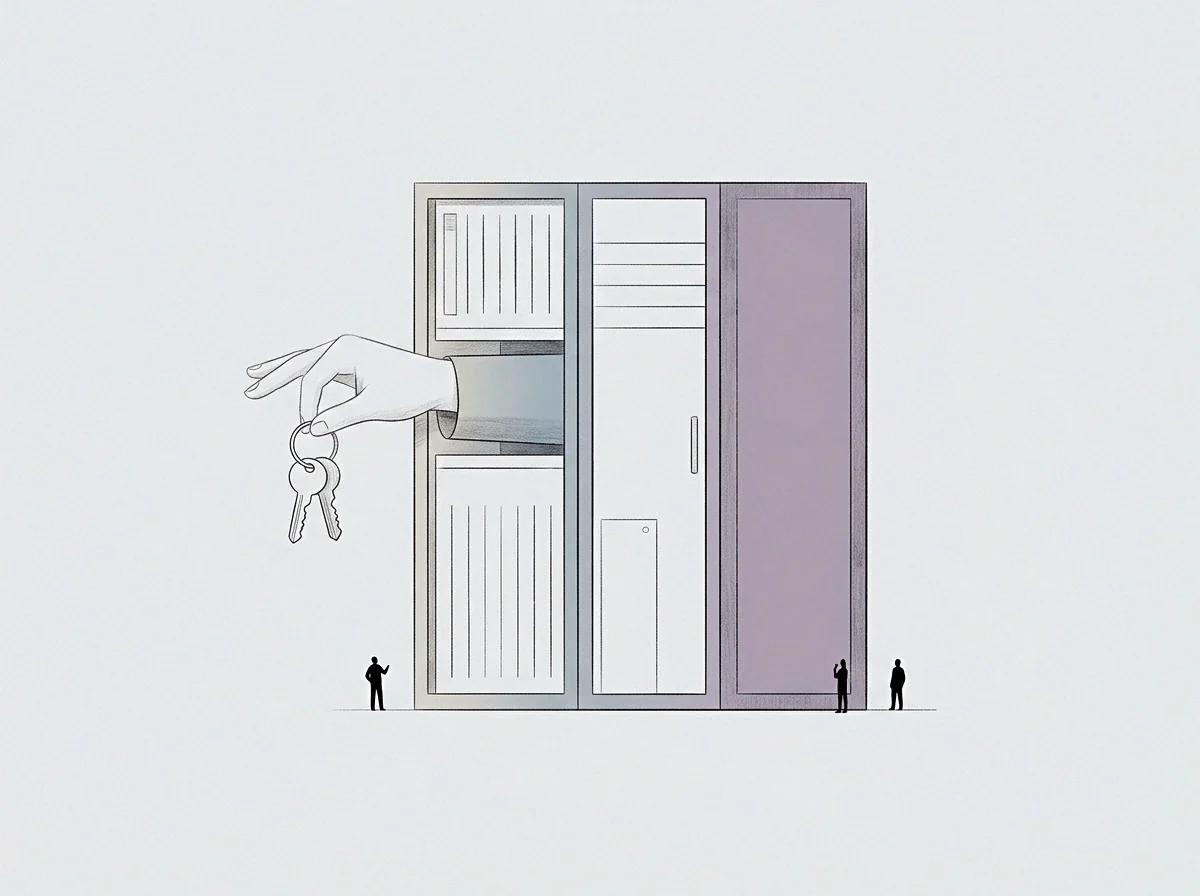
The daily workspace contains the real inventory of operational authority. Physical keys, banking tokens, software licenses, vendor relationships, and production tolerances accumulate on one desk. During early leadership transitions, these assets remain bound to the owner through automated habits.
The incoming leader arrives with general management training yet lacks the specific causal maps connecting daily anomalies to company survival. Transferring the operational seat requires dismantling the owner-operator reflex one workflow at a time.

Separation of Ownership Authority From Daily Execution
Operational control differs from proprietary ownership. A proprietor possesses statutory voting rights, capital allocation prerogatives, and final governance authority over corporate assets. The operator, by contrast, directs workflow sequences, schedules labor, resolves customer claims, and manages vendor disputes within a fixed budget.
In the first phase of an enterprise, one person holds both roles within a single pair of hands. The boundaries between ownership rights and operational duties dissolve completely.
The operational queue stalls immediately. When a new manager takes the operational seat, that conflation causes systemic friction. Every time the owner overrides a scheduling decision, steps into a customer negotiation, or issues a direct instruction to a line worker, the incoming leader loses standing.
The team learns to bypass the designated manager, seeking out the proprietor for binding answers. The transfer sequence demands a structural partition: the owner must yield daily decision rights while retaining capital governance at the board level.
The incoming manager inherits customer logs. The handover fails if the operational successor cannot discipline staff, negotiate prices within policy limits, or reject substandard vendor deliveries without prior owner consent. That partition feels unnatural to an owner who spent five years answering every telephone call.
The emotional toll of watching another person direct the workforce can provoke defensive micro-management. The transition progresses only when daily operating decisions remain with the new leader, even when those decisions deviate from the founder’s historical taste.
The morning dispatch runs on time. The incoming operator can manage the business effectively once the original owner stops correcting small mistakes before staff meetings.

Circuit
Information travels through an owner-operated firm via undocumented routes. The formal organization chart shows straight vertical lines connecting the executive suite to departmental supervisors, but the actual workflow depends on informal habits. Long-term suppliers call the founder’s personal mobile phone when raw materials run short.
Key accounts text the owner on weekends to adjust shipment volumes. Department supervisors wait for the founder’s informal nod in the hallway before implementing any schedule revision.
These informal communication channels form an operational network that operates outside the new manager’s vision. When a leadership transition begins, these pathways continue humming. The incoming executive issues formal directives that produce zero compliance because the staff waits for confirmation through the unwritten channel.
Transferring operations requires identifying every undocumented channel and routing it through formal organizational nodes. The founder must systematically close personal channels and redirect counterparties to the incoming leader.
Information routing determines decision rights whenever an operational exception bypasses the official management hierarchy.
Tacit operational knowledge presents the central obstacle during this rerouting. Explicit knowledge, such as an employee handbook or equipment operating manual, transfers easily through written records. Tacit knowledge, which encompasses customer idiosyncrasies, supplier pricing tolerances, and subtle machinery sounds, cannot be transferred through a document.
In cognitive psychology, researchers examining expertise acquisition demonstrate that practitioners struggle to articulate the sensory cues guiding their real-time choices. The owner knows an order is troubled because a vendor’s delivery confirmation arrived twelve minutes later than usual, yet that diagnostic rule exists nowhere in the company files.
Dismantling Uncodified Information Pathways
The migration of undocumented workflows requires deliberate observation and transcription. For sixty days, the owner must log every inbound request that arrives outside standard corporate ticketing channels. These incoming demands fall into recurring categories of operational friction:
- Supplier credit negotiations handled through informal verbal assurances rather than documented purchase agreements and established accounts payable terms.
- Emergency customer concessions granted during off-hours telephone calls without logging the margin reduction in the corporate accounting system.
- Informal employee scheduling accommodations arranged without adjusting payroll tracking software or alerting department shift managers.
- Production machinery calibrations performed by the founder based on physical vibration and engine pitch rather than instrument readings.
The incoming operator must receive these interactions directly. When a legacy client calls the founder’s personal phone, the founder must introduce the new leader onto the call and remain silent. If the founder answers the client’s question directly, the old channel reinforces itself.
Rerouting requires persistent friction. The client must learn that the founder no longer possesses current schedule details, making the new leader the only functional point of contact.
Support tickets bypass the new lead. When this redirection is neglected, the organization develops operational schizophrenia, dividing into a visible hierarchy that makes announcements and a covert network that executes work, which ultimately exhausts the successor and forces the founder back into full-time operational management.
Cadence
Operational succession collapses when treated as an event rather than an extended choreography. Replacing an owner-operator requires an incremental sequence divided into distinct stages of increasing authority. Moving too rapidly triggers catastrophic errors in customer fulfillment, whereas moving too slowly demoralizes the incoming leader.
The transition period demands a predictable calendar that binds both parties to specific operational milestones.
The transfer progresses through four distinct operational phases: Shadowing, Parallel Execution, Supervised Autonomy, and Full Detachment. In the Shadowing phase, the incoming executive observes every operational task without exercising independent authority. The owner conducts meetings, handles disputes, and schedules shifts while explaining the underlying reasoning out loud.
In cognitive apprenticeship literature, this process is known as cognitive modeling: making implicit cognitive decisions audible to the learner. The successor records patterns, maps relational networks, and studies company workflows without altering any procedures.
The operator inherits the weekly schedule. During Parallel Execution, the operational workload splits according to function. The incoming executive takes direct responsibility for routine operations, such as inventory purchasing, standard fulfillment, and basic customer service.
The founder retains control over non-standard exceptions, capital-intensive equipment maintenance, and sensitive commercial relationships. Both leaders meet daily at dusk to review operational deviations, compare diagnostic conclusions, and align execution standards.
Operational authority moves across discrete performance thresholds rather than arbitrary calendar dates.
In Supervised Autonomy, the incoming executive assumes full command of all daily workflows, including exception handling and supplier disputes. The founder moves to an advisory posture, attending weekly operational reviews without direct management intervention. The founder intervenes only if an operational mistake threatens enterprise solvency or breaches statutory regulations.
This phase tests the incoming leader’s diagnostic capacity under real operational pressure.
| Transition Stage | Decision Authority | Workflow Routing | Error Tolerance Limit | Meeting Rhythm |
|---|---|---|---|---|
| Shadowing (Days 1–30) | Proprietor retains 100% operational sign-off | All workflows route through owner with successor observing | Zero deviation from established founder procedures | Daily morning debrief and evening log review |
| Parallel Run (Days 31–90) | Successor manages routine tasks; owner holds exceptions | Routine tickets route to successor; escalations to owner | Minor fulfillment delays up to 4% margin variance | Twice-weekly formal operations audit |
| Supervised Autonomy (Days 91–180) | Successor directs 100% of daily operational decisions | All workflows route to successor; owner receives summaries | Operational loss limit capped at $15,000 per incident | Weekly executive review and variance assessment |
| Full Detachment (Day 181+) | Successor holds exclusive operating rights within budget | Successor directs staff; owner removed from operational loops | Standard annual budget and corporate performance gates | Monthly board meeting and quarterly capital review |
The bank token changes hands. The duration of each phase depends on the enterprise’s operational velocity. High-frequency consumer distribution businesses can complete the sequence within four months because operational cycles repeat daily.
Specialized industrial manufacturing firms with multi-month project lead times require nine to twelve months to expose the successor to every operational variation. The sequence cannot advance to the next phase until the successor demonstrates consistent performance across the defined criteria.
In high-reliability organizations, such as civil aviation maintenance or naval engineering teams, operational handoffs rely on strictly verifiable check-rides before command changes occur. The senior officer steps down only after the subordinate executes routine and emergency procedures under direct observation. Small enterprises often skip this rigor, replacing formal verification with hopeful optimism.
A durable handover requires concrete verification before moving down the sequence.
The incoming leader takes the seat only when the person stepping down stops attending the morning operational muster.
Floor
Every operational transition produces an initial decline in organizational efficiency. When an experienced founder steps away from the control console, delivery timelines slip, customer response intervals lengthen, and production waste increases. This disruption happens because the new leader lacks the founder’s twenty-thousand hours of muscle memory.
An owner who expects immediate perfection will panic during the second month and reclaim operational control, terminating the succession sequence entirely.
The transition architecture must define an operational floor: an agreed boundary of acceptable performance decline during the transfer period. This boundary establishes explicit thresholds for order defect rates, customer churn, and budget variances. As long as performance metrics remain above this floor, the owner must refrain from direct operational intervention.
Errors within this safety zone serve as tuition for the successor’s operational development.
The second phase alters payroll authority. When mistakes happen, the founder’s role is not to repair the failure directly, but to ask diagnostic questions during the scheduled debrief. The organizational development literature on the zone of proximal development shows that leaders acquire complex problem-solving abilities only when allowed to resolve operational breakdowns independently.
Rescuing the successor prevents them from building the cognitive connections required to manage future crises.
Establishing Fallback Protocols and Error Boundaries
To protect enterprise solvency while allowing necessary learning space, the transition agreement must document concrete operational circuit-breakers. These controls specify the exact conditions under which an owner may intervene in daily operations:
- The operational reserve capital experiences a net drawdown exceeding twenty percent in a single fiscal quarter.
- A primary commercial customer accounts for more than fifteen percent of total gross revenue and issues a written notice of intent to terminate due to delivery failures.
- A regulatory compliance violation or workplace safety incident incurs potential statutory liability for the corporate board.
- Staff turnover within a single department exceeds thirty percent over a rolling sixty-day window, signaling systemic management failure.
The software license remains with ownership. Outside these four catastrophic conditions, the owner-operator leaves the operational floor entirely to the successor. When an order ships late or a sub-optimal vendor agreement is executed, the company absorbs the minor financial friction as an investment in operational durability.
This dynamic rests on organizational research conducted within mid-sized family enterprises undergoing generational transitions. That research indicates that firms establishing explicit error tolerances retain successors at twice the rate of firms where founders intervene at will. What remains unresolved in the research, however, is how long an organization can sustain margin compression before the loss of competitive position permanently impairs enterprise valuation.
Line
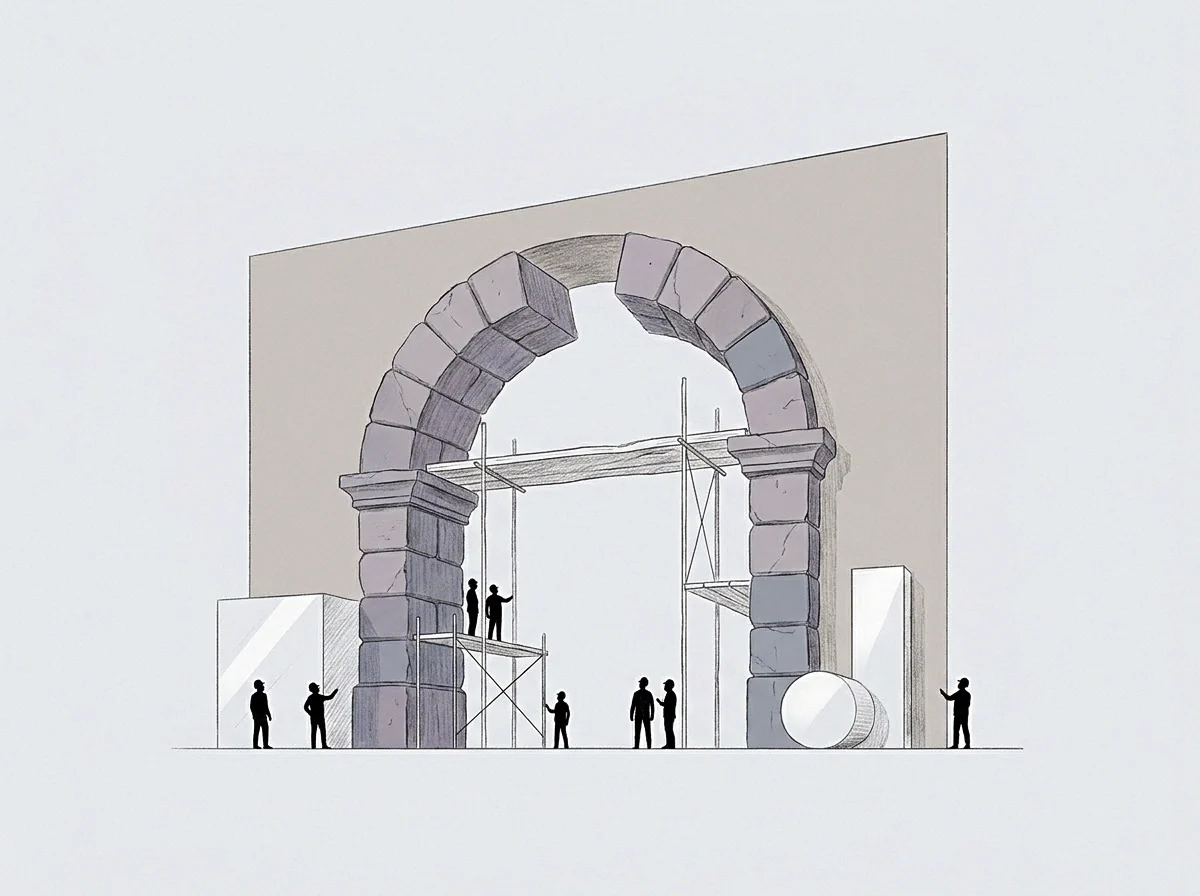
The final boundary of the operational transfer sequence establishes structural separation. A founder cannot effectively advise an enterprise while sitting in the adjacent room. Physical proximity invites staff backsliding.
When team members encounter an unfamiliar obstacle, they naturally walk past the new leader’s office to ask the founder for guidance. The physical presence of the previous operator creates a gravitational field that pulls operational authority backward.
Structural separation requires removing the founder from daily sightlines. The person stepping aside must vacate the executive office, relinquish direct administrative access to messaging channels, and surrender daily operating facilities. If the founder retains a working space within the corporate building, that office should be dedicated strictly to strategic governance, investor relations, or product development, completely isolated from customer fulfillment and staff dispatch.
Vendor accounts retain old credentials. Structural detachment also encompasses digital systems. The founder must transfer root administrator rights for corporate bank portals, enterprise resource planning databases, and payroll platforms to the incoming leader.
Retaining administrative privileges tempts the founder to audit daily operational records late at night, discovering minor anomalies that trigger unwarranted anxiety. Once the transition sequence finishes, the founder reviews operational performance exclusively through monthly governance reports and quarterly board packets.
Physical and digital absence forces the organizational hierarchy to treat the incoming leader as the sole authority.
The legal documentation governing the leadership transition must explicitly reflect this operational line. Employment agreements, board charters, and executive delegations must delineate the exact limits of managerial authority. The incoming operator requires unambiguous authority over hiring, compensation, operational expenditures within the approved budget, and operating vendor selection.
Without statutory operational independence, the incoming executive functions merely as an expensive operations coordinator.

The Post-Transfer Governance Rhythm
After completing the transition sequence, the founder interacts with the enterprise through a formal governance cadence. The weekly informal catch-up calls must stop. Instead, the owner and operator meet once a month for a formal performance review.
The agenda centers on high-level operational indicators, capital expenditure proposals, and strategic objectives. Daily operational issues, such as individual client complaints or temporary production bottlenecks, are excluded from this forum.
Staff members consult the founder privately. This discipline preserves the integrity of the operational boundary. If a department supervisor attempts to discuss operational grievances with the founder outside the formal governance framework, the founder must direct that employee back to the new leader.
Protecting the successor’s operational authority is the owner’s primary governance responsibility during the post-transition period.
The founder’s equity interest becomes safer when operational execution no longer depends on personal labor. An enterprise whose daily revenue generation requires the physical presence of its creator is fundamentally unscaleable and unsellable. By transferring operational control through a rigorous sequence, the founder converts personal operational capability into institutional enterprise value.
The operational handover agreement explicitly defines that the incoming chief executive holds final hiring and termination authority over all operational staff, stripping the board of unilateral veto rights regarding line personnel.