
Fallback Governance Architecture For Autonomous Systems Under High Telemetry Ambiguity
Fallback governance restricts autonomous operational envelope and shifts execution authority to deterministic states when telemetry confidence decays below safety thresholds.

Switch
Operational control within uncrewed platforms depends on continuous telemetry validation. When sensor networks operate under physical interference, signal loss, or adversarial jamming, the information state becomes ambiguous. Automated logic relies on telemetry to construct internal state estimates, matching physical reality with computational models.
Discrepancies between physical states and reported parameters introduce severe friction into decision loops, threatening collision, hardware degradation, or catastrophic drift.

Signal Corruption and Telemetry Degradation
Disruptions in data flow rarely manifest as binary outages. Modern autonomous hardware frequently encounters partial packet corruption, sensor drift, cross-channel interference, or spoofed positional vectors. Under these degraded conditions, high-level control algorithms receive input streams that remain syntactically valid yet semantically false.
Algorithms optimized for fully observable environments struggle to differentiate between authentic physical movements and corrupted state readings.
When telemetry validation drops below functional tolerances, the authority governing execution requires structural re-alignment. Continuing full autonomous operations based on unverified environmental estimates transfers immense systemic risk onto down-stream mechanical components. Autonomous systems need clear thresholds where operational control shifts automatically from complex mission objectives to deterministic safety containment.
Sensors under heavy interference report structural plausible errors long before completely dropping signal.
Designing effective system architecture under state uncertainty demands explicit boundaries around automated agency. Systems that lack formal fallback logic run high-level planning modules against corrupted state data, causing rapid oscillation or uncontrolled directional changes. Establishing immediate mechanical constraints limits catastrophic failure modes when observation networks degrade.
Failure to bound operational authority during state uncertainty shifts physical risk onto unmonitored downstream control loops.

Fence
Physical boundaries limit execution parameters long before automated software attempts recovery maneuvers. A defensive governance architecture enforces mechanical restrictions based on real-time operational metrics. When communication bandwidth drops or state estimates exhibit variance, safety fences automatically restrict speed, turn radius, and power allocation.

Deterministic Thresholds for Dynamic Fallback
System architects establish scalar thresholds to govern operational authority transitions. Rather than relying on singular health indicators, multidimensional error vectors assess telemetry integrity. If spatial confidence drops below defined values while mechanical acceleration remains elevated, the platform triggers localized intervention steps.
This sequence prevents high-speed maneuvers while positional calculations remain uncertain.
These deterministic constraints operate independently of main planning computers. Embedded auxiliary hardware monitors telemetry confidence indices, retaining override capability over high-level software nodes. By decoupling safety enforcement from primary processing units, system integrity persists even if high-level decision engines freeze or calculate invalid paths.

How Is Telemetry Degraded Under Distributed Signal Loss?
Data transmission across field deployments breaks down under predictable structural patterns. Distributed nodes experience localized packet drops, fluctuating transmission delays, and transient signal reflection off surrounding physical barriers. These disruptions corrupt spatial tracking algorithms, forcing autonomous logic to rely on dead-reckoning calculations that accumulate positional drift over time.
- State Space Containment restricts operational limits based on the continuous calculation of positional uncertainty metrics.
- Sensor Variance Budget assigns statistical weightings to input streams, ignoring corrupt data feeds automatically.
- Operational Envelope Reduction scales down velocity parameters as latency across supervisory channels increases past functional targets.
Autonomous state machines drop high-level optimization functions whenever state uncertainty crosses a calibrated probability threshold.
System stability improves when governance logic lowers execution complexity in direct proportion to data degradation. High-level autonomy gives way to low-level stability loops, maintaining vehicle equilibrium while diagnostic sweeps evaluate external telemetry sources.
Clear operational boundaries protect physical hardware even when sensor networks provide conflicting information.
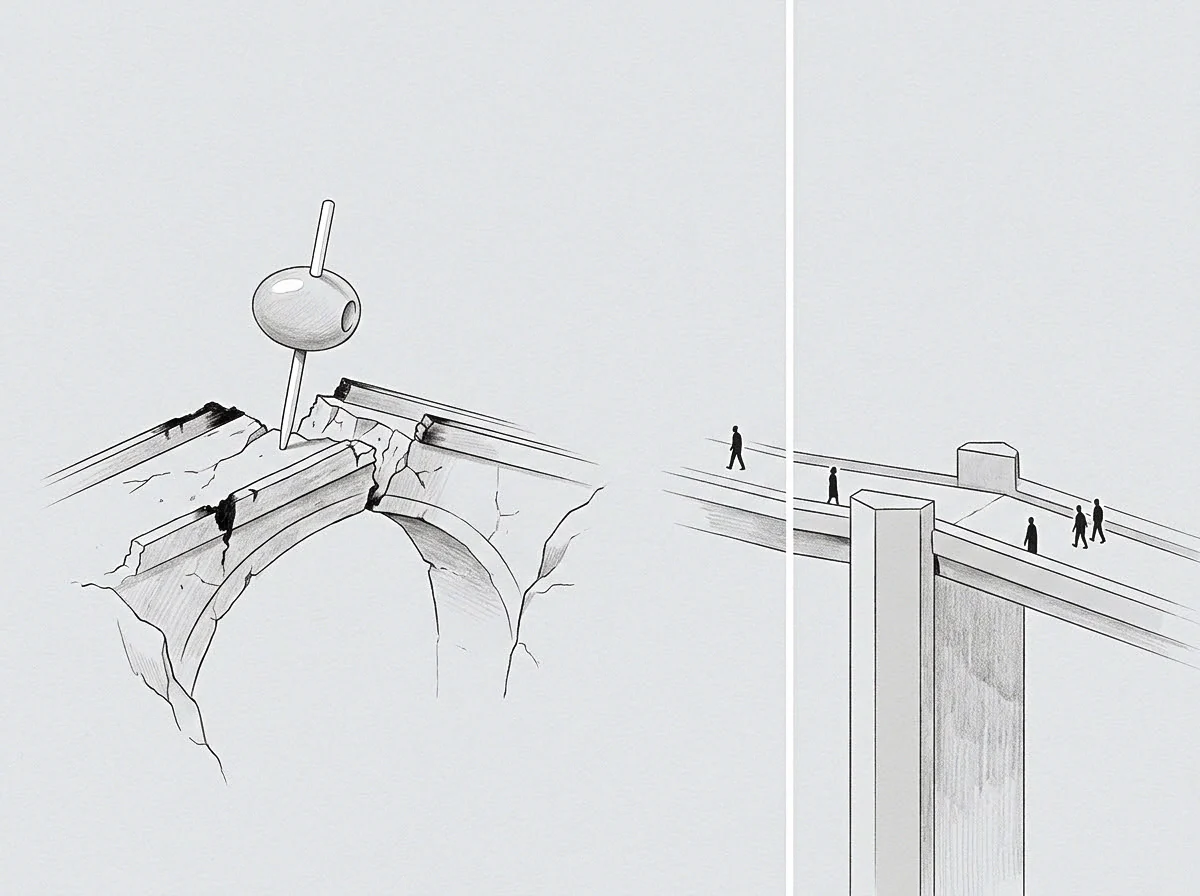
Deck
Control desks manage the distribution of operational authority across system layers. Under nominal operational telemetry, high-level software agents manage trajectory planning, payload deployment, and resource distribution. Under degraded telemetry, responsibility shifts down through secondary computational nodes to deterministic safety processors or human operator stations.

Comparative Authority Allocation in Ambiguous Operational Regimes
Transitioning between execution tiers demands defined boundaries to avoid control collisions. Conflict occurs when main software engines and auxiliary fallback modules emit opposing operational instructions simultaneously. Formal control logic must dictate clear dominance rules based on state certainty scores.
Assessing control transition states across different telemetry profiles demonstrates how functional authority shifts during operational degradation.
| Control Mode | Telemetry Quality | Primary Decision Seat | Execution Parameters | System Speed Limit |
|---|---|---|---|---|
| Autonomous Nominal | High Confidence (>95%) | Primary AI Engine | Full Operational Scope | 100% Rated Velocity |
| Bounded Autonomy | Moderate Variance (70-95%) | Safety Rule Engine | Restricted Pathing | 60% Rated Velocity |
| Supervised Fallback | High Ambiguity (40-70%) | Auxiliary Controller | Station-Keeping / Loiter | 25% Rated Velocity |
| Sovereign Isolation | Severe Loss (<40%) | Hardware Fail-Safe | Deterministic Shutoff | Zero Movement |
The progression illustrated in the comparison table establishes how execution scope narrows alongside sensor confidence drops. Operating at reduced capacity preserves hardware integrity until sensor feeds stabilize or human interventions resolve spatial ambiguities.
A multi-tiered control architecture guarantees that execution authority scales alongside verified observation quality. When telemetry feeds deteriorate rapidly, fallback routines override complex software paths, commanding safe vehicle positioning or localized termination sequences without waiting for remote authorization.
A degraded state vector forces the execution seat to drop velocity parameters to maintain spatial safety margins.
Engineers structuring fallback logic must establish deterministic verification steps. Systems that delay fallback execution while attempting to re-establish broken telemetry streams expose physical hardware to unmanaged environmental hazards.
The implementation of mandatory state-decay clauses forces control loops into predictable execution envelopes when sensor validation fails.

Latch
Mechanical latches hold fallback states active until explicit reset commands validate full system recovery. Once telemetry ambiguity triggers an emergency control step, automated systems cannot immediately resume high-level autonomous routines upon receiving a single valid data packet. Transient signal spikes often mimic valid telemetry, creating dangerous state toggling if software reinstates full autonomy prematurely.

Codification Limits in Emergency Operator Handover
Transferring governance to manual supervisory seats presents unique structural challenges. Human operators receiving emergency handovers during high-stress telemetry failures lack the real-time context held by processing units prior to signal loss. Telemetry corruption hides critical state details, forcing operators to execute decisions under severe information deficits.
Documenting fallback procedures within system manual structures bridges knowledge gaps during control transfers. Handover routines must provide immediate, clear diagnostics, presenting basic vehicle orientation, remaining energy reserves, and current failure metrics within milliseconds of control transfer.
- System controllers monitor error rates across dual redundant buses to detect early signal corruption.
- Primary automated routines restrict actuation authority as telemetry verification scores degrade.
- Supervisory software sends structural alerts to manual operator seats prior to complete signal cutoff.
- Execution loops enter deterministic default states if operational seats remain empty during emergency events.
System codification cannot replace immediate operational feedback. When software logic reaches the edge of its operational envelope, clear state markers inform human supervisors exactly which sensor paths failed and which control channels remain active.
Operational seats function predictably only when state handover protocols remain active regardless of command latency.
Proper governance ensures that system ownership remains clear during degraded operational windows. When software engines hand over authority, manual operators assume operational control within clearly defined physical parameters.
The telemetry stream appeared complete, but the underlying confidence weights had already decayed past recovery thresholds.

Vault
Sovereign default states protect surrounding environments when all computational fallback mechanisms exhaust their options. When sensor noise completely obscures environmental awareness and human supervisory links disconnect, autonomous platforms enter isolated containment modes. This terminal execution tier prioritizes immediate risk mitigation over mission success.
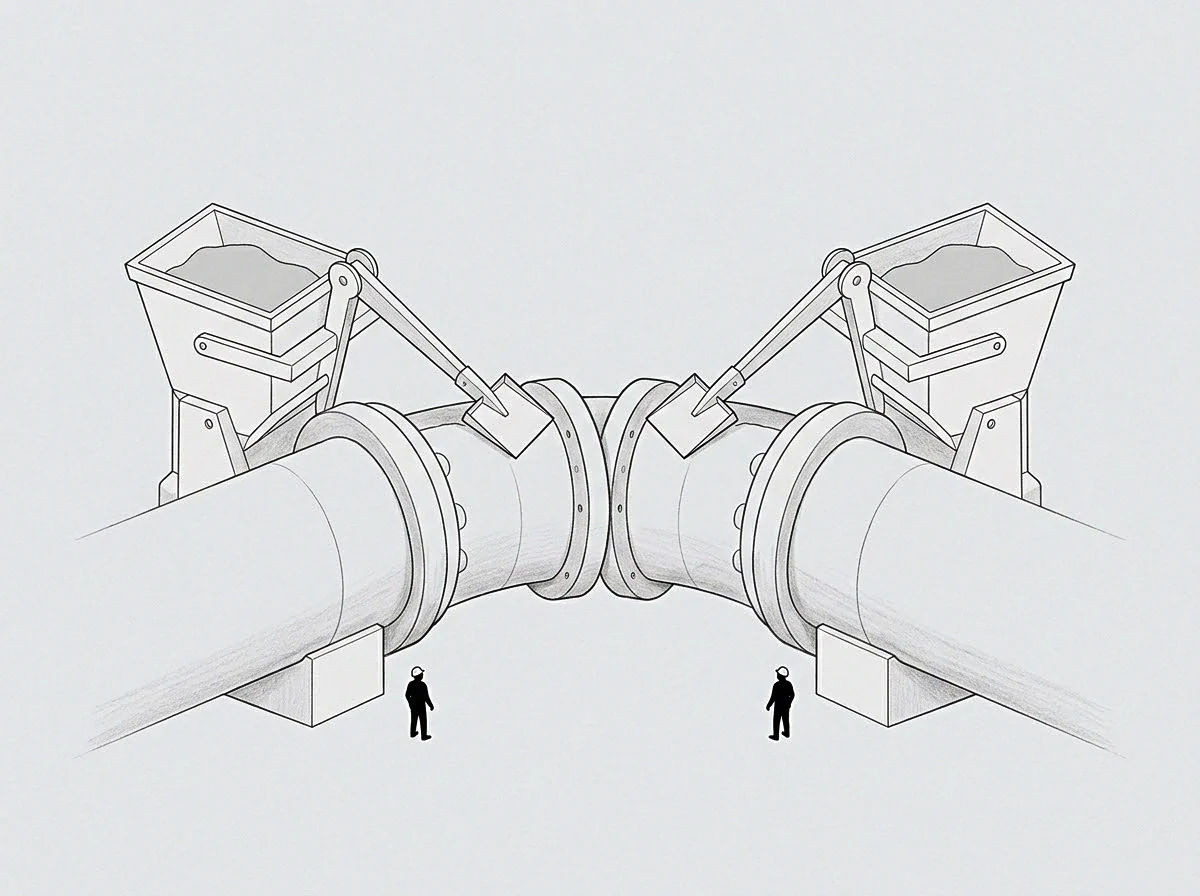
Sovereign Default States and Execution Containment
Executing terminal default protocols requires isolated hardware triggers. Independent timing circuits monitor communication heartbeats and sensor processing rates. If these timing loops register sustained deadlocks, localized cutoffs isolate power buses, drop physical anchors, or engage mechanical braking systems without reliance on central processors.
Isolating critical systems prevents runaway software conditions from driving hardware beyond geographic safety zones. Autonomous hardware governance depends on deterministic physical interventions that function regardless of internal software states or external signal clarity.
Designing fallback systems around physical reality preserves operational integrity across uncertain environments. As platforms increase in autonomy, clear deterministic boundaries separate routine path planning from safety enforcement, protecting high-value equipment and surrounding infrastructure from uncontrolled telemetry loss.
Whether high-frequency autonomous platforms can maintain regulatory compliance during sustained signal dropouts remains open to verification under operational stress.