
Capital Structure Shifts After Voting Power Conversion
Voting power conversion shifts corporate governance control by collapsing super-voting equity into common shares without altering underlying economic rights.

Frame
An owner sits with the capitalization table at midnight, reviewing the certificate register after an institutional financing tranche closes. The ledger records two distinct equity tiers created during early formation: ten thousand Class B shares holding ten votes per share, alongside one hundred thousand Class A shares holding a single vote per share. The concentration of authority rested in those super-voting certificates, allowing operational direction to remain with the founder despite economic dilution.
A single clause tucked into the amended articles of incorporation alters that balance when specific liquidity thresholds arrive. The clause mandates an automatic collapse of the voting ratio upon a qualified public offering or a written consent threshold signed by preferred equity holders.
When that threshold is crossed, the structural concentration of board control alters without a single dollar changing hands. The conversion of voting power separates ownership claims into two distinct legal realities: financial entitlement and corporate governance authority. The seat held by the founder retains its share count, yet the authority attached to those shares contracts by ninety percent relative to the rest of the equity pool.
The capitalization table reflects identical share counts, but the governance weight of those shares equalizes instantly across all holders.

Dual-Class Voting Ratios and Capital Distribution
Corporate balance sheets frequently isolate voting control from capital investment through dual-class equity architecture. Founders maintain multi-vote common equity to retain board appointment rights, veto power over asset sales, and direct oversight of treasury allocations while issuing single-vote equity to external funding sources. This separation creates a structural buffer where strategic decisions bypass standard shareholder approval thresholds.
Economic interest tracks the percentage of outstanding stock owned, while operational command relies entirely on the class-specific voting multiplier embedded in the corporate charter.
Automatic conversion clauses collapse super-voting stock into common equity the moment an initial public offering reaches its stated dollar threshold.
The stability of this arrangement depends entirely on the stability of the class share definitions. Capital structure shifts begin when those definitions expire according to pre-negotiated sunset clauses. Sunset provisions take three primary forms: time-based expirations, transfer-based triggers, and milestone-based conversions.
Time-based sunsets dissolve high-vote stock after a fixed number of years. Transfer-based triggers convert multi-vote stock to standard common stock the instant a holder transfers certificates to an unaffiliated party. Milestone-based triggers execute when total outstanding high-vote equity drops below a specified percentage of total capital outstanding.

The Mechanics of Super-Voting Rights Conversion
Executing a share reclassification requires formal administrative entries in the corporate ledger. The corporate secretary cancels the Class B certificates and issues replacement Class A certificates at a fixed ratio, typically one-to-one. The total count of outstanding shares remains static, preserving economic ownership proportions across all holders.
The aggregate vote pool shrinks dramatically, eliminating the artificial amplification that previously protected executive decisions from investor challenges.
The voting ratio vanishes. Common equity absorbs the vote. The charter dictates the ratio.
The shift alters governance instantly. Preferred investors who held contractual rights to force this exchange gain proportional representation on the board. The founder layer loses absolute veto capability over structural amendments, leaving operational leadership subject to standard corporate voting majorities.
The underlying legal mechanism governing this transition relies on Section 242 of the Delaware General Corporation Law or equivalent state statutes, which govern charter amendments and share reclassifications through mandatory board resolution and shareholder ratification clauses specified during early-stage capital formation.

Premium
Valuation models frequently assign an explicit control value to multi-vote equity classes prior to public listing or restructuring events. Institutional investors accept a lower vote-per-dollar ratio during early growth stages in exchange for liquidation preferences, anti-dilution protections, and board oversight rights. When voting power converts, this implied control value shifts away from the founder pool and distributes across the broader base of common shareholders.
The financial rights to corporate earnings remain unchanged, yet the governance capacity of common equity expands significantly as super-voting concentrations dissolve.
Rights embedded in high-vote certificates function as an informal scaffold holding operational control in place while a enterprise matures. Removing that scaffold exposes the executive team to direct oversight from major capital contributors. Equity research across public markets indicates that dual-class firms trade at a measurable governance penalty when super-voting structures extend beyond ten years post-listing.
Market participants discount the stock price to account for potential principal-agent conflicts when voting control diverges sharply from economic exposure.

Voting Control Valuation Disconnects
The economic value of a share reflects future dividend claims and liquidation proceeds, whereas the governance value reflects the power to direct corporate capital. When a company eliminates super-voting stock, the governance value of ordinary common stock rises because each share now represents a larger percentage of the total active vote pool. Equity holders who previously owned silent financial interests gain direct influence over proxy contests, director elections, and executive compensation approvals.
Preferred stock holds liquidation preference. Economic parity remains untouched. Voting concentration dissolves.
The balance of influence across major shareholders recalibrates immediately upon certificate exchange.

Protective Provisions and Veto Dissolution
Special governance rights often sit alongside voting ratios inside preferred stock purchase agreements. Investors use these terms to block major corporate actions regardless of total share ownership. When preferred stock converts to common stock during an initial public listing or recapitalization, these protective provisions terminate under standard contractual terms.
- Voting rights collapse occurs when super-voting shares lose their weighted advantage, flattening all issued equity into a uniform single-vote class.
- Liquidation precedence retention leaves economic claims untouched while voting power equalizes, ensuring senior capital retains payment priority during corporate winding-up events.
- Board seat forfeiture happens when contractual voting agreements expire upon share reclassification, forcing former directors to stand for open election among all common equity holders.
- Unanimous class consent termination dissolves specialized veto powers over structural debt issuance, leaving treasury management subject to standard majority governance.
Unanimous consent requirements disappear. The board seat remains occupied. The shift changes governance dynamics permanently across every tier of ownership.
Unanimous class approval requirements dissolve into simple majority voting once preferred shares undergo statutory reclassification.
Skipping a comprehensive legal review of protective provisions prior to executing a conversion leaves overlapping governance covenants active, exposing the board to conflicting shareholder actions and potential litigation over director appointment authority.
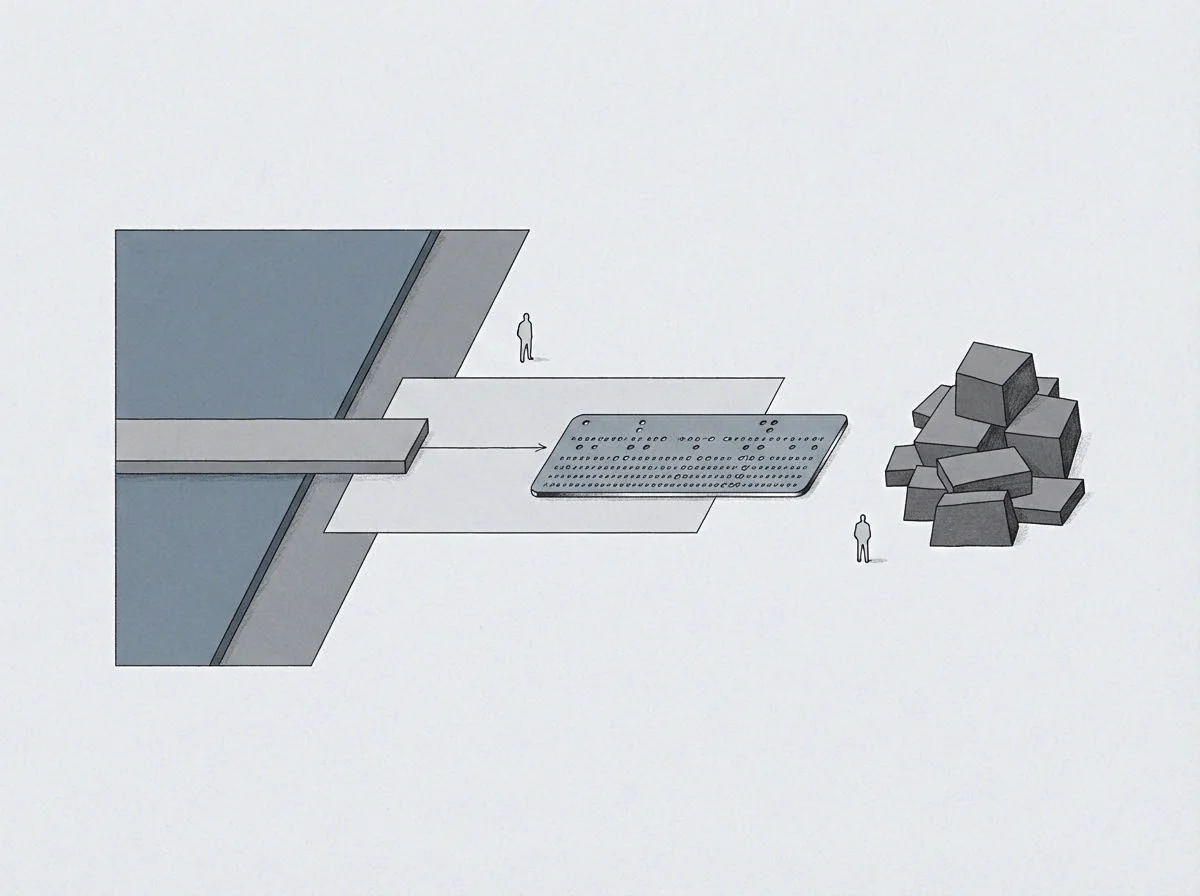
Reclassification
Statutory share conversion procedures require rigorous administrative coordination between corporate legal counsel, transfer agents, and certificate holders. When a conversion trigger occurs, the corporation must submit amended articles of incorporation to the state of registration, specifying the cancellation of old share classes and the precise mechanics of replacement issuance. The physical ledger must match the legal filings to prevent claims of stock over-issuance or unauthorized voting dilution.
Take an enterprise established by two co-founders who hold forty percent of economic equity divided into Class B shares carrying ten votes per share. Institutional venture capital funds hold fifty percent of economic equity across Series A and Series B preferred shares, while key operators hold the remaining ten percent in single-vote Class A common stock. Under this arrangement, the co-founders command over eighty-six percent of the total voting power, granting them total control over board appointments and charter amendments.
Assume the enterprise completes a qualified public transaction that triggers an automatic conversion of all Class B common stock and all Series Preferred shares into a single unified class of Class A common stock. The total voting pool shrinks from over four hundred thousand votes to exactly one hundred thousand votes. The co-founders’ voting authority drops from eighty-six percent to exactly forty percent, matching their economic ownership stake.
They can no longer appoint a majority of the board independently, nor can they unilaterally approve or block merger proposals.

Can Convertible Notes Force Ownership Voting Collapse?
Debt instruments designed to convert into equity upon future financing rounds frequently contain provisions that alter voting power dynamics before formal conversion occurs. Convertible notes and Simple Agreements for Future Equity (SAFEs) operate as financial liabilities on the balance sheet until a qualified financing round triggers their conversion into shadow preferred or common stock. If these debt instruments carry conditional voting agreements or investor-rights obligations, they introduce temporary governance terms that expire the moment the debt converts into standard equity shares.
Class B stock converts automatically. Voting power determines board control. The founder loses veto rights.
Structural governance adjustments proceed according to charter guidelines established during initial funding stages.
Voting power concentration drops faster than economic ownership when equity classes reclassify under charter mandates.

Structural Execution of Voting Power Conversion
Executing an orderly class conversion requires sequential compliance with legal protocols, operational notifications, and statutory filing schedules to ensure continuous corporate validity.
- The capital committee reviews charter provisions governing class thresholds and verifies that all conditions for mandatory conversion have been satisfied.
- The board of directors passes a formal resolution declaring the execution of the conversion ratio and directing officers to amend internal share registers.
- Shareholders submit certificate documentation to the transfer agent for mandatory exchange into single-class common certificates.
- Corporate counsel files amended articles of incorporation with the secretary of state to officially eliminate the discontinued share classes from corporate records.
- The transfer agent issues final capital statements confirming updated voting tallies and economic ownership distributions across all equity holders.
The administrative team processes these changes while corporate operations continue uninterrupted, updating investor relations logs to reflect the flat voting structure.
We expected our ten-to-one voting ratio to remain intact until the secondary market listing, but the charter language forced an immediate single-class conversion upon the closing of the institutional growth round.

Parity
Reaching voting equity parity across all share classes alters how capital allocations, executive compensation, and acquisition offers are evaluated by the board of directors. When founders lose super-voting protections, corporate decision-making aligns directly with majority economic interests. Shareholders holding significant capital positions gain the power to challenge management proposals through standard proxy mechanisms.
This shift ensures that capital distribution choices reflect the consensus of economic owners rather than the preferences of a insulated management tier.
The mechanics of corporate governance post-conversion mirror standard public market standards, where every share commands equal weight in director elections. The table below outlines how specific rights shift across share classes before and after a structural voting power conversion event.
| Equity Class | Pre-Conversion Voting Multiplier | Post-Conversion Voting Rights | Liquidation Seniority | Board Control Mechanics |
|---|---|---|---|---|
| Class B Founder Common | 10 Votes per Share | 1 Vote per Share | Junior Common Rank | Direct Appointment Rights Expire |
| Class A Operator Common | 1 Vote per Share | 1 Vote per Share | Junior Common Rank | Standard Majority Election |
| Series Preferred Stock | 1 Vote per Share (As-Converted) | 1 Vote per Share (Common) | Converts to Common Rank | Protective Class Vetoes Terminate |
Capital structures shift predictably. Equity classes consolidate upon conversion. Voting authority shifts overnight.
Board oversight becomes proportional to total financial investment across the entire capitalization table.
When share classes achieve complete voting parity, operational leaders must govern through broad shareholder consensus rather than unilateral voting power.

Realignment
Following a voting power conversion, the internal alignment of the executive team and the board of directors undergoes immediate recalibration. Operational decisions that were previously protected by super-voting blocks now face scrutiny from institutional shareholders holding major economic positions. Management must demonstrate that treasury allocations, capital expenditures, and strategic expansions deliver long-term economic value across the entire share base, as the safety net of absolute charter voting control no longer exists.
This structural change marks a critical stage in the lifecycle of an owner-managed firm. Just as load-bearing structural elements in civil engineering distribute physical stress across secondary supports when primary girders are repositioned, a capital reclassification spreads corporate governance obligations across the broader investor base.

Post-Conversion Capital Allocation Dynamics
Capital allocation decisions post-conversion reflect the priorities of majority economic holders. Executive compensation packages, dividend declarations, and stock repurchase programs require clear justification under standard fiduciary metrics. Strategic acquisitions that risk significant share dilution face direct shareholder opposition if major equity holders view the transaction as economically unfavorable.
The exit from executive control begins when voting parity deprives the founder of absolute charter protection.
Senior liquidation preference survives reclassification. Rights convert at execution. The board evaluates strategic direction through unified corporate majorities.

Scaffold Removal in Founder Succession
Converting voting power functions as a deliberate removal of the administrative scaffold that sustained early executive authority. Succession plans that relied on vote amplification to maintain leadership must adapt to standard board elections. The founder transitions from governing by structural charter right to leading through operational performance and strategic alignment with key institutional equity owners.
The long-term stability of the converted capital structure depends on whether the board can maintain strategic focus when activist shareholders leverage their newly equalized voting power to challenge operational direction.