
Structuring Transitional Service Agreements to Prevent Post Acquisition Founder Scope Creep
Transitional service agreements prevent founder scope creep by establishing strict hourly caps, escalating fee tiers, and single-point communication channels.

Gate
A founder three weeks after closing an acquisition receives an unscripted operational message at midnight because internal system access remains tied to a personal credentials register. The acquisition agreement transfers company equity, yet operational dependencies stay bound to the person who built the infrastructure. Buyers treat the seller as an ongoing operational buffer, relying on informal inquiries to resolve legacy code ambiguities, vendor history gaps, and undocumented database architecture.
Without precise contractual boundaries, the transitional period degrades into an indefinite, uncompensated consulting engagement.
Transitional Service Agreements convert a former owner from an equity holder into a temporary service vendor. Role strain emerges when the buyer expects equity-owner dedication from a contractor working under fixed terms. Tacit knowledge generates friction.
The work previously performed through informal daily routines becomes invisible until the owner steps away from the operator seat. If those tasks remain unmapped during due diligence, the buyer defaults to treating the founder as an on-call technician for every operational hiccup.
An unmapped operational dependency automatically transforms into an unpriced contractual liability the moment equity transfers.
Structuring the post-sale relationship starts with inventorying every seat the founder holds prior to closing. A founder rarely occupies a single role. The individual sits simultaneously as chief architect, primary vendor liaison, senior developer, and escalated customer support agent.
When the sale closes, the buyer assumes all executive authority while attempting to retain the technician functions through generic agreement clauses. A broad clause referencing general support services invites continuous scope expansion, exposing the former owner to open-ended operational demands while pursuing new ventures.
Disputes arise over what constitutes integration assistance versus baseline operational maintenance. Buyers consider historical knowledge extraction a standard post-closing right. Sellers view repetitive operational tasks as an improper drag on their post-acquisition capacity.
Explicit categorization resolves this friction before closing. Defining specific service categories, exact deliverables, and hard boundaries prevents informal operational escalation from becoming a permanent working condition.
Leaving service definitions vague causes immediate post-closing friction, pulling the seller back into daily fire-drills while eroding the financial return achieved at exit.

Hours
Metering time spent on post-closing integration creates immediate transparency around the true operational cost of knowledge transfer. Unpriced hours invite endless demands. When a transitional agreement provides an un-capped monthly flat fee, the buyer faces zero economic friction when assigning routine tasks to the former owner.
The seller’s time must be quantified, tracked, and capped with the same rigor applied to external advisory engagements.
A functional agreement specifies weekly time allocations across distinct operational functions. Allocating five hours per week for technical architecture queries and two hours for vendor introductions establishes clear operational expectations. Once those hours deplete within a billing cycle, service pauses until the next period unless the buyer exercises a pre-negotiated overtime rate.
High punitive rates for excess hours disincentivize buyer teams from using the seller for low-value administrative work.
A contract term establishing a three-fold fee multiplier for hours beyond weekly caps shifts routine problem-solving back to the buyer’s internal staff.
Quantifying knowledge transfer tasks requires breaking complex institutional workflows into explicit, measurable service outputs:
- System access handovers complete upon transfer of root administrative credentials and documented repository permissions.
- Vendor relationship transitions conclude after joint introductions and formal assignment of master service contracts.
- Legacy code walk-throughs occur in structured, recorded sessions limited to pre-scheduled weekly time blocks.
- Escalated incident support triggers strictly when primary engineering teams encounter catastrophic system failures documented in severity logs.
Personal accounts leak structural risk. Establishing dedicated communication channels ensures that transitional inquiries do not blend into personal channels. The seller operates exclusively through a temporary, monitored company email account and a single ticketing queue.
Informal text messages, personal messaging apps, and unscheduled phone calls remain outside the contractual scope. Ambiguous clauses create operational drag.
Buyer staff frequently default to contacting the former owner directly out of habit built during the acquisition process. Enforcing formal communication protocols breaks this habit early. When an unscripted inquiry arrives via informal channels, the seller routes the request back to the designated ticket queue without answering the substantive question.
Clear caps prevent capacity drain. This discipline forces the buyer’s organization to consolidate inquiries, evaluate internal resources, and consume transitional hours only when genuinely necessary.
A transitional service arrangement lacking clear hourly caps and steep overtime rates converts a clean equity sale into an indefinite, low-margin job.

Wire
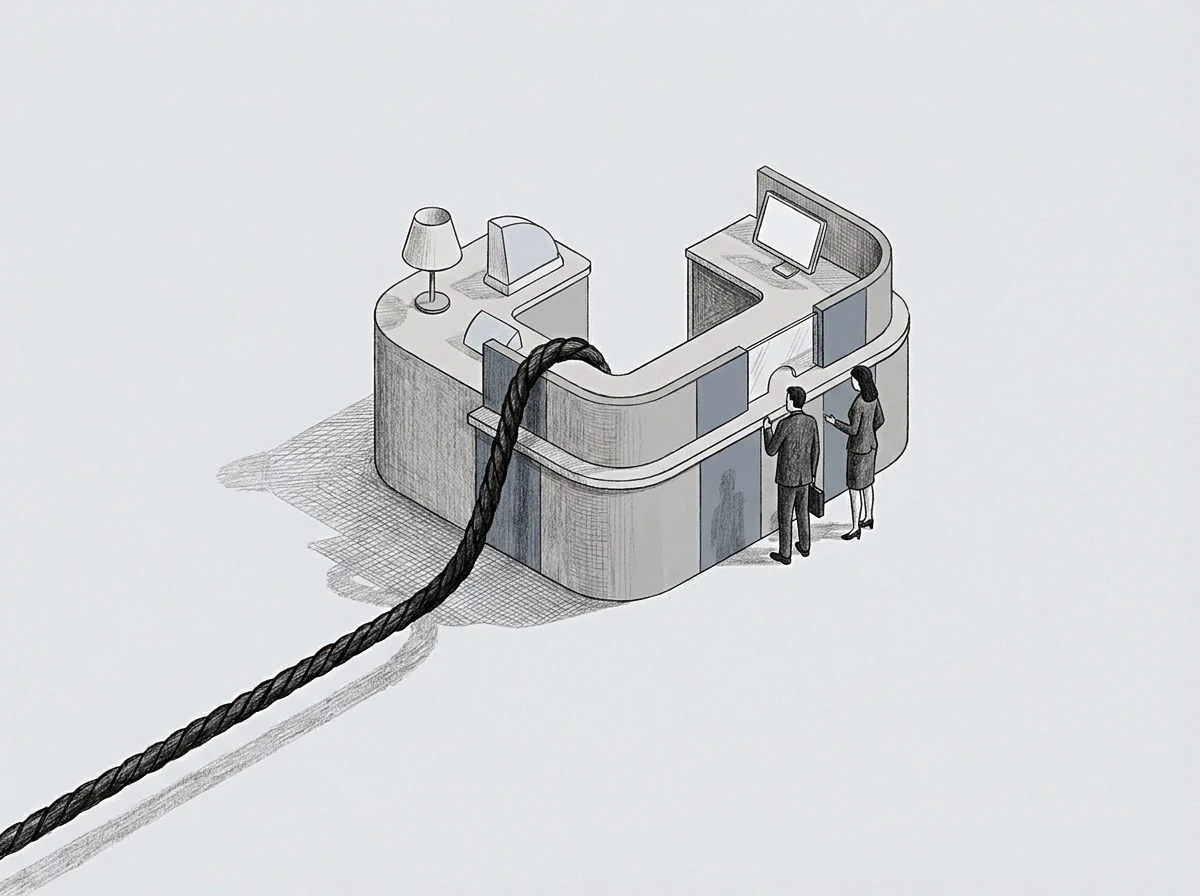
Communication infrastructure dictates the velocity of scope expansion during transition periods. Direct line access to a former founder encourages buyer staff to bypass internal problem-solving entirely. When an integration team encounters an unfamiliar database schema, contacting the architect who designed it yields a faster resolution than reading documentation.
This convenience for the buyer imposes a continuous cognitive tax on the seller, fracturing their attention across multiple un-scoped interruptions each day.
Why Do Buyer Teams Circumvent Formal Escalation Protocols?
Internal buyer teams bypass formal escalation paths because historical channels offer zero friction and zero cost accountability. During the acquisition process, founders maintain high accessibility to push the transaction across the finish line. Post-closing, buyer staff assume that same availability continues uninterrupted.
Without a physical or technical barrier interrupting direct access, employees message the seller directly for routine guidance, treating the founder as a live search engine for legacy company data.
Service boundaries hold only when request routing requires formal submission through buyer executive channels.
Controlling the communication interface requires setting explicit SLA response windows. Instant messaging platforms create an illusion of real-time availability that degrades contractual limits. Establishing a mandatory 48-hour response window for non-critical tickets prevents the buyer from treating the former owner as active operational staff.
Fixed windows stop emergency calls. Critical emergency support must be narrowly defined by system downtime thresholds rather than buyer convenience.
Organizational role strain intensifies when the former owner attempts to manage buyer employees directly. The transitional agreement must explicitly state that the seller holds zero managerial authority over post-acquisition staff. The seller provides advice, documentation, and technical guidance to designated managers, but does not execute daily operational directives, assign tasks, or manage junior engineers.
Silent consent yields structural drift.
The buyer’s integration lead requires that all technical queries pass through a single internal coordinator before reaching the former owner.

Sheet
Comparing compensation structures highlights the alignment between financial incentives and scope containment. Fee structures dictate buyer behavior during the post-acquisition transition. A fixed monthly retainer with unlimited hours encourages maximum buyer consumption and zero internal knowledge capture.
Conversely, a structured model combining a declining hour baseline with escalating hourly rates forces the buyer to build internal capacity before the agreement expires.
| Service Model | Fee Mechanics | Buyer Behavioral Incentive | Scope Creep Risk |
|---|---|---|---|
| Uncapped Retainer | Flat monthly rate for unrestricted support hours | Externalizes routine maintenance onto seller | Severe risk of continuous operational expansion |
| Fixed Deliverable Tranche | Milestone payments tied to explicit documentation sets | Prioritizes rapid knowledge capture and transfer | Low risk limited to deliverable ambiguity |
| Tiered Hourly Multiplier | Base rate up to weekly cap, escalating 3x rate beyond | Conserves seller hours for critical escalations | Minimal risk contained by economic penalties |
| Declining Capacity Schedule | Weekly hour cap drops 25 percent month-over-month | Forces internal team onboarding and self-reliance | Moderate early risk tapering to zero at termination |
Milestone-based compensation structures tie payments directly to knowledge transfer completion rather than time elapsed. Under a milestone model, the seller receives compensation upon delivering comprehensive architecture maps, completing staff training cycles, or successfully transferring third-party vendor contracts. This arrangement aligns both parties around the rapid termination of the service dependency.
Retainers without caps destroy boundaries. The seller aims to complete the transfer efficiently, while the buyer focuses on absorbing operational capability quickly.
Fee increases curb casual queries. Incorporating an automatic step-up clause into the agreement raises the hourly rate significantly during later months of the transition period. Month one maintains standard advisory rates to facilitate initial integration.
Month three doubles the rate, and month six quadruples it. This planned cost escalation creates a strong financial incentive for the buyer to offboard the seller as quickly as possible, preventing the transitional period from becoming a permanent convenience.
Escalating monthly fee structures turn buyer convenience into a budget line item that integration leads aggressively work to eliminate.
Structuring the service agreement around milestone handovers with escalating overtime rates protects the seller’s post-exit schedule.

Exit
Termination provisions define the hard operational boundaries of a transitional service agreement. An effective contract contains explicit auto-termination dates that operate independently of ongoing integration status. If the buyer fails to onboard internal staff or digest provided documentation within the agreed timeframe, the service agreement expires naturally without contract extensions.
The responsibility for operational readiness rests entirely with the buyer once the terminal date arrives.
Handover documentation isolates core tasks. Sunset clauses should explicitly prohibit automatic renewal mechanisms and require mutual written consent at executive levels to extend support terms. When extension options remain accessible to junior integration managers, support contracts drift far past their original intent.
Restricting extension approval to C-suite executives ensures that any scope continuation faces strategic scrutiny and financial justification.
Physical offboarding steps must mirror the contractual termination date. On the final day of the agreement, all company-issued communication channels, VPN access keys, and internal software permissions terminate automatically. Personal accounts leak structural risk if legacy credentials remain active in buyer systems post-termination.
Cutting technical access promptly converts contractual boundaries into hard operational facts, preventing informal inquiries from slipping through legacy communication channels after the agreement closes.