
Structuring Engineering Leadership Seats In Early Founder-Led Companies
Early engineering leadership divides into technician, manager, and executive seats; scaling requires writing explicit terms to separate delivery from architecture.

Bench
An operator sits before terminal logs at three in the morning while payroll spreadsheets remain open on a secondary display. A pull request waits for review, two senior hires wait for compensation revisions, and the infrastructure bill exceeds projections by forty percent. Three distinct obligations inhabit the same calendar.
The company contains nine engineers, yet architectural decisions still flow through one laptop. Context switching consumes residual attention. Each transition between production debugging, salary negotiations, and product strategy extracts cognitive reserves that cannot be recovered within the working day.
Engineering leadership inside an enterprise during early commercial traction consists of three separate positions occupied by one body. The first position is the technician, writing production code, fixing pipeline failures, and maintaining unbroken mental models of the data layer. The second position is the manager, handling delivery schedules, compensation bands, hiring pipelines, and performance corrections.
The third position is the executive, mapping technical expenditure to capital runways and board commitments. When unstated, these positions remain worn seats, inhabited through emergent necessity without explicit scope. Stated configurations convert these burdens into held seats, bound by specified hours and measurable jurisdictions.
A single contributor can inhabit multiple functional stations only when the hours allocated to each post are written down.
Research across technical organizations indicates that organizational output stalls when engineering rosters pass eight contributors if the central technical executive refuses to vacate pull request queues. This empirical threshold derives from coordination theory and communications queueing models measured in early-stage software companies. The observation rests upon linear communications path analysis within teams scaling from five to fifteen developers.
A shift in these findings would occur if asynchronous development environments could reduce team coordination overhead to zero. System architecture remains unwritten. Under current operational realities, technical debt accumulates behind the desk of the technical executive who insists on writing critical infrastructure components while managing six direct reports.

The Tripartite Allocation
Dividing these functions demands explicit temporal boundaries. An individual running software delivery alongside strategic technology development splits an eighty-hour week across incompatible modes of thought. The technician requires continuous four-hour blocks of uninterrupted concentration to hold system states in memory.
The managerial post operates on thirty-minute intervals dictated by interpersonal evaluations, unblocking junior contributors, and cross-functional planning. The executive post requires open temporal space to evaluate vendor dependencies and runway exposure.
When the manager occupies the same desk as the core software builder, managerial duties get postponed until production incidents subside. Performance reviews slide by six weeks. Technical onboarding remains oral folklore.
Hiring queues stall because candidate evaluations demand three uninterrupted hours that the builder cannot surrender. The calendar absorbs the disruption.
Technical organizations stabilize when executive leadership delegates code authoring authority before delegating organizational reporting lines.

Drain
Switching between code authoring and personnel administration degrades mental acuity through measurable cognitive drag. Role conflict research demonstrates that holding divergent operational expectations within a single post generates psychological fatigue and decreases task accuracy. This finding, documented in field studies of dual-role professionals across engineering and clinical facilities, depends on the observation of competing behavioral demands within single work shifts.
Should future organizational designs demonstrate that asynchronous task management fully insulates workers from emotional switching friction, this finding would lose validity. Operating capacity contracts under pressure. The builder who attempts to design database schemas while calming an anxious product manager satisfies neither operational standard.
Late night commits consistently reveal the cognitive exhaustion produced by daytime managerial interruptions.
Tacit systems repel external contributors. When architectural knowledge stays lodged inside the skull of the original builder, documentation exists only as historical fragments in private communication channels. The engineering group becomes dependent on personal intervention for routine deployments.
The failure modes of this operational entanglement follow recognizable patterns:
- Tacit knowledge monopoly concentrates operational decisions within one contributor, leaving team members unable to ship production code without senior intervention.
- Delivery schedule paralysis emerges when critical path infrastructure components depend on an executive whose daily schedule is fractured by client escalations.
- Evaluation avoidance develops because the builder views managerial corrections as relational confrontations rather than contractual duties.
- Architectural drift expands across the codebase as junior hires construct divergent patterns in the absence of written engineering guidelines.

Compounding Interruption Latency
Consider an enterprise where the technical leader retains final pull request approval while interviewing twenty candidates a month. The company employs twelve developers across two distributed groups. Code reviews wait seventy-two hours in queue because the technical leader spends mornings in commercial strategy meetings and afternoons handling compensation reviews.
Developers initiate secondary branches to remain occupied, multiplying work in progress and generating merge conflicts. Execution velocity drops immediately.
The builder returns to the codebase at midnight to clear the backlog, approving complex changes with superficial scrutiny or rewriting pull requests entirely. This intervention invalidates employee ownership. Team members cease autonomous problem solving, electing to wait for the technical leader to supply precise implementations.
Organizational silence hides structural attrition. The leader experiences this hesitance as personal inadequacy among the staff, while the staff experiences the leader as an operational barrier.
Leaving operational responsibilities unassigned produces an organization where junior contributors exchange autonomy for passivity while the leader burns personal health to sustain delivery cadence.

Branch
Separating the engineering function requires bifurcating technical authority into two distinct seats. The first seat is the Head of Engineering, an operational post focused on execution, delivery cadence, hiring logistics, engineering career ladders, and process stability. The second seat is the Chief Technology Officer, a strategic post governing technical architecture, long-term vendor selection, research exploration, external technical representation, and system reliability standards.
Dividing these posts unburdens the technical founder from daily personnel management while maintaining their architectural oversight.
Splitting operational delivery from technical vision prevents short-term release deadlines from extinguishing long-term architectural integrity.
Manufacturing assembly lines in physical industries separated tool maintenance from line management over a century ago to avoid conflicting priorities between output speed and machine durability. Software systems demand an identical division. When a single leader controls both system health and project deadlines, system health is routinely sacrificed to meet commercial delivery targets.
Technical debt compounds weekly. The resulting architectural compromises eventually destroy feature delivery speed.

Should Architecture Decisions Remain With The Original Builder?
Original creators often assume that founding equity grants permanent operational control over technical direction. This assumption creates organizational paralysis when systems expand past the creator’s technical competencies. Retaining architectural veto power requires continuous engagement with modern operational paradigms.
When the original creator transitions into an executive post focused on market expansion, detailed system design belongs to dedicated staff.
The technical co-founder frequently resists delegating the architectural veto, fearing that delegating implementation details will erode product quality. This hesitation reflects an unstated anxiety concerning personal utility within the expanding enterprise. The individual feels diminished when their contributions shift from commit logs to written structural policies.
Unwritten specifications invite conflicting interpretations. Relinquishing daily code commits is a structural adaptation necessary to preserve executive focus.
The group cannot execute effectively when decisions must receive informal endorsement from a founder who no longer reads every commit.

Roster
Distributing technical posts requires explicit documentation of authorities, accountabilities, and time allocations. Organizations flounder when titles are distributed as status compensations rather than functional contracts. The table below delineates the structural divisions between engineering leadership posts within an expanding venture containing fifteen to fifty technical employees.
| Seat Designation | Primary Jurisdiction | Allocation of Working Hours | Escalation Boundary | Direct Output |
|---|---|---|---|---|
| Chief Technology Officer | Architecture runway, capital efficiency, technical compliance | Sixty percent technical research, forty percent investor alignment | Board level strategic misalignment | Architectural RFCs, technology roadmaps, vendor contracts |
| Head of Engineering | Delivery velocity, personnel management, hiring pipelines | Seventy percent people operations, thirty percent delivery systems | Sprint deadline failures and team attrition | Performance reviews, sprint plans, compensation bands |
| Principal Systems Architect | Core infrastructure, database schemas, code quality | Eighty percent implementation, twenty percent junior mentorship | Production outages and scalability bottlenecks | Core frameworks, refactoring plans, code reviews |
Examining this roster demonstrates why assigning all three designations to a single founder invites operational failure. The required cognitive investments directly conflict. Code review bottlenecks delay deployment cycles.
A contributor cannot design quarterly compensation structures while debugging distributed memory leaks without sacrificing thoroughness in both tasks.
Contractual Scope And Authority Floors
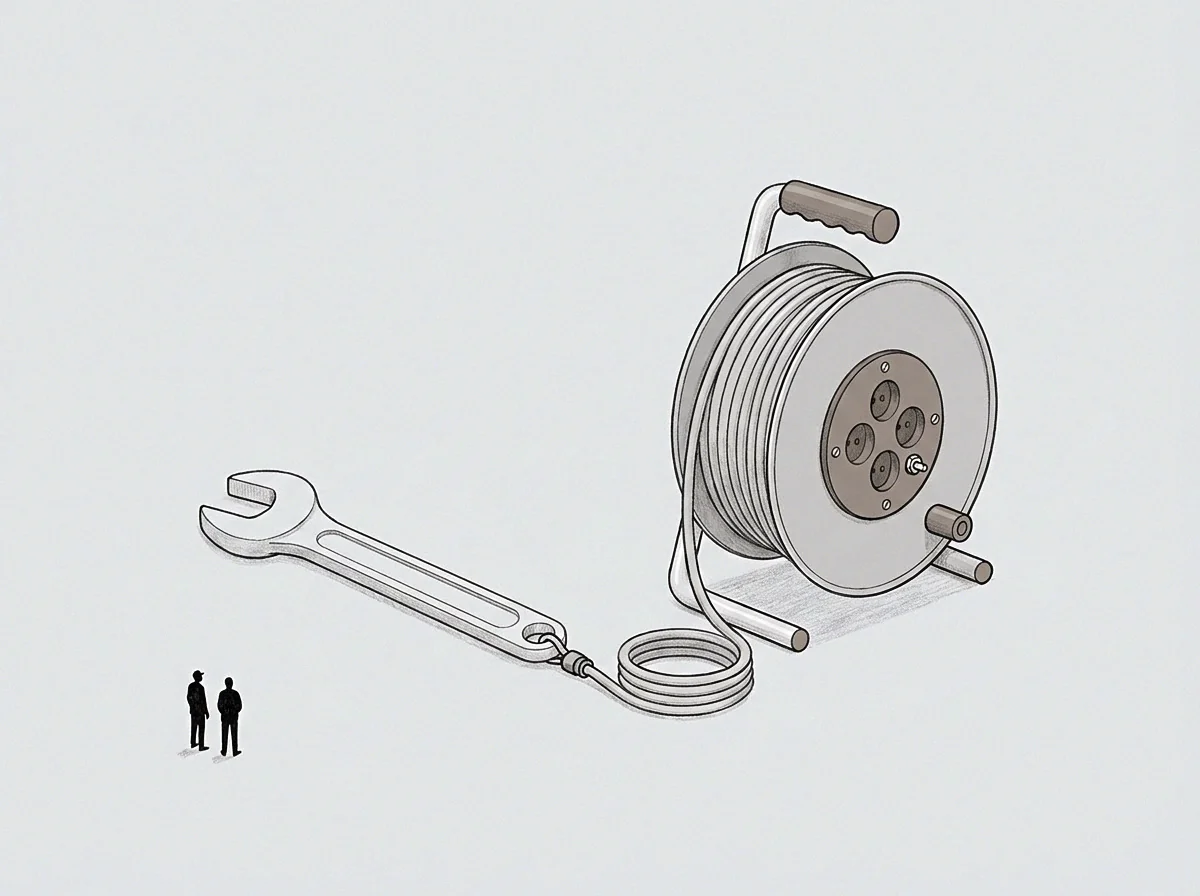
Drafting an executive mandate demands specifying the authority floor for each position. When bringing an external operational leader into the engineering branch, the founding team must define explicit operational perimeters. These specifications eliminate ambiguity regarding functional boundaries:
- Hiring and termination authority assigns total jurisdiction over engineering department personnel evaluations to the operational leader without founder pre-approval.
- Technology selection veto establishes that changes to production infrastructure frameworks require joint consent between the technical architect and operational director.
- Sprint delivery autonomy prevents executive leadership from injecting spontaneous features into active development cycles without removing equivalent story points.
The field lacks definitive empirical evidence regarding the exact employee threshold at which separating the strategic technology post from the operational delivery post becomes mandatory. While practitioner consensus clusters around twenty engineers, variations in software complexity and founder competence produce substantial variance. Careful leaders observe team communication friction and delivery predictability rather than relying on arbitrary headcount triggers.
A written agreement specifying that the incoming engineering director holds unilateral termination authority over non-performing engineers within ninety days transforms a cosmetic hire into an operational executive.
Deed
Putting down a worn post requires an explicit structural handover sequence. The founder who wishes to vacate the managerial desk cannot simply announce a transition and walk away. Unstated boundaries produce persistent resentment.
The transfer must be executed as a phased withdrawal governed by tangible milestones rather than calendar targets.
The initial phase demands externalizing tacit operational data. The founder documents deployment topologies, credentials, billing cycles, and unwritten architectural exceptions into shared repositories. In the second phase, the incoming engineering leader shadows operational cadences, observing sprint retrospectives, compensation evaluations, and incident triages.
In the third phase, roles reverse: the new leader conducts proceedings while the founder observes quietly. Shared seats dilute executive accountability. In the terminal phase, the founder vacates the meeting room entirely.
A handover remains incomplete as long as team members seek informal ratification of managerial decisions from the founding engineer.
The founder who relinquishes the operational manager seat frequently experiences an identity contraction. For years, personal worth within the enterprise was affirmed by resolving production crises and unblocking colleagues. Transitioning to a strategic technology post removes the daily dopamine loop of direct software engineering.
The calendar suddenly contains large expanses of unstructured time. If the individual fails to direct this capacity toward strategic architecture, market analysis, and platform durability, they inevitably regress into meddling with the daily development pipeline.
Formal Handover Sequences
Successful transitions demand strict enforcement of communication boundaries. When an engineer approaches the founder with a complaint regarding sprint assignments or compensation adjustments, the founder must direct that contributor to the incoming operational leader. Intervening in managerial disputes invalidates the new leader’s organizational standing.
The founder’s responsibility shifts from solving operational friction to upholding the authority of the operator hired to manage it.
The transition process concludes when operational cadence continues uninterrupted through a multi-week absence of the original technical architect. At this stage, engineering delivery schedules achieve predictability independent of personal founder heroics. The founder’s technical seat shifts from an all-consuming operational burden to a structured executive post governed by explicit terms, dedicated hours, and bounded authority.