
Structural Capacity Limits and Equity Allocation in High Growth Founder Managed Service Operations
Founder managed service firms hit structural limits when technical labor consumes governance capacity, requiring role unbundling to reallocate equity accurately.
Chair
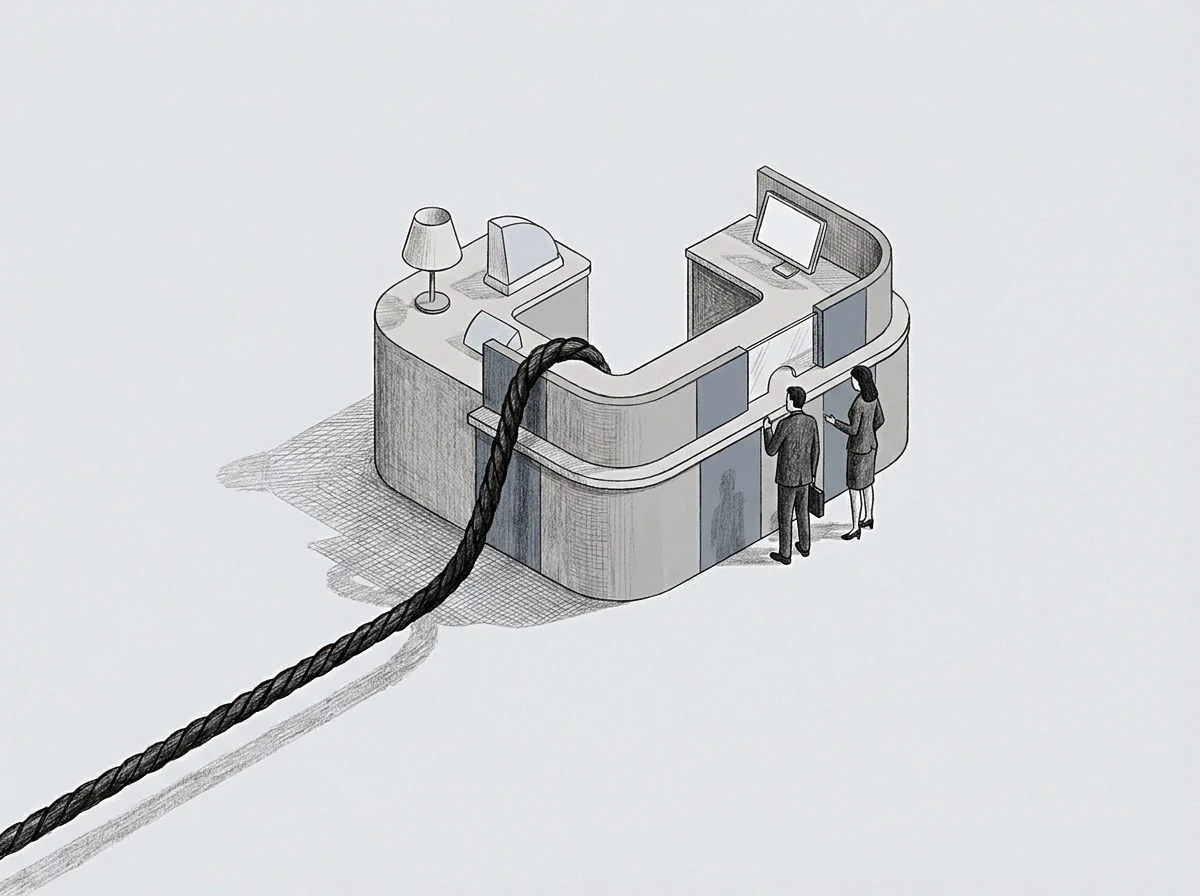
A service firm reaching five million in gross revenue often hits operational bottlenecks tied directly to the owner’s personal schedule. Answering delivery escalations at midnight reflects an operational reliance on individual endurance over organizational structure. In fast-growing firms, the founder usually holds three distinct roles: primary technician producing deliverables, line manager overseeing staff, and corporate officer directing growth.
Each seat requires dedicated focus and specific weekly hours. As client demand grows, delivery work consumes available time, leaving managerial oversight fragmented and strategy neglected. Production work ultimately absorbs the remaining capacity.
Role theory defines this phenomenon as role overload paired with role conflict. Overload occurs when total demands across assigned roles exceed individual capacity, while conflict arises when the duties of one position impair performance in another. An operator handling complex technical engagements cannot evaluate capitalization structures or negotiate executive recruitment terms without significant switching costs.
Research on managerial capacity shows that moving between tactical execution and governance requires twenty to thirty minutes of recovery time per transition. Across a fifty-hour work week, constant task switching consumes up to fifteen hours in lost focus.

Structural Limits of the Operator Function
Managed service businesses exhibit a direct linear relationship between labor inputs and billable output. Unlike software platforms where marginal distribution costs approach zero, scaling a service firm requires continually adding billable labor. A founder-managed firm hits a structural growth ceiling once the person holding client trust reaches full billable capacity.
At that point, intake stops or delivery quality falls.
A managed service operation caps output when the operator-founder handles both client delivery and strategic direction without dedicated administrative support.
When operational delivery relies on unwritten knowledge held only by the founder, delegation stalls under a tacit knowledge constraint. Junior staff receive task assignments without the broader context required for independent execution. Escalations increase, pulling the owner back into production to protect client retention and locking operational capacity to individual billable hours.
The financial consequences of unaddressed structural limits compound as the business expands. Margins narrow when executives perform mid-level delivery at senior wage rates, while valuation metrics discount firms dependent on founder involvement. Failing to separate operator duties from corporate ownership caps output capacity, suppresses valuation multiples, and leads to executive burnout.

Hours
Tracking time across distinct roles reveals where operational capacity breaks down. A standard work week contains forty to sixty actionable periods, yet founder-managed firms rarely audit where those periods go. Administrative tasks, emergency client interventions, informal coaching, and vendor management often run as invisible labor that reverts to founders.
When these duties consume thirty percent of weekly availability, calculated project profitability metrics become inaccurate, hiding true operating overhead.
Capacity friction tends to peak at specific headcount thresholds, notably eight, fifteen, and thirty team members, where informal coordination breaks down and requires formal structure. An operator managing eight direct reports while maintaining client deliverables quickly reaches administrative saturation. Research on span of control shows that direct supervisory effectiveness drops significantly when an unassisted manager oversees more than six direct reports while carrying production quotas.

Mechanisms of Capacity Degradation
Capacity limits manifest through specific operational failure patterns across service delivery teams. Identifying these patterns allows organizations to intervene before client retention declines.
- Tacit Knowledge Hoarding happens when critical delivery workflows stay stored in individual memory rather than explicit documentation, preventing delegation.
- Escalation Path Compression emerges when team members bypass intermediate supervisors to route minor operational issues directly to firm principals.
- Governance Atrophy occurs when long-term strategic initiatives are indefinitely deferred to resolve immediate client delivery friction.
- Context Degradation arises when rapid switching between technical labor and executive decision-making reduces accuracy across both areas.
Tacit expertise transferred without formal documentation leaves the operational seat permanently tethered to the originator.
Addressing these bottlenecks requires precise role decomposition, separating total organizational obligations into distinct positions before assigning individuals. Time tracking data from growing service firms shows that unbundling technical execution from executive governance restores up to twenty-five hours of weekly executive bandwidth. This transition requires funding, shifting overhead costs from unpriced founder labor to corporate payroll.
When a co-founder absorbs unpriced operational hours to preserve cash, an imbalance develops within the partnership. Equity splits stay static while labor contributions diverge. The partner managing internal operations may log sixty billable hours weekly, while the partner handling strategic relationships logs twenty hours while drawing equal equity distributions.
Equal ownership reflects early risk assumption rather than ongoing labor input during growth.

Split
Early equity decisions frequently collide with operational realities as a firm grows. Equal fifty-fifty allocations reflect initial risk alignment rather than long-term functional contributions. Over time, operational duties shift unevenly: one partner remains stuck in client delivery while another moves into governance or business development.
Without mechanisms to separate ownership equity from labor compensation, structural resentment builds between partners.
Research on owner-managed businesses distinguishes capital returns from labor returns. Equity ownership provides a claim on residual enterprise value and capital distributions based on risk assumed, whereas compensation pays for specific operational labor at market rates. Underpaying operating founders to artificially inflate net profit margins distorts business valuation and misallocates capital returns.
Evaluating Equity Allocation Frameworks
Comparing equity structures highlights how different arrangements handle labor capacity imbalances over time.
| Allocation Structure | Mechanic of Adjustment | Labor Distortion Risk | Governance Complexity |
|---|---|---|---|
| Static Equal Allocation | Fixed equity ratios established at inception without performance or time triggers | High distortion when labor contributions diverge over operational expansion phases | Low initial setup friction, high long-term dispute potential |
| Dynamic Milestone Allocation | Equity earnings tied to operational delivery metrics, billable hours, or revenue thresholds | Moderate distortion if metrics emphasize short-term output over structural business building | Moderate administrative overhead requiring accurate tracking systems |
| Market-Rate Labor Separation | Equity fixed based on capital risk; operational labor paid strictly at market rates | Low distortion as labor imbalances are compensated via cash or accrued salary debt | High requirement for early cash flow stability or debt accounting structures |
An equity grant unlinked to specific functional delivery terms creates irrecoverable capital friction when role transitions occur.
Conventional four-year vesting schedules protect against early departure, but they assume static capabilities and fail to address shifting operational performance. A co-founder who reaches capacity at two million in revenue retains the same vesting rights as one capable of supporting twenty million in scale. Dynamic equity frameworks address this by linking milestone-based vesting to role transition clauses, such as an operational clawback that reduces unvested equity by twenty percent if a founder exits technical delivery.

Scale
Moving a service business beyond individual founder limits requires systematically unbundling operator responsibilities. This process begins by identifying high-frequency technical tasks currently performed by firm principals, then mapping those unwritten workflows into standardized procedures so secondary staff can take over direct operational management.

Does equity vesting protect against operational capacity collapse?
Time-based equity vesting fails to protect service organizations against operational collapse because it measures duration of presence rather than functional output. When an operator-founder hits personal capacity limits, time-based schedules keep awarding ownership even as delivery stalls. Effective protection requires milestone vesting tied to transfer metrics, such as training a department head or handing off client relationships without revenue loss.
Unbundling operational seats follows a sequence designed to preserve service quality while releasing executive capacity.
- Audit daily executive activities to separate technical client labor, administrative management, and corporate governance.
- Codify tacit technical processes into explicit operational manuals and delivery templates.
- Recruit middle management operators to hold direct supervisory responsibility for billable delivery teams.
- Reallocate principal time strictly to strategic growth, key account governance, and capital allocation.
Shifting an operator out of primary service delivery requires a clear compensation adjustment. If a replacement manager commands a market salary of one hundred fifty thousand dollars, the firm must absorb that expense directly on its income statement. Recognizing market-rate management costs allows net profit margins to reflect true enterprise earning power.
Whether service firms can fully transition founder-held client relationships without a temporary margin decline remains an open empirical question.

Claim
Formalizing roles through contractual governance helps prevent partner disputes during expansion. Operating agreements in service businesses need explicit terms for functional expectations, time commitments, and the consequences of stepping back from a role. Setting explicit boundaries converts vague expectations into enforceable obligations.
The market value of a service firm reflects the capacity of operational seats rather than the personal endurance of its owners.
When an operator-founder steps back from direct delivery management, equity holdings should be evaluated against ongoing enterprise value creation. Transitioning from active operator to passive owner changes the balance between risk and labor. Operating agreements can include dynamic cap table adjustments or equity buyback provisions to manage this shift, ensuring that a partner stepping down from daily duties accepts reduced distribution rights or equity dilution to fund replacement hires.
Defining operational seats with clear boundaries and compensation parameters stabilizes service delivery. Separating capital ownership from operational management aligns equity incentives with real contributions, enabling growing service enterprises to expand far beyond the personal capacity of their original founders.