
Separating Code Authority From Director Oversight In Growing Firms
Separating code authority from director oversight isolates operational repository rights from statutory governance to protect audit integrity and peer review.

Knot
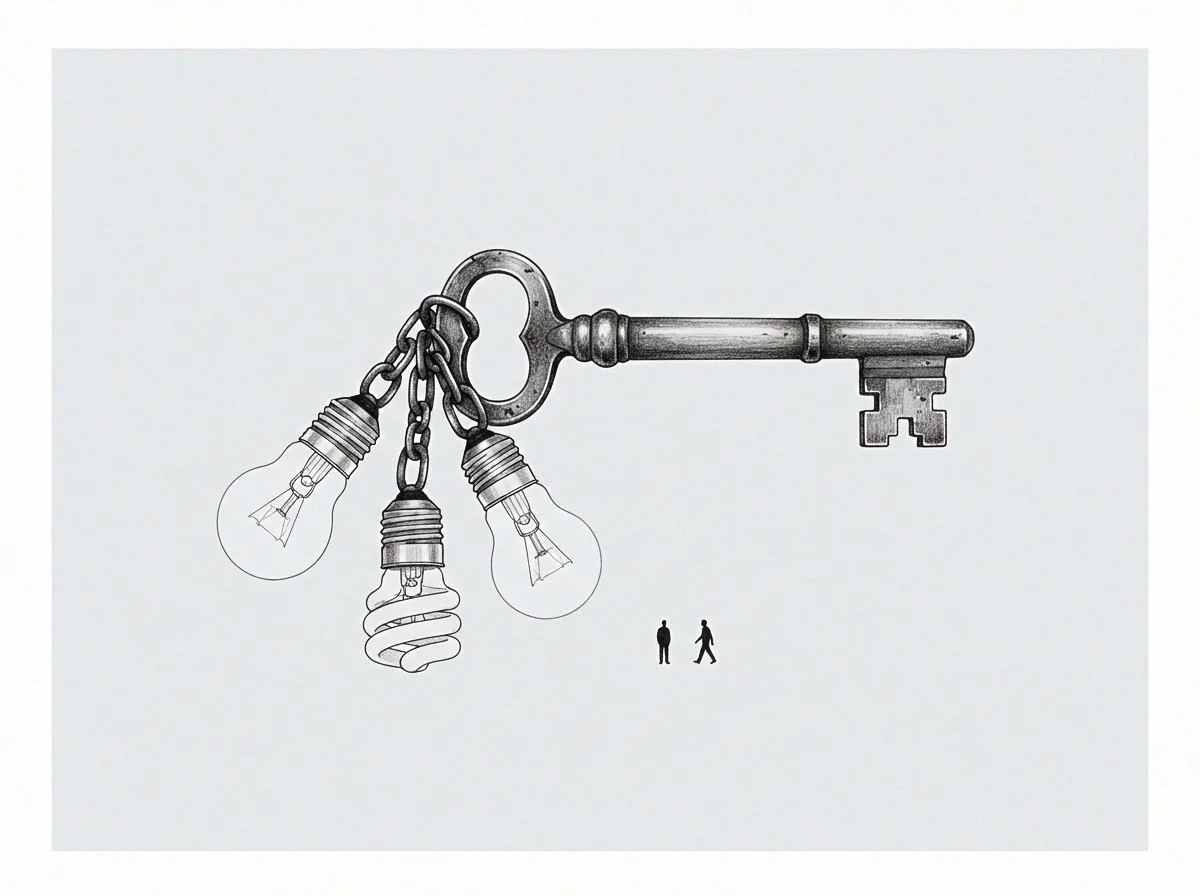
Production credentials remain inside the founding director’s personal keychain long after statutory filings declare outside equity holders. A single push access key signs merge requests to core repositories while the same fingers sign corporate resolutions and voting agreements. The software repository records commits under an identity that also votes on executive compensation and corporate dissolutions.
Technical authority over codebase deployments merges quietly with legal oversight over enterprise assets. When production systems fail at two in the morning, the corporate director edits script configurations directly on host servers. Authority over technical execution overlaps with the statutory duty to supervise management.
The founder acts as lead architect and director simultaneously, confusing the supervisory seat with the direct execution of systems engineering. Early commercial viability requires immediate software delivery, so early operational control centers on whoever holds repository administrative rights. Corporate statutory oversight operates on a different legal calendar, structured around fiscal quarters, minutes, formal corporate notices, and fiduciary declarations.
When one individual occupies both roles without structural partitions, the speed of code deployment overwrites the deliberative cadence of board governance. Engineering commits bypass intermediate review because a sitting director pushed the revisions. Operational staff treat a director commit as an implicit executive order rather than standard source code subject to testing.
A technical founder holding repository write access while sitting as a director dissolves the boundary between operational delivery and corporate surveillance.
Role strain emerges immediately within technical staff. Engineers tasked with auditing pull requests hesitate to reject syntax written by someone who sets operational budgets and holds veto power over equity distributions. The director’s informal code commit becomes an irreversible architecture mandate, insulating software bugs from standard testing pipelines.
Code reviews decline in rigor, and technical documentation atrophies across every project the director touches directly. When software failures occur, the board cannot effectively examine operational accountability because the supervising director authored the defect. The firm carries unmitigated technical exposure masked by executive authority.
Engineering velocity slows under the weight of executive deference. Code changes wait for the director’s personal review, creating a structural bottleneck disguised as senior technical leadership. Staff members stop refactoring outdated modules, fearing political friction with an executive board member who originally authored those subsystems.
The technical estate becomes brittle. Operating engineers defer routine infrastructure maintenance until systemic failure forces an executive intervention.
Technical credentials held at the director level routinely silence operational dissent across downstream engineering teams.

Track
Which Authority Governs Emergency Production Deployments?
Statutory company law assigns directors a non-delegable duty of care to oversee corporate assets, intellectual property, and enterprise solvency. The technical layer operates under a distinct operational mandate: continuous integration, system stability, cryptographic verification, and service availability. Separating repository commit authority from statutory director status requires establishing distinct physical and procedural boundaries between these seats.
The corporate director oversees system policy, financial exposure, enterprise risk profiles, and executive hiring. The operational software engineer, staff architect, or release manager exercises exclusive write access to production branches and software deployment triggers.
Directors establish risk tolerance thresholds, data privacy mandates, and regulatory compliance protocols at the governance level without touching repository administrative controls. Management implements those policies through automated deployment gates, continuous integration pipelines, and mandatory peer code reviews. When production services experience total operational collapse, incident response protocols assign recovery operations exclusively to system engineers on duty.
Directors observe recovery metrics through telemetry dashboards, audit logs, and post-incident briefings rather than shell access. Direct technical intervention by board members invalidates the operational chain of custody and voids third-party security certifications.
A corporate policy revoking direct repository write permissions for board members establishes operational accountability across engineering teams.
The transition produces immediate procedural friction between founding directors and operational managers. Founders accustomed to fixing production bugs view repository access restrictions as administrative interference that slows crisis recovery. Technical managers, conversely, view continued director access as an intolerable compliance hazard that prevents repeatable operational standards.
The dispute centers on whether speed or institutional resilience governs growing enterprises.
Consider an enterprise software firm with forty engineers where the founding director retains production commit privileges. The board passes resolutions mandating rigorous access controls to satisfy institutional investors and enterprise customer audits. The director bypasses the staging environment at night to hotfix a billing glitch, corrupting financial reconciliation databases hours before an external audit.
The company cannot prove access isolation to independent auditors, forcing a costly restatement of operational compliance records. The director’s direct intervention exposes the firm to commercial warranty claims and investor disputes.
The investor representative will state that operational autonomy cannot exist while a director holds root credentials to the primary database.

Grid
Operational control and corporate governance operate through fundamentally incompatible mechanisms, cadences, and liabilities. Distinguishing their functions requires a comparative evaluation across institutional dimensions.
| Institutional Dimension | Code Authority and Systems Engineering | Director Oversight and Board Governance |
|---|---|---|
| Primary Mandate | Deterministic software delivery and uptime. | Fiduciary care, capital allocation, strategy. |
| Primary Instrument | Cryptographic signing keys and pull requests. | Corporate resolutions and board minutes. |
| Operating Cadence | Continuous deployment cycles and sprints. | Quarterly meetings and annual audits. |
| Legal Exposure | Operational service level breaches. | Personal director liability and statutory claims. |
| Verification Mode | Automated testing pipelines and code coverage. | External audits and committee reports. |
| Access Boundary | Least privilege repository permissions. | Information rights and governance filings. |
Authority over code repositories demands immediate, local technical competence evaluated through automated verification suites and deployment health checks. Oversight of corporate direction demands broad temporal perspective, contextual business assessment, capital structuring, and legal compliance. Combining these jurisdictions inside one person without role partitions compromises both responsibilities.
A person debugging production databases loses the strategic vantage necessary to evaluate executive performance and long-term enterprise value. Conversely, a director evaluating enterprise valuations lacks the daily operational awareness to assess system dependencies safely.
The operational team requires autonomy within its technical mandate to build robust operational systems. Technical managers establish pull request policies requiring multiple independent peer reviews, continuous integration passes, and cryptographic validation prior to deployment. Board members review operational risk metrics, infrastructure expenditure, regulatory compliance reports, and system audit summaries.
When this boundary functions cleanly, technical teams deliver operational velocity without executive interference, and directors maintain objective supervisory distance.
Revoking board-level technical write permissions preserves engineering objectivity and insulates directors from direct operational failure liabilities.

Wall
Implementing structural partitions between code execution and corporate oversight requires explicit technical and legal boundaries. The organization replaces informal executive discretion with codified administrative controls and formal delegation charters.
- Access Revocation Charters establish the formal surrender of repository administrative rights, database write access, and cloud console root keys by all statutory board members. Directors retain read-only informational visibility into aggregate engineering metrics and audit logs while surrendering source code modification rights.
- Independent Engineering Delegation transfers system architecture decisions, release engineering approvals, and technical infrastructure choices to operational managers. Staff engineers govern production deployments through formal peer-review gates without seeking director sign-off on individual code modifications.
- Audit-Logged Governance Requests direct board-level system queries through formal engineering management channels rather than direct operational requests. Technical executives present quarterly vulnerability assessments, infrastructure budgets, and architectural debt analyses to the corporate board during scheduled meetings.
The handover of technical keys marks a psychological and structural turning point in enterprise growth. Technical founders experience the withdrawal of repository access as a profound operational detachment from daily product creation. The administrative boundary forces the founder to inhabit the director seat fully, trading immediate code contribution for systemic organizational oversight.
Engineers assume complete accountability for deployment outcomes, ending their reliance on executive rescue during technical crises. The arrangement converts tacit founder knowledge into documented standard operating procedures accessible to all team members.
Stipulations in corporate bylaws that condition director status upon the complete absence of production credentials permanently secure the partition between governance and technical execution.
Room
A quiet emerges in the engineering room once executive access keys expire. Operational teams debate architectural choices based entirely on software design criteria rather than corporate politics. Code reviews recover their technical sharpness when junior engineers evaluate changes authored solely by operational peers.
Pull request pipelines run without manual overrides, rejecting code that falls short of automated testing standards. Production environments achieve operational predictability because every deployment follows documented, repeatable pathways.
Outside the technical office, the board table functions with clear supervisory focus. Directors review infrastructure expenditures against market returns, evaluating engineering capability as an institutional asset rather than an extension of personal founder identity. Performance audits of executive managers happen with objective scrutiny because directors hold no direct responsibility for system bugs or operational outages.
The corporate entity develops institutional maturity separate from individual founder personalities, creating durable commercial value that survives executive transitions.
The separation of code authority from director oversight exposes a deeper ambiguity regarding whether technical founders can sustain governance engagement without operational immersion.