
Measuring Tacit Work Transfer Efficacy During Technical Executive Handover In Owner Managed Enterprises
Tacit work transfer succeeds when an incoming technical executive independently resolves uncataloged system failures without founder escalation.

Desk
The terminal cursor blinks against a dark screen at four in the morning. An owner who built the original code base sits alone in the office, tracing an unmapped race condition that halted nightly reconciliation batches. Three rooms away sits the empty chair of the incoming technical executive, hired six months ago to take over engineering operations.
The incident report from midnight lists a database timeout, yet the owner bypasses the log files entirely, checks an unindexed Redis cache key directly, and clears the bottleneck with an undocumented configuration patch. The incoming executive arrives at nine o’clock and reads a ticket marked resolved without understanding why the cluster failed or how the recovery happened.
This pattern defines technical executive transitions in owner-managed firms. The outgoing owner-operator relies on decade-long operational reflexes, heuristics, and undocumented architectural concessions. Standard corporate documentation captures explicit procedures, system diagrams, and vendor contracts, but it misses tacit technical work: diagnostic instinct, unmapped dependencies, and unwritten crisis habits.
When an enterprise transfers leadership from a technical founder to an incoming chief technology officer, standard milestone reviews track nominal project delivery while ignoring whether operational competence actually crossed the table.
A technical handover stalls whenever operational recovery relies on unwritten founder intervention during unexpected production downtime.
Transferring technical authority involves three distinct seats that owner-operators inhabit simultaneously. The first is the technician seat, writing scripts, troubleshooting servers, and deploying hotfixes. The second is the manager seat, assigning sprint tasks, balancing headcount, and tracking release cycles.
The third is the founder seat, deciding product architecture, equity allocation, and technical risk exposure. In an owner-managed firm, these functions collapse into a single routine, where the founder diagnoses infrastructure health by subtle queue dips or familiar alert patterns, conflating personal intuition with institutional capacity.
The incoming technical leader inherits the manager seat immediately, and standard governance models treat this administrative shift as proof of a successful transition. Calendars change hands, direct reports send their weekly updates to the new desk, and vendor renewals route to the newcomer’s inbox. Meanwhile, the technician and founder functions remain tied to the outgoing owner.
The successor receives responsibility for platform uptime without the contextual pattern recognition needed to prevent outages, while evaluation focuses on administrative throughput rather than independent technical survival.
Unmeasured tacit transfer leads to quiet operational breakdown. When documentation stays high-level, the organization splits into two operational tracks: the incoming executive manages public sprints while the owner handles private, off-hours triage. Engineering velocity slows, staff deal with conflicting priorities, and the firm faces structural paralysis once the founder permanently departs.

Trace
Capturing uncodified technical skill requires operational exposure rather than passive observation. Traditional onboarding relies on shadowing, where a successor watches the owner conduct architecture reviews or resolve system degradation. Expert intuition relies on automated pattern recognition that owners cannot easily articulate while actively working.
Asking an owner to explain technical choices during a live outage produces post-hoc explanations rather than the actual heuristics used under pressure.
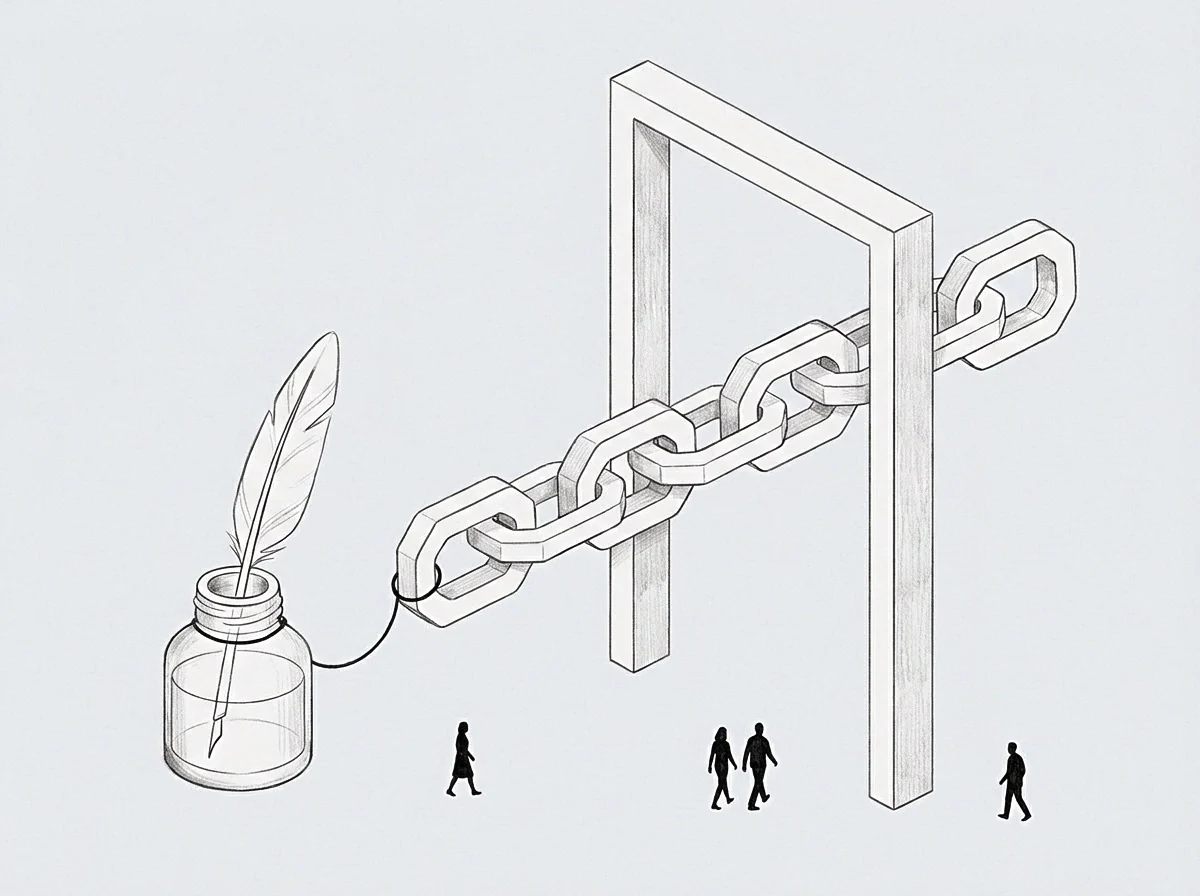
Observable Heuristics in Diagnostic Routines
Tacit technical transfer becomes measurable when work shifts from passive observation to active co-performance. Under paired duties, the incoming executive handles production incidents while the owner sits nearby with hands off the keyboard, stepping in only to supply missing historical context. This inversion exposes where the successor’s understanding ends and pinpoints missing system knowledge as the incident unfolds.
Every software platform retains sediment from past commercial crises. A database schema contains denormalized tables created five years prior to survive an unannounced customer audit. An API gateway contains custom routing rules hardcoded to circumvent an unpatched vendor bug.
These structural anomalies represent architectural sediment. The owner understands every work-around because they built it, whereas the incoming executive sees strange anomalies that contradict standard engineering design.
Unstated technical debt becomes visible only when the successor diagnoses system anomalies without real-time owner coaching.
Measuring how well this sediment transfers involves tracking the incoming leader’s diagnostic path during an incident, focusing on three discrete operational indicators:
- Heuristic divergence rate reflects the statistical variation between the successor’s diagnostic hypothesis and the owner’s historical resolution path during live operational anomalies.
- Architectural anomaly identification records how quickly an incoming leader detects unwritten structural workarounds without consulting the founding engineer.
- Escalation latency delta gauges the elapsed time before the successor requests historical clarification, revealing the exact boundary of independent platform mastery.
Where Do Tacit Operational Dependencies Surface Unseen?
Unseen dependencies cluster around informal channels between the technical founder and senior engineering staff. Experienced engineers routinely bypass ticket queues to message the owner privately about fragile services or deployment blocks. This backchannel preserves speed but leaves the incoming executive insulated from the actual technical friction in the system.
The successor must deliberately intercept these private channels. Transfer progresses when legacy engineers redirect informal inquiries to the incoming executive and receive solid structural guidance without owner escalation. Until these informal conduits transfer to the successor, the owner remains the invisible spine of the company’s technical apparatus.
A structured transfer surfaces undocumented operational routines before the formal exit concludes.
Toll
Evaluating tacit transfer demands instruments tailored to executive autonomy. Measuring an incoming chief technology officer by standard engineering metrics—like lines of code, pull requests, or completed Jira tickets—yields misleading data. Executive competence shows in decision accuracy under uncertainty, architectural capital allocation, and crisis response, requiring clear mechanisms to verify whether the successor possesses genuine operational instinct.
Three primary evaluation modes operate during technical handovers in private enterprises. Each measures a distinct dimension of technical comprehension, carrying specific evidentiary weight and operational disruption costs.
| Evaluation Mode | Measurement Target | Operational Disruption | Evidentiary Precision | Failure Consequence |
|---|---|---|---|---|
| Static Artifact Review | Explicit system documentation, runbooks, architecture decision records | Negligible | Low | Theoretical fluency masking complete operational helplessness during outages |
| Synthetic Fault Injection | Remediation of staged infrastructure failures and legacy edge cases | Moderate | High | Temporary staging downtime revealing specific diagnostic blind spots |
| Shadow Decision Logging | Comparative analysis of independent architectural and risk choices | None | Very High | Prolonged overlap periods delaying the complete transfer of formal authority |

Empirical Verification Through Fault Remediation
Synthetic fault injection provides empirical validation of tacit transfer. The organization introduces controlled infrastructure failures into a staging environment that mirrors production complexity. These faults replicate historical outages that once required direct founder intervention, such as database replication splits, corrupted cache layers, or memory leaks in legacy services, leaving the incoming executive to resolve them without assistance.
The evaluation tracks mean time to detection, diagnostic efficiency, and remediation accuracy. When the incoming leader identifies the core issue through systematic deduction rather than trial-and-error changes, the business confirms that architectural understanding has transferred. If the successor stalls or pursues remedies that would risk live customer data, the owner identifies the limits of the handover before equity vesting milestones close.
Autonomous technical execution occurs when an incoming leader resolves legacy edge cases within target operational limits.
A second instrument, shadow decision logging, runs over three to six months of regular operations. During architectural debates, vendor negotiations, or major release approvals, both the owner and the successor draft independent decision memos detailing their chosen solution, risk assessment, and projected costs. The memos stay sealed until both parties submit their conclusions.
Comparing these entries reveals whether the successor shares the owner’s risk tolerance and platform instincts. Major divergence shows that the successor lacks exposure to the commercial realities driving the technical architecture. For example, proposing a microservice rewrite for a monolithic system that runs reliably on two dedicated servers reflects theoretical knowledge detached from commercial needs.
The comparison protects the firm against unnecessary engineering overhauls.
The handover process follows an ordered operational progression:
- Baseline documentation mapping inventories all formal technical assets alongside explicit infrastructure diagrams and operational runbooks.
- Passive triage observation pairs the owner and successor during live production alerts to trace unspoken diagnostic assumptions.
- Active inverted remediation places the successor on primary incident response with the owner acting solely as an observational auditor.
- Blind shadow logging records parallel architectural and risk decisions across concurrent operational quarters.
- Controlled fault challenge tests independent crisis resolution through unannounced staging environment failures.
- Full operational severance removes the owner from all production credentials and internal technical communications channels.
What remains open is how far an incoming executive must mirror an owner’s specific mental model rather than establishing alternative, equally stable diagnostic habits.

Lease
Formalizing the handover requires contractual terms that tie technical transfer milestones to ownership dynamics. In an owner-managed business, an outgoing executive often retains equity, board seats, or dividend rights. This dual position as a former operator and ongoing shareholder easily creates friction.
The founder feels pulled to intervene whenever the successor strays from legacy designs, while the incoming executive hesitates to execute necessary platform changes under constant scrutiny.
The firm resolves this friction by establishing a technical transition covenant within the employment agreement and operating pact. This document replaces vague expectations with explicit operational thresholds, defining exactly where the founder’s managerial and technical intervention rights end and converting them into a standard equity holder with conventional fiduciary protections.
The contract specifies an operational sunset divided into observational, transitional, and advisory phases. During the advisory phase, the incoming executive holds full authority over deployments, hiring, vendor choices, and platform design. The outgoing owner retains limited audit rights restricted to quarterly board reviews of uptime, infrastructure spending, and roadmap execution.
Should production latency increase or timelines slip, the owner cannot unilaterally seize access keys or alter configurations.
The covenant sets an explicit escalation trigger: the outgoing founder exercises technical override rights only when an infrastructure failure threatens commercial viability, defined as unrecovered production outages exceeding forty-eight continuous hours or verified data loss events that breach client master service agreements.