
Measuring Operational Drift Impact On Strategic Decision Making In Leadership
Operational drift erodes strategic decision-making by steadily displacing executive governance hours with unmeasured frontline delivery firefighting.
Room
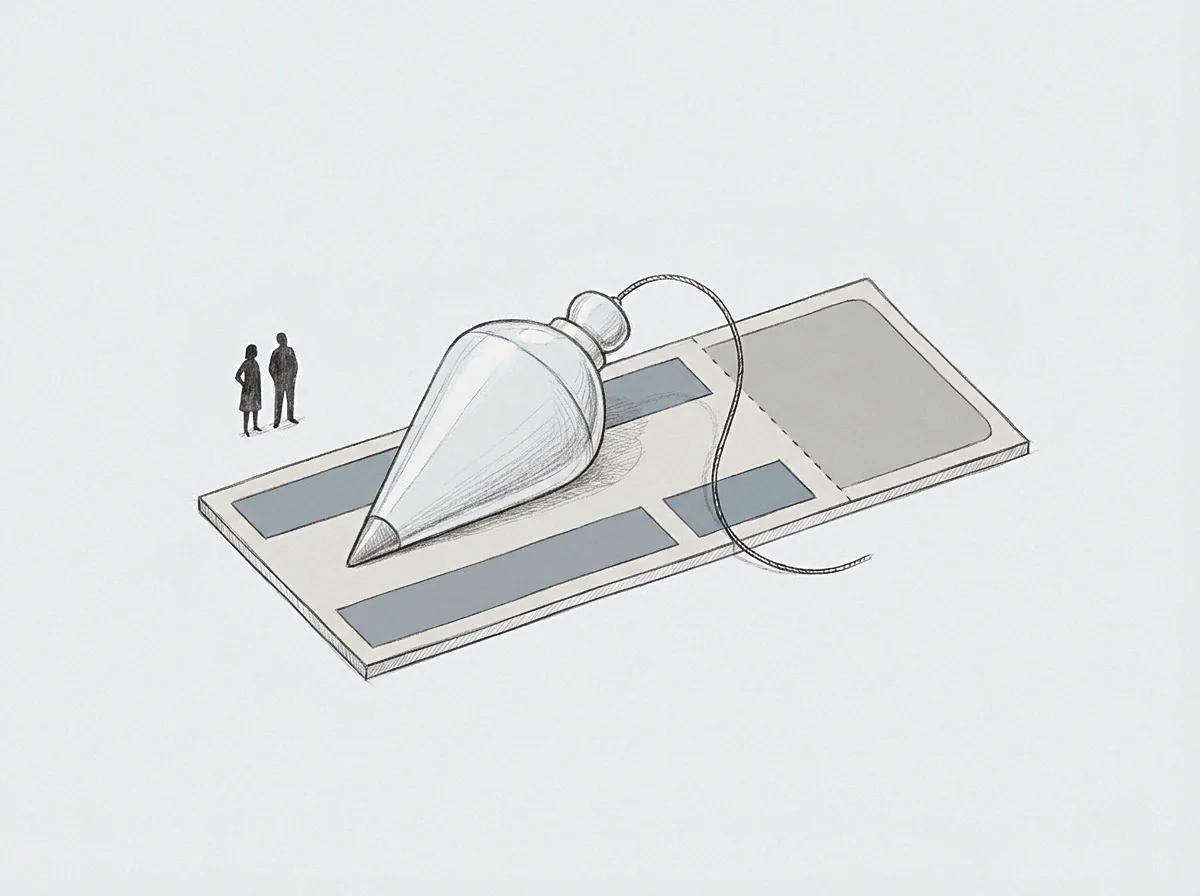
A spreadsheet sits open past midnight, showing four emergency engineering adjustments, two unapproved customer credits, and thirty untracked support tickets cleared by an executive who spent the morning session reviewing five-year market positions. Whiteboards show scribbled workarounds next to chat notifications demanding immediate authorizations. The operational floor pulls executive attention downward: each informal bypass around a broken workflow takes time away from deliberate capital planning, and senior leaders step into frontline delivery failures because immediate execution breakdowns carry penalties while delayed strategy stays unnoticed for months.
This pattern defines operational drift, where daily work diverges incrementally from formal governance to keep delivery moving. Formal leadership charters may specify that senior personnel dedicate eighty percent of their contracted energy to forward-looking resource allocation and structural design, yet small execution failures steadily cut into that commitment. The shift happens in small increments.
A manager corrects a billing error directly instead of redesigning the broken invoicing process, while a technical director spends a weekend writing patch code instead of overhauling obsolete infrastructure.
When leadership spends operational hours resolving recurrent delivery anomalies, formal governance becomes a ceremonial fiction.
Leaders who double as floor operators and strategic trustees face cognitive fatigue that narrows attention to immediate horizons. Hours spent reviewing operational exceptions consume the energy needed for scenario analysis, risk pricing, and organizational restructuring. Instead of directing work through formal organizational mechanisms, leadership slips into tactical triage, handling emergencies rather than guiding long-term structure.
Triage Routines Inside Executive Hours
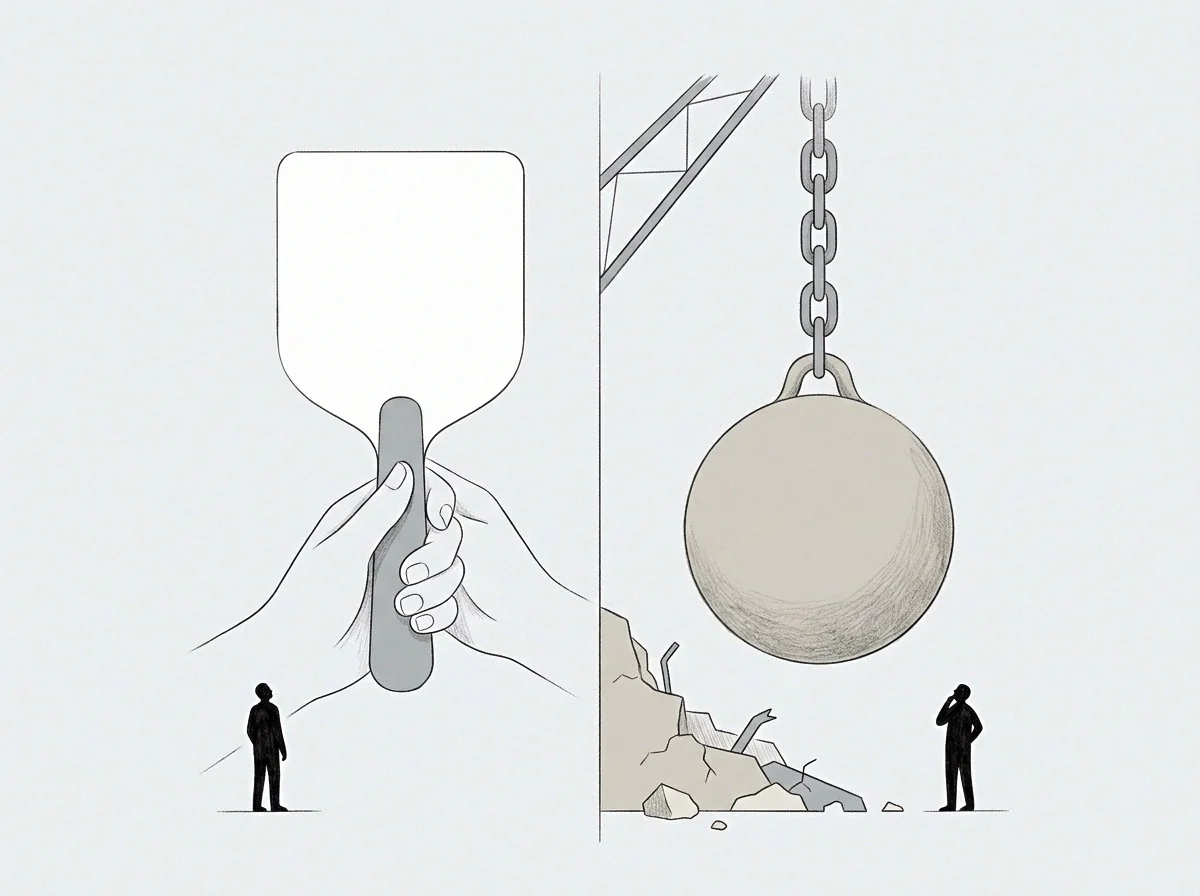
Executive schedules deteriorate when operational friction goes unmeasured. A calendar audit over two fiscal quarters shows ad hoc check-ins, customer escalations, and triage meetings crowding out scheduled policy evaluations and investment reviews. When an executive routinely sets aside strategic sessions to clear operational bottlenecks, the organization learns that formal controls yield to immediate output.
Informal triage creates an escalating pattern. Because teams see executive authority used to clear local process stalls, they bypass standard operating protocols and push minor friction directly upward. The leadership layer turns into an operational backstop, blurring the line between management and technical execution while leaving fiduciary oversight unattended.

The Invisible Migration of Strategic Capacity
Strategic capacity rarely disappears all at once; it migrates through reverse delegation. Instead of passing execution down to accountable operational roles, executives pull operational tasks upward to maintain short-term velocity. The undocumented labor of maintaining fragile legacy systems ends up concentrated in the personal habits of senior personnel.
With executive attention spent propping up systemic deficiencies, the enterprise fails to prepare for market realignments, regulatory shifts, and capital market contractions.
Letting daily execution drift absorb leadership schedules creates structural stagnation, leaving the enterprise exposed whenever market conditions shift and demand focused strategic planning.

Gauge
Tracking the operational erosion of leadership decisions requires concrete metrics rather than self-reporting. Executive teams often believe they are directing strategy when their daily hours consist of reactive fixes. Defining quantitative indicators exposes the gap between formal governance intentions and actual hours spent.
Measurement tracks how far floor behavior pulls away from authorized policy. Without objective tracking, sustained activity is easily mistaken for strategic progress. By analyzing leadership hours, decision latency, and escalation frequency, organizations document how much planning capacity has been diverted into delivery triage.
- Tactical Displacement Ratio measures the share of executive working hours absorbed by operational triage relative to hours dedicated to structural policy.
- Unrecorded Concession Volume tracks informal exceptions granted by leadership outside standard governance processes to protect delivery schedules.
- Latency in Strategic Commitments quantifies the calendar delay between policy ratification and actual execution caused by operational bottlenecks.
- Governance Threshold Drift identifies the percentage variance between formal compliance standards and the lower operating tolerances accepted across daily delivery floors.
Tracking these indicators across quarters reveals structural issues before they show up on the financial statements. When the Tactical Displacement Ratio crosses thirty percent, leadership tends to shift toward defensive positions, prioritizing short-term cash preservation over long-term capability building.
Tracking the ratio of operational firefighting to policy deliberation reveals whether leadership governs the organization or merely survives its workflows.

Quantifying the Allocation Deficit
The allocation deficit measures the difference between expected strategic capacity and actual strategic work delivered. To record this gap, leadership runs a monthly time-allocation decomposition, categorizing executive work into three functions: technical work that produces direct deliverables, management work that coordinates operations, and leadership work that governs capital allocation, organizational structure, and long-range risk positioning.
Executive work audits in asset-intensive operations show that without explicit governance boundaries, technical and management tasks expand to take up to sixty percent of senior leadership capacity. This operational pull distorts capital expenditure planning, vendor selection, and executive succession.
The operating agreement establishes a clear threshold: if operational escalations consume more than fifteen percent of executive capacity across two consecutive cycles, the operating charter requires formal review and the underlying delivery workflows undergo mandatory restructuring.
Scale
Evaluating how operational drift affects leadership choices requires comparing governance baselines directly against floor realities. Discrepancies between written policies and daily practices show where operational compromises have begun driving strategic decisions.
| Decision Domain | Formal Governance Standard | Floor Drift Reality | Measured Distortion Indicator |
|---|---|---|---|
| Capital Allocation | Assets allocated against five-year discounted returns | Capital diverted to patch recurring delivery bottlenecks | Unbudgeted operational remediation spend |
| Client Agreements | Standardized service tiers with fixed margins | Informal bespoke concessions to prevent churn | Variance between contracted and delivered scope |
| Personnel Deployment | Specialized roles aligned to core job architectures | Cross-functional poaching to resolve daily crises | Percentage of hours spent outside designated seat |
| Technical Architecture | Strict adherence to architectural compliance standards | Unvetted temporary workarounds deployed to production | Accumulation rate of unserviced technical concessions |
This comparison shows that operational drift actively alters corporate policy from the ground up rather than creating a passive delay. When daily practices repeatedly depart from formal standards, those standards lose organizational authority, and leadership ends up ratifying past compromises after the fact under the label of adaptive strategy.

Does Local Optimization Corrupt Capital Commitments?
Local operational optimization frequently undermines broader capital deployment. Frontline teams naturally focus on immediate cycle time and throughput, adopting workarounds that create deferred structural costs. A software team might introduce undocumented database exceptions to close a sprint on schedule, or a plant crew might delay equipment recalibration to hit quarterly production targets.
When leadership bases decisions on performance metrics distorted by local workarounds, long-range planning falters. Forecasts, margin calculations, and return-on-equity projections lose accuracy because they reflect an artificially maintained baseline. Strategies built on compromised operational foundations fail as soon as external pressures remove the informal fixes holding daily workflows together.
Operational workarounds hide systemic fragility from executive visibility until localized triage collapses under external shock.
Production floors prioritize immediate throughput over structural design, and leadership that accepts unmeasured compromises eventually finds its strategic room constrained by accumulated short-term fixes.

Weight
Unchecked operational drift creates friction that compounds across planning cycles. In marine engineering, ship hulls accumulate biological films that gradually reduce hydrodynamic efficiency, driving up fuel burn and engine load long before fouling shows in drydock. In much the same way, organizations collect informal operating exceptions that steadily degrade capital efficiency and strategic flexibility.
This decay follows a recognizable sequence that erodes executive governance over time:
- Threshold Tolerance Erosion begins when frontline managers accept small operational exceptions without formal governance waivers.
- Executive Escalation Capture occurs when leadership steps in directly to keep customer deliveries moving during workflow failures.
- Strategic Horizon Compression sets in as long-range planning sessions are repeatedly displaced by tactical alignment meetings.
- Retrospective Policy Normalization solidifies when executives adjust formal strategy to validate accumulated operational compromises.
A high operating tempo often conceals strategic decay: the leadership team stays fully occupied while the enterprise steadily loses market position and operational leverage. Routine firefighting consumes the cognitive capacity and capital reserves needed to reposition the business ahead of market shifts.

Decay Chains in Executive Deliberation
When operational drift reaches senior discussions, strategic deliberation turns into managing past compromises. Instead of evaluating where capital generates the strongest structural returns over the next decade, leadership examines which operational liabilities require immediate funding to prevent service interruptions. Deliberations shift from developing opportunities to managing liabilities.
This pattern weakens board oversight. Meetings intended for independent evaluation of capital allocation and fiduciary risk end up consumed by tactical incident reviews. Lacking rigorous long-range scenario analysis, board members default to assessing basic operating hygiene, reinforcing the immediate operational focus that generated the drift.
An executive leadership team can absorb only a finite volume of unrecorded operational compromise before its formal strategic mandate ceases to function in practice.
Reset
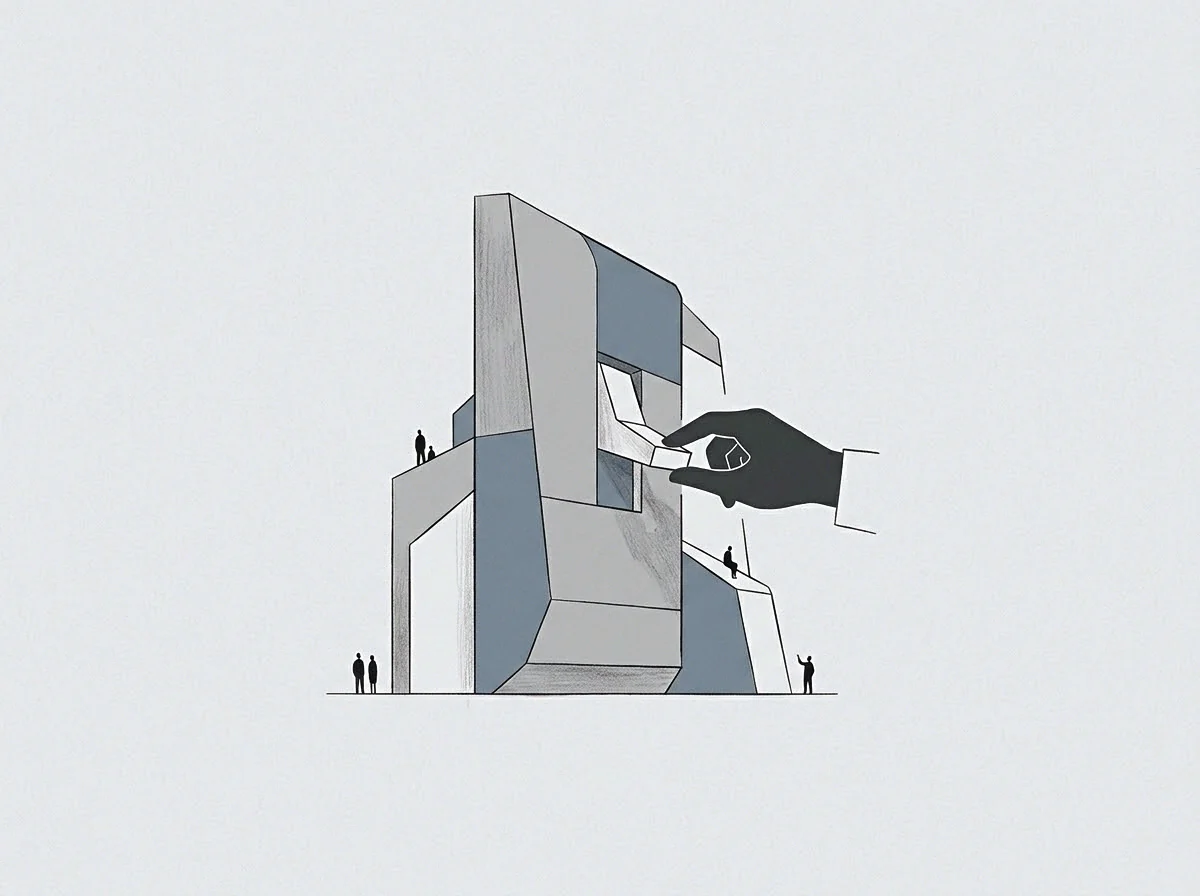
Restoring strategic integrity requires a clear structural divide between frontline execution and executive governance. The leadership seat requires protection from delivery emergencies through operational boundaries, escalation caps, and formal delegation compacts. Without distinct limits, daily operational demands displace governance work.
Organizations maintain this separation by establishing governance sanctuaries: protected calendar windows reserved strictly for structural policy, capital allocation, and organizational architecture. These sessions adhere to definite constraints, excluding operational status updates, customer escalations, and tactical triage from the agenda.

Decoupling Floor Triage from Boardroom Governance
Decoupling operations from governance requires holding operating teams accountable to formal service baselines without executive intervention. When delivery stalls, leadership refrains from stepping into technical or supervisory roles to execute a rescue, allowing the operating structure to register the friction of its own constraints.
When operational failures disrupt delivery, the causes are assessed through formal reviews rather than informal executive interventions. Enforcing this boundary requires operating managers to build resilient workflows instead of treating executive capacity as emergency floor labor.
Enforcing Fixed Strategic Allocations
Leadership teams protect strategic capacity by tracking executive time with the discipline applied to capital expenditure. When operational drift starts encroaching on strategic time allocations, leadership triggers an operational review to reassess delegation boundaries and process limits.
By recognizing strategic focus as a finite resource that degrades under unmeasured operational friction, leadership protects its core function: steering the enterprise through deliberate design rather than reactive adjustment.