
Contractual Mechanisms For Retaining Founder Intuition Post Acquisition
Retaining founder intuition post-acquisition requires contractual governance clauses that grant unilateral veto rights over product architecture and isolate cognitive capacity from administrative management.

Seat

Tacit Heuristics Versus Explicit Governance
Legal ownership of an enterprise transfers asset titles, registered trademarks, and customer contracts across a corporate closing table. Uncodified mental models, implicit operational reflexes, and relational pattern recognition remain locked inside the individual who built the company. Corporate acquisitions frequently mistake formal authority for operational understanding.
The corporate buyer acquires the physical entity while assuming that the underlying decision logic automatically persists through standard employment agreements.
Intuition operates as rapid tacit pattern recognition built from years of trial, error, and unwritten operational history. Standard post-acquisition retention structures treat this cognitive asset as simple labor capacity. Buyers assign the former operator to a traditional managerial role, binding them to integration checklists, reporting cadences, and administrative approvals.
Corporate reporting structures systematically starve the exact cognitive bandwidth required to exercise implicit pattern recognition.
Preserving uncodified operational judgment during an corporate transition demands contractual isolation from routine corporate management.
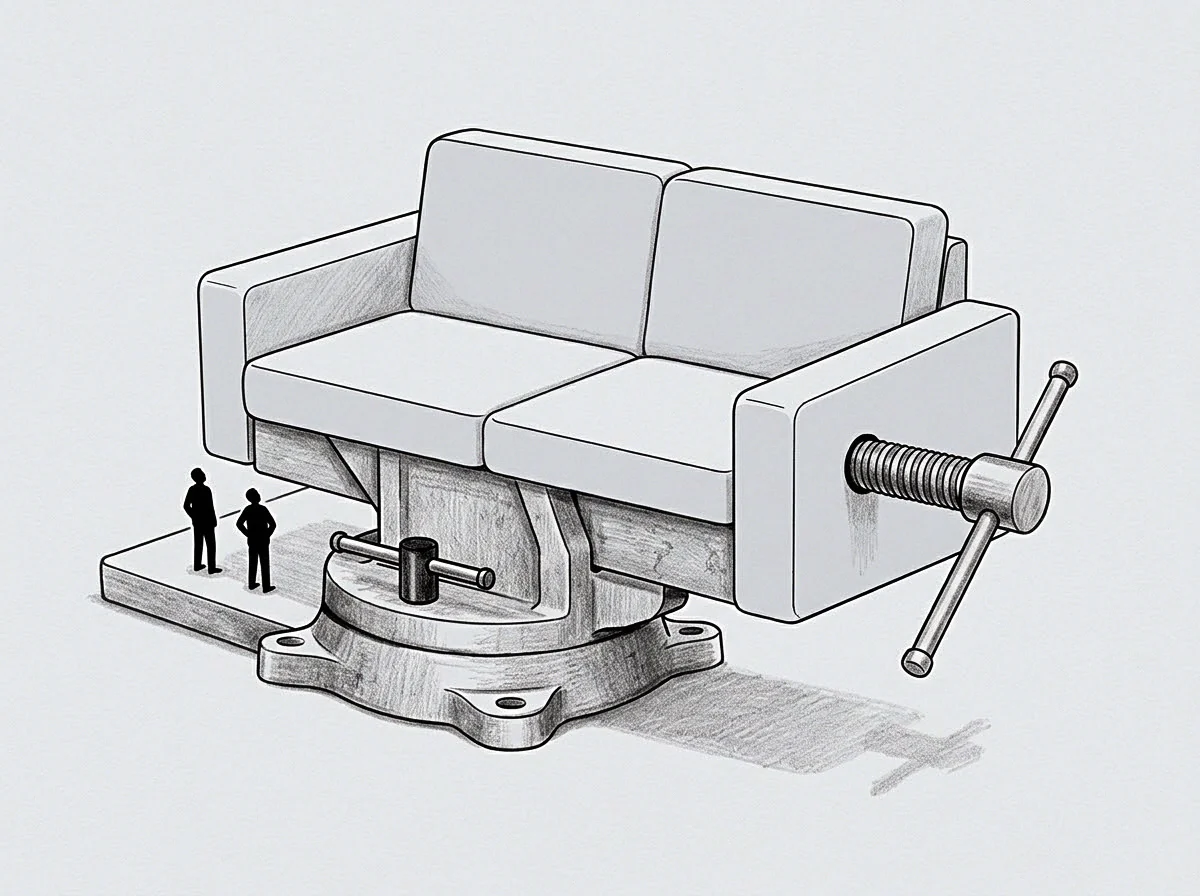
Role strain emerges immediately when an operator moves from holding ultimate decision authority to executing corporate procedure. The original builder occupied three functional positions simultaneously: the technician maintaining product standards, the manager allocating daily work, and the owner bearing residual financial risk. Corporate buyers typically absorb the ownership position and strip away technician autonomy, leaving the individual stranded in a middle-management position.
Corporate bureaucracy converts creative intuition into administrative resistance.
When an acquiring entity forces an intuitive operator into a pure administrative position, the tacit knowledge base corrupts within six months. The individual stops sensing market shifts because their calendar fills with internal alignment meetings. The capacity for rapid directional assessment drops as procedural validation replaces personal judgment.
Enterprise value degrades while the corporate buyer attempts to standardize an unstandardizable asset.
The operational cost is paid in depleted personal attention and eroded competitive advantage.
Earnout

Metric Distortion in Contingent Consideration
Contingent financial compensation mechanisms routinely misalign the incentive structure of an intuitive builder. Standard earn-out provisions tie post-acquisition financial payouts directly to short-term financial thresholds such as net revenue or earnings before interest, taxes, depreciation, and amortization. Tying financial payouts to rigid accounting metrics forces the operator to abandon strategic positioning choices in favor of immediate metric extraction.
Intuitive decision-making frequently requires accepting short-term operational inefficiency to secure long-term product differentiation or structural margin defense. Metric-bound retention structures punish this forward-looking posture. When contingent equity payouts depend strictly on annual earnings targets, the operator suppresses intuitive product investments that show financial returns beyond the earn-out period.
The corporate contract actively incentivizes the destruction of the enterprise’s long-term competitive moat.
- Metric Myopia forces the decision-maker to prioritize immediate accounting revenue over structural product defensibility during the integration period.
- Capital Starvation occurs when corporate budget allocations block intuitive experiments that fail standard corporate ROI evaluation criteria.
- Metric Arbitrage encourages the former owner to defer necessary maintenance investments until after the contractual performance window closes.
- Cognitive Atrophy sets in as procedural metric reporting replaces daily market pattern recognition.
Alternative earn-out structures must tie contingent compensation to non-financial strategic milestones or option-value creation metrics. Validating strategic retention requires measuring qualitative development targets, key architectural completions, or key talent retention benchmarks rather than pure quarterly operating profit. Aligning financial incentives with strategic freedom allows the founder to execute high-conviction intuitive decisions without risking their deferred purchase price.
Tying contingent compensation exclusively to short-term accounting earnings forces operators to trade long-term structural value for immediate payout security.
The corporate integration team will eventually observe that the acquired company hit every quarterly financial target while losing the intangible product quality that justified the acquisition valuation.

Veto

Reserved Powers and Structural Authority Buckets
Contractual retention of intuitive pattern recognition requires enforceable governance provisions that insulate specific operational decisions from corporate oversight. Standard corporate integration frameworks subsume all operational authority under centralized buyer management committees. Preserving founder judgment requires explicit contractual reservation clauses that establish absolute veto authority over defined operational zones.
These reserved power clauses create legal boundaries around critical domain areas such as product architecture, brand voice, positioning shifts, or core engineering talent allocation. Within these contractual zones, the former operator retains unilateral decision rights, bypassing standard corporate approval hierarchies. Establishing explicit governance zones prevents corporate middle management from diluting high-conviction product choices through standard corporate consensus processes.
| Mechanism Design | Tacit Retention Capacity | Acquirer Risk Profile | Primary Failure Mode |
|---|---|---|---|
| Product Veto Board | High pattern preservation across core product features | Moderate operational friction with corporate units | Interpersonal deadlock over strategic positioning |
| Discretionary R&D Capital Desk | High support for intuitive market experimentation | Low financial exposure capped by fixed budget | Capital misallocation on unvalidated initiatives |
| Direct Board Advisory Desk | Moderate strategic input with zero direct authority | Low operational disruption to buyer hierarchy | Complete advisory isolation and tacit knowledge loss |
| Decentralized Unit Authority | Maximum preservation of operational speed | High integration delay and organizational friction | Cultural divergence between buyer and target firm |
Special purpose discretionary capital budgets operate as another vital contractual mechanism. Assigning an annual R&D capital allotment subject solely to the founder’s approval preserves the capacity for rapid, unapproved experimentation. This structural insulation allows the operator to fund intuitive product concepts without producing corporate ROI business cases or navigating multi-layered capital allocation committees.
Contractual reservation of unilateral product veto rights prevents corporate integration standards from eroding core enterprise differentiation.
An explicit contract term granting unilateral authority over product architecture choices completely overrides standard corporate sign-off policies within that designated operational domain.

Hours

Can Advisory Retain Tacit Knowledge Without Operational Authority?
Operational burnout rapidly destroys intuitive capacity when an acquirer forces a founder to maintain full-time executive responsibilities post-closing. The sheer volume of corporate integration tasks consumes the cognitive space needed for strategic reflection. Transitioning the builder from an operational management seat to a structured advisory seat protects cognitive capacity while maintaining institutional access.
Advisory agreements must establish precise limits on temporal and operational commitments. Capping required service at twenty hours per month prevents the acquiring organization from dragging the former executive into daily corporate administration. This structural boundary protects the individual’s mental availability, ensuring that spent time focuses strictly on high-leverage pattern recognition, strategic consulting, and key talent retention.
Effective advisory arrangements isolate strategic pattern recognition from daily corporate administrative friction.
The primary risk of an advisory position involves complete marginalization. Without contractual governance rights, corporate teams quickly isolate the advisor, rendering their intuitive judgment useless. Contractual provisions must mandate regular direct strategic consultations between the founder and executive buyer leadership, bypassing operational integration layers.
Direct access ensures that tacit observations reach decision-makers who possess authority to act upon them.
Clear temporal boundaries keep the advisor focused on structural pattern recognition rather than administrative task completion.

Clause

Drafting Post-Acquisition Tacit Retention Covenants
Legal drafting of acquisition agreements must shift focus from punitive non-compete language toward affirmative enablement mechanisms. Traditional employment contracts rely heavily on restrictive covenants designed to prevent value destruction rather than foster intuitive value creation. Retaining tacit operational heuristics requires precise contractual terms that define operational autonomy, access rights, and reporting channels.
- Define specific operational domains where the founder retains final decision authority regardless of buyer corporate reporting structures.
- Establish direct reporting obligations exclusively to the acquirer’s executive board or Chief Executive Officer to eliminate middle-management filtering.
- Structure annual capital allocations dedicated to founder-directed research and development without requiring corporate capital committee approval.
- Incorporate mutual termination triggers that allow the founder to exit advisory duties while retaining earned equity if the buyer breaches autonomy boundaries.
Information rights clauses represent another load-bearing drafting element. The contractual agreement must guarantee uninhibited access to operational data, customer feedback channels, and raw product telemetry. Intuition depends on rich, unfiltered environmental data; isolating the former operator behind corporate summary reports destroys their ability to spot emerging market vectors.
Unfiltered access to raw operational telemetry forms the essential prerequisite for post-acquisition intuitive pattern recognition.
The contract must explicitly state sunset conditions for all advisory governance mechanisms. Tacit knowledge transfer cannot extend indefinitely; institutional decay inevitably occurs as the acquired business integrates into the parent entity. Establishing clear temporal boundaries for reserved powers allows both parties to execute a clean handover once tacit operational heuristics pass into standard corporate operating procedures.
What structural covenants will preserve the founder’s intuitive judgment when corporate leadership changes twice within three years post-closing?